Williamsport water damage pricing by scope — 2026
If you're reading this as a Williamsport homeowner, you may need answers while water is still coming in. I'll get right to what it costs here. Most homes in Williamsport were built before 1980 and nearly half are single-family, often with full basements typical for this part of central Pennsylvania (U.S. Census Bureau, ACS 2024). These factors, combined with the region’s long heating season, mean restoration in Williamsport is often dealing with basement moisture—especially after sump pump failures or heavy river flooding from the West Branch Susquehanna.
Losses in these mid-century houses often involve water under finished floors or behind drywall, quickly driving up the scope. Here’s what you can expect for professional water restoration and related services in Lycoming County for 2026:
| Service |
What it covers |
Typical duration |
Price range |
| Water extraction + emergency drying (Cat 1) |
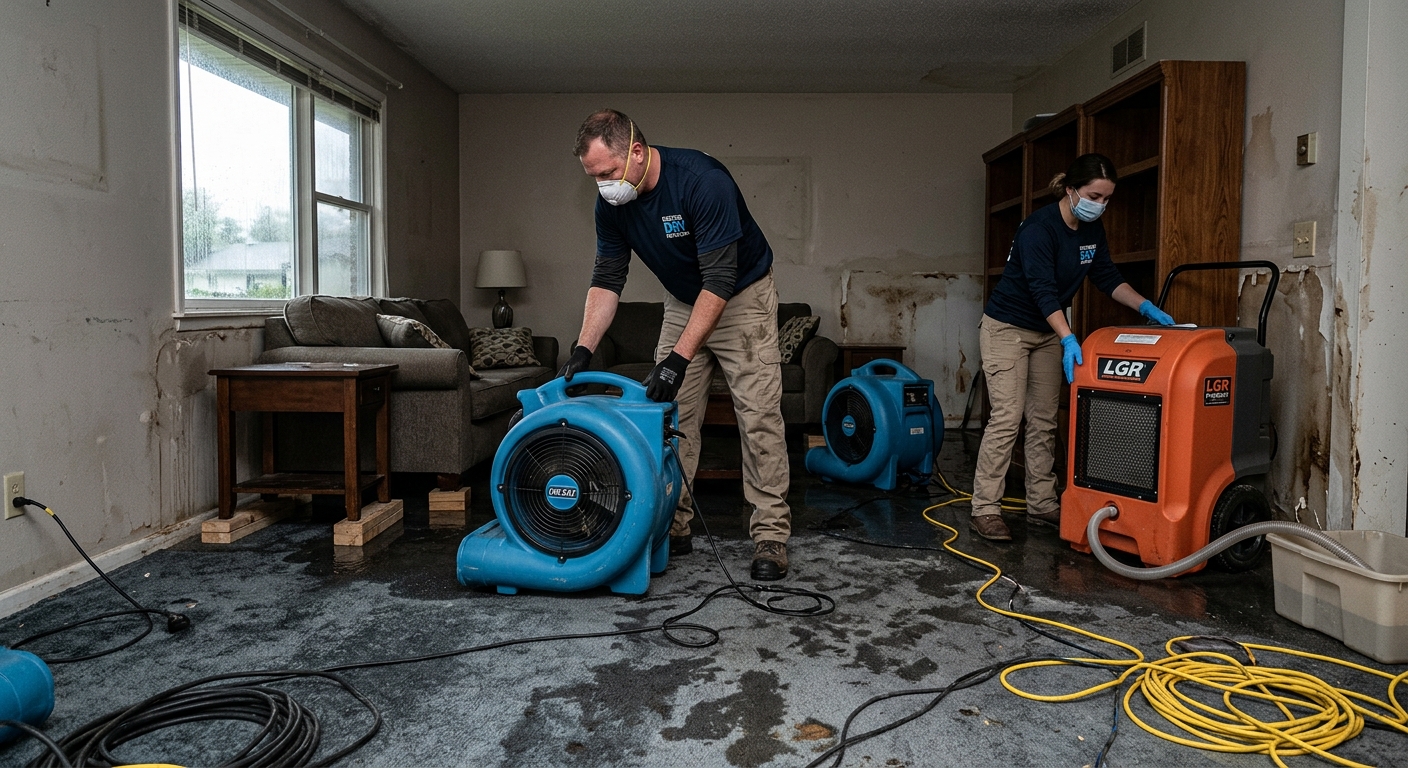
extraction, air movers, LGR dehumidifiers, daily moisture monitoring |
3–5 days |
$1,050–$6,600 |
| Structural drying only (post-extraction) |
drying to standard after water is already out |
3–5 days |
$900–$6,200 |
| Mold remediation with containment |
containment, HEPA filtration, removal, antimicrobial, clearance test |
3–7 days |
$1,300–$9,200 |
| Sewage backup cleanup (Cat 3) |
biohazard protocol, disposal of porous materials, disinfection |
2–5 days |
$2,200–$10,500 |
| Emergency board-up / tarping |
stop further water entry, secure the structure |
same day |
$350–$900 |
Estimates for a typical Williamsport home. Category, affected area and how long the water sat move these figures more than anything else.
Hiring under pressure in Williamsport
If you have active water in your home, you don't have days to research every contractor. In Williamsport and Lycoming County, there are several restoration firms based locally, with other crews traveling in from the region—it’s not like a big city where you can expect a tech at your door in 45 minutes. You need to screen fast, but missing a step can leave you exposed financially or legally.
First, before anyone comes over, confirm these three things on the phone: (1) They're registered as a Home Improvement Contractor (HIC) for Pennsylvania jobs over $500, (2) they carry current liability insurance and workers’ compensation (for any crew with employees), and (3) their lead technician on site has current IICRC certification for water damage or mold if relevant.
Before the first fan or dehumidifier is brought inside, you should have these three documents in hand: (1) a signed written contract as required by the Home Improvement Consumer Protection Act for jobs over $500, (2) a certificate of insurance with your name and address on it, and (3) a clear written scope or work authorization spelling out what actions are included at what price range—no verbal “just trust us.”
- Is the contractor listed on hic.attorneygeneral.gov?
- Will they provide a written contract before starting?
- Do they have current liability insurance with proper coverage?
- Is workers’ compensation covered for all onsite crew? (Check at wcais.pa.gov.)
- Will a certified IICRC technician be on site?
- Will you receive a clear, itemized estimate before any demolition or removal?
- Do they have references from recent Williamsport or Lycoming County jobs?
- Will all mold remediation include post-clearance testing?
- What is their timeline for mobilization and setup?
- Does the contract state your right to a three-day cancellation?
Watch for pressure tactics: crews unloading before you authorize work, leaving contract sections blank, or pushing for signatures before you see pricing or insurance documents. In Williamsport, slow the process just enough to protect yourself—don’t sign anything incomplete.
Why below-grade water is its own problem
Most Williamsport homes have full basements, which means water below-grade isn’t just another wet room. Basements sit beneath the soil, so any seepage or sump failure brings unique complications. Unlike upstairs leaks, water in a basement can’t drain out by gravity—water follows the path of least resistance, and with a foundation three feet below the frost line, it tends to linger. That long frost season here just keeps the ground saturated.
Hydrostatic pressure is real—groundwater can force its way through walls or slab cracks, and once inside, it raises humidity fast. Williamsport’s housing stock, often from the mid-20th century, typically includes older sump systems with no battery backup. Once the power’s out, or pumps fail, water accumulates quickly. If your basement is finished—framed walls, drywall, carpet—restoration is automatically more involved. It’s not just about extraction: wall cavities get wet, framing soaks up moisture, and hidden mold risk jumps. The same inch or two of water in a finished basement can more than double what needs to be removed, dried, and sometimes rebuilt versus a bare concrete space.
Any restoration here must check the full perimeter for trapped water behind walls and beneath cabinets. Otherwise, you risk lingering odors, warping, or worse—hidden rot and future mold growth in places you won’t see until the next loss.
Credentials and permits for restoration work in Williamsport
Pennsylvania does not license water damage restoration or mold remediation contractors. A business card alone means very little. Here, the industry follows IICRC S500 and S520—insurers expect crews to be IICRC-certified, but it’s not legally required. Always ask to see the lead technician's IICRC card with their name.
Permits generally aren’t needed in Williamsport for mitigation—water extraction, drying, cleaning, or mold remediation. A permit is required only if the project involves reconstruction (replacing drywall, trim, cabinets, or any structural work). That’s enforced locally by the City of Williamsport Bureau of Codes.
Insurance and workers’ compensation matter, especially since anyone working on your property unprotected can become your liability. Ask for a certificate of insurance—don’t take “we’re covered” at face value. For workers’ compensation, Pennsylvania employers must be covered and you can verify it directly at wcais.pa.gov. HIC registration is required for contracts over $500; check hic.attorneygeneral.gov for current status.
Before work begins, get (1) a contract in writing describing the scope and pricing, (2) a copy of insurance, and (3) confirmation of who will be on site and their credentials. Be wary of anyone brushing these aside.
Category 3 cleanup in Williamsport
Category 3 water losses—often sewage backups—aren’t just unpleasant. They contain serious pathogens and require completely different handling from clean or “gray” water. It’s not just “dirty water with a worse smell.” Professional crews in Williamsport use full PPE: respirators, protection suits, and gloves. Proper containment is critical to keep what’s in the basement from traveling upstairs or contaminating your HVAC system.
In Lycoming County’s older homes, porous materials like carpet, drywall, or insulation that have come in contact with sewage must be removed—disinfection chemicals alone are not enough. Contents may need to be disposed of per hazmat protocols. After removal, spaces are thoroughly cleaned and deodorized before any rebuilding begins. It’s usually safest to be out of the area until after remediation is complete, especially for kids, elderly residents, or those with weakened immune systems.
Williamsport’s sewer backup risks are made worse by older infrastructure and basement plumbing. The best defense is installing backflow prevention valves. Right now, cost-sharing for this equipment is not standard in our municipalities—homeowners bear the cost, but it is worth asking your plumber or local codes office if incentives have changed.
Expect professional cleanup here to fall between $2,200–$10,500, depending on scope. Cutting corners here is not worth the risk of serious health issues or denied insurance claims down the road.
What insurance covers — and the exclusion that surprises people
Most major disputes in Williamsport water damage claims come down to this split: sudden, accidental water from inside—think a burst supply line or failed washing machine hose—is typically covered by homeowners policies. But when the water enters from outside—from flooding, surface runoff, or river overflow—it’s generally excluded from standard coverage. If your finished basement was inundated as the West Branch Susquehanna rose, you’ll need separate flood insurance, and many discover this too late.
Slow leaks and neglect trigger exclusions too. If damage is traced to a pipe that dripped for months or water that collected due to deferred maintenance, coverage may be denied—even if the cost is high. Sewer backups are not included in most Lycoming County policies by default—a specific rider must be added, and you’ll only know if that box was checked by reading your own declarations page.
Insurers settle using actual cash value (depreciated) or replacement cost. Know what yours pays out before work starts. When your contractor prepares a “scope of loss” document, it’s the detailed estimate insurance adjusters use to price what is—and sometimes isn’t—restorable. Confirm you get a copy.
Direct billing and assignment of benefits can seem convenient—you sign paperwork and let the restoration company deal with your insurer. But you give up some control: the company deals directly with adjusters, and you rely on their documentation if disputes arise.
Pennsylvania’s Home Improvement Consumer Protection Act requires a written contract for jobs over $500 in Williamsport and gives you three business days to cancel after signing. If a contractor offers to “waive your deductible,” that’s a red flag—they’re violating state law, exposing you to denied coverage or even fraud claims. Always pay your deductible directly to keep the claim above board.
How long the whole thing takes
Restoration after a water loss in Williamsport happens in two distinct phases, though they often blur together in a crisis. First comes mitigation—removing standing water, setting up drying equipment, and preventing mold. This usually lasts 3–7 days, is urgent, and may be billed directly to your insurer if coverage is confirmed.
Once everything is dry and or cleaned, there’s often a pause: the equipment disappears, but the damaged walls, flooring, or built-ins are still torn up. This limbo between mitigation and reconstruction is normal, but it catches many homeowners off guard. Permits may be required for structural repairs or major rebuilding, triggering a new process. Reconstruction can take weeks (sometimes months), depending on material availability and how quickly a qualified crew is scheduled. Williamsport’s market is moderately dense, with local firms and traveling crews, so you might wait longer for the best finish work, especially during peak season or after a regional flood event.
If the gap between phases drags on, don’t assume you’ve been abandoned—reconstruction is a separate contract and crew. Check with your original mitigation contractor to confirm what’s included and who’s handling the hand-off, so there are no surprises.
Frequently asked questions — water damage restoration in Williamsport
What is the difference between water damage class and category?
In Williamsport, understanding the difference between water damage “class” and “category” can impact both your cleaning approach and your insurance. “Category” refers to the type of water involved: Category 1 is clean (supply lines), Category 2 is gray (washing machines, dishwashers), and Category 3 is black water—sewage or river flooding. “Class” describes the extent and difficulty of the drying job: Class 1 is the least severe (minimal wet material), while Class 4 involves deeply saturated materials and hidden cavities—typical of Lycoming County’s finished basements. Crews must combine both to scope the right drying and demolition—so a Category 3, Class 3 event (like a sewage backup in a fully finished basement) is among the most intensive and costly jobs, sometimes reaching $10,500 for cleanup.
How much does sewage backup cleanup cost in Williamsport?
Sewage backup cleanup in Williamsport ranges from $2,200–$10,500 for a typical residential job in 2026. The price depends on how much space the sewage impacted, how long it sat, and especially whether the area is finished or full of personal contents. Because most Williamsport homes have full basements, even a few inches of Category 3 water can mean removing wall sections, carpet, and insulation—items that can’t be safely restored. These jobs require strict biohazard protocols and proper disposal. Don’t be tempted to cut corners here; insurers in Pennsylvania expect professional documentation for jobs involving contamination.
Why did the crew cut my drywall two feet up?
If you return to your Williamsport home and see drywall cut or removed up to 24 inches from the floor, it's not arbitrary—it’s a standard flood cut for rapid drying and mold prevention in basements or rooms hit by water. In older Lycoming County homes, water wicks up drywall and inside wall cavities, creating a breeding ground for mold you won’t see until too late. By removing drywall above the visible water line, crews can access framing and insulation to thoroughly dry all affected areas, especially in finished basements. After drying, the same contractors or a follow-up crew can rebuild and match finishes, but that step is separate—and the total bill for structural drying may be in the $900–$6,200 range.
Does homeowner's insurance cover water damage in Williamsport?
For most Williamsport homeowners, insurance covers sudden, accidental water damage, like a burst pipe or an overflowing washing machine. These are covered perils under standard policies. What’s not covered—often to people’s surprise—is outside water: floods from rain or the West Branch Susquehanna require separate flood insurance. Gradual leaks, deferred maintenance, or mold resulting from long-term moisture are usually excluded. If a sewer backup occurs in your Lycoming County house, coverage is only provided if you purchased a special rider. If you’re facing a covered Category 1 water loss, for example, expect your policy to cover professional mitigation in the $1,050–$6,600 band, less your deductible.
Is basement flooding covered by insurance in Pennsylvania?
Basement flooding in Williamsport—or anywhere in Pennsylvania—is generally not covered by standard homeowner’s insurance if the water comes from outside (groundwater, river overflow, surface runoff). That’s considered “flooding,” and a separate flood policy is required. However, if your basement floods because of a burst pipe inside your house, that’s usually a covered peril. The fine print matters, and many find out the hard way that their standard policy excludes the exact loss they’re suffering. If your house is one of the 86.3% built before 1980 (U.S. Census Bureau, ACS 2024), check for sump or sewer backup riders as well. Restoration after a covered event might cost $1,050–$6,600 just for extraction and drying.
What should I do in the first hour of a water leak?
If you discover a new water leak in your Williamsport home, first shut off the water supply at your main valve. Cut power to affected circuits if you can safely reach your electrical panel, especially if the water is near outlets or appliances. Move valuables and electronics to a dry spot upstairs—don’t risk your safety for anything replaceable. Photograph the damage as soon as possible; documentation will help with insurance and any restoration contractor you bring in. Call your insurance company and describe what’s happened—they may have a preferred vendor for mitigation, but you are not obligated to use their first suggestion. Most importantly, don’t delay: the clock starts on damage and potential mold risks right away. Initial extraction and emergency drying will likely fall in the $1,050–$6,600 range in Williamsport.
Can I clean up water damage myself in Williamsport?
You can handle minor water incidents in your Williamsport home—like a toilet overflow that stayed on the tile and was caught quickly—but be cautious. If water has reached walls, carpeting, or soaked a basement floor (especially in an 80-year-old house), you’re dealing with potential hidden damage, structural drying needs, and mold risk. DIY cleanup won’t be sufficient if water was present for more than 24 hours or if you suspect contaminated water is involved. Insurance will often deny claims for “incomplete mitigation.” For most full-room events, especially if they involve a Category 2 or 3 water source, hiring a certified professional is both safer and often covered (in the $1,050–$6,600 range for basic extraction and drying).
Can a contractor waive my deductible in Pennsylvania?
No, it is illegal for a contractor to waive your insurance deductible for water damage restoration in Pennsylvania, including Williamsport. This is clearly stated under state law and is part of the Home Improvement Consumer Protection Act. Any offer to “cover” your deductible or to write up an inflated invoice is a warning sign of possible fraud—and may lead your insurer to deny the claim outright or refuse to pay the contractor. The only proper way is for you, the homeowner, to pay your deductible directly, and your insurance to pay their share according to your policy. This practice protects you from inflated restoration bills—unethical contractors sometimes ignore real scope, and you end up with worse repairs or legal risk. For a covered loss (say, an extraction and drying job in the $1,050–$6,600 range), you’re responsible for your deductible, period.
What does mold remediation cost in Williamsport?
Mold remediation with containment in Williamsport typically runs from $1,300–$9,200 in 2026. If your Lycoming County home has a finished basement and mold is found inside wall cavities after a water event, expect costs near the higher end of that range. Lower costs apply to surface growth or isolated spots in unfinished areas. Proper remediation should always include setting up containment (to avoid cross-contamination), HEPA filtration, full removal of affected materials, antimicrobial treatments, and, ideally, a clearance test after cleanup. Cutting corners can mean hidden mold, which comes back months later—especially in our long, damp winters. Always confirm your contractor follows IICRC S520 standards, as that’s what insurance adjusters in Pennsylvania rely on for claims approval.
How does north-central Pennsylvania's climate affect drying times?
North-central Pennsylvania, including Williamsport, has long heating seasons and some of the state’s highest ground snow loads. The climate here—cold winters, high ground moisture, and frequent freeze-thaw cycles—means basements and crawlspaces rarely “air dry.” A typical structural drying job in Williamsport will take 3–5 days with professional-grade equipment (in the $900–$6,200 band), but subfloor, wall cavity, and insulated areas can take longer in winter. Humidity control is crucial, and older homes built before 1980 often require extra monitoring and equipment because of difficult-to-access framing and hidden voids. Always let your contractor leave equipment running for the full recommended duration to avoid future mold and structural issues.