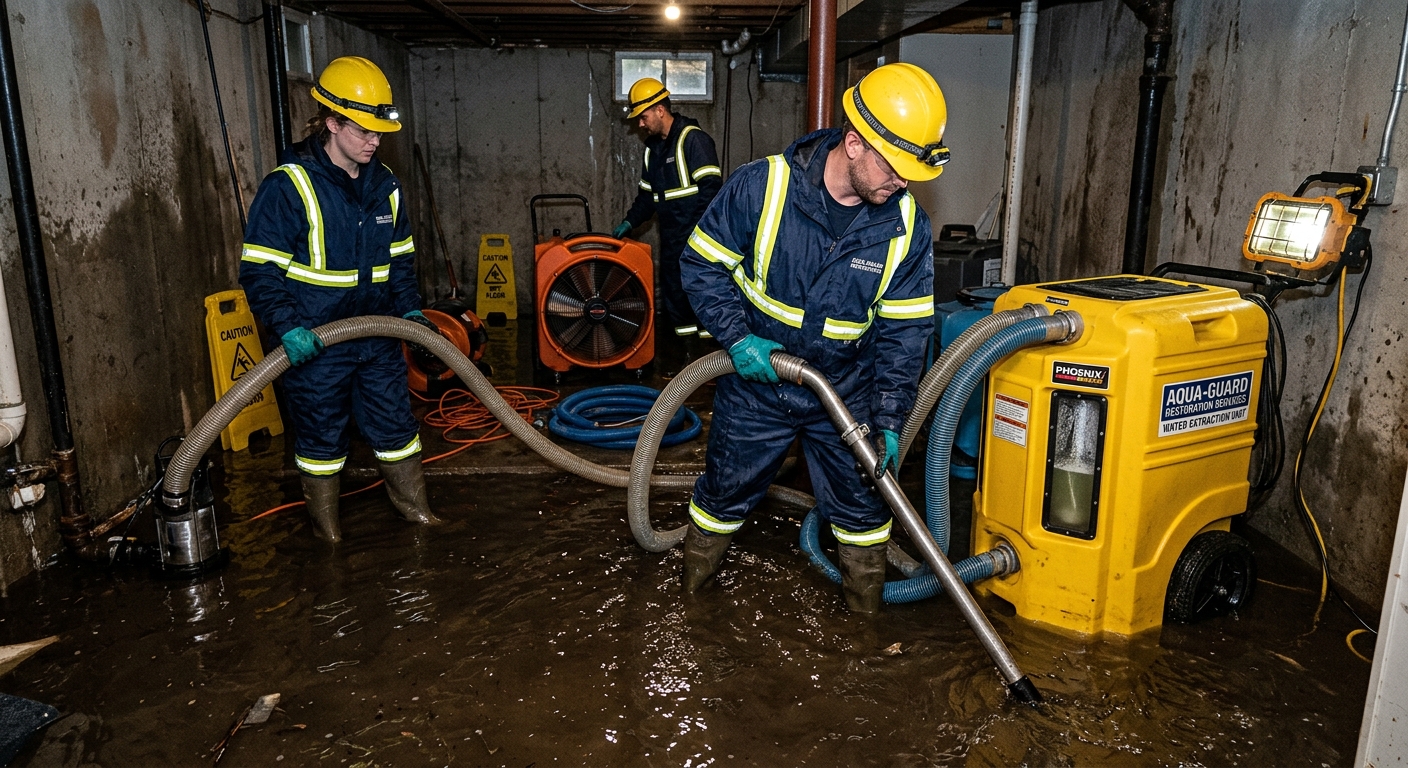
What water damage restoration costs in Paradise
If you’re reading this in Paradise with wet carpets or a flooded basement, time matters — and so does cost. In this corner of Lancaster County, water losses are shaped by the age and construction of our homes. More than half of local houses were built before 1980, and Paradise reflects this with classic basements and older plumbing that makes leaks and sudden breaks common. Homes here are mostly single-family with foundations built to withstand the freeze-thaw cycles of south-central Pennsylvania, but when pipes fail or sewers back up — especially in multifamily and older rowhouses near Lancaster city — the resulting projects can get complicated and price bands wide.
The price you’ll pay depends on how long water sat, the type (clean, gray, or black/sewage), and how many rooms or units are affected. Here are real numbers, based on 2026 estimates for Paradise-area jobs:
| Service |
What it covers |
Typical duration |
Price range |
| Water extraction + emergency drying (Cat 1) |
extraction, air movers, LGR dehumidifiers, daily moisture monitoring |
3–5 days |
$1,250–$7,800 |
| Structural drying only (post-extraction) |
drying to standard after water is already out |
3–5 days |
$1,050–$7,300 |
| Mold remediation with containment |
containment, HEPA filtration, removal, antimicrobial, clearance test |
3–7 days |
$1,550–$11,000 |
| Sewage backup cleanup (Cat 3) |
biohazard protocol, disposal of porous materials, disinfection |
2–5 days |
$2,600–$12,500 |
| Emergency board-up / tarping |
stop further water entry, secure the structure |
same day |
$350–$900 |
Estimates for a typical Paradise home. Category, affected area and how long the water sat move these figures more than anything else.
After the repair: hardening the house
Once restoration work is finished, some upgrades make a lot of sense here in Paradise, given the 12 °F winter design temperature and the reality of old plumbing in local homes. The single best dollar you can spend is replacing old washing machine and water heater supply lines (often under $220–$380 each with labor). These burst more in late-winter freeze-thaw cycles that we get in Lancaster County. Next, automatic water shut-off valves, which sense leaks and kill the main: install cost runs $480–$1,900 depending on existing plumbing and digital integration. These are peace-of-mind investments, especially for older or multi-family buildings.
Battery backup sump pumps ($620–$1,390 total) are also worth strong consideration, especially in homes with basements and exposure to power outages, as is common with spring rains along the Conestoga River. If your home sits near older sewer lines, a backflow valve ($950–$2,200) can be effective if your line is accessible, but it’s not worth the trouble if your sewer has modernized already. Water heater pans and floor drains (both under $180–$450) help but won’t stop widespread damage from pressurized lines giving out. Wireless leak sensors ($40–$120 each) go under sinks, appliances, and in basements — they’re cheap insurance and work for almost any house in Paradise. Skip “miracle” coatings or sprays: they don’t work here and won’t stop a real loss.
What to do right now
If water is still coming in at your Paradise address, the main shut-off valve is your first target. Head for it — don’t look for where water’s coming from. Only kill power at the panel if you know it’s dry and safely accessible (wet, old basements are common here and it’s not worth the risk). Photograph the scene before you move a single thing — use your phone, angle wide, and capture every item and detail. Next, get rugs, boxes, and anything you can safely carry off wet flooring to someplace dry. Never try to vacuum up water with a household vacuum — it’s a fire and shock hazard, especially with our full-basement homes. Leave the big stuff where it is for now.
Once the scene is safe, call your insurer before or at the same time as a restoration contractor. There’s no penalty for calling the restoration crew first, but the sooner you open a claim, the sooner coverage decisions and payment can start. Paradise is in a service area full of national restoration companies, so response is usually measured in hours — but do not wait until morning. Mold gets its foothold inside 24 hours, and every hour you leave water to sit moves you closer to a $1,550–$11,000 remediation and possibly denied coverage for “deferred action.” The biggest mistake? Taking a wait-and-see approach. Move fast, document everything, and let the pros do the drying.
Outside water, inside water
Paradise sits between the Conestoga River and the Little Conestoga Creek — both are well-known sources for flood claims in Lancaster County. The distinction in water damage insurance is not academic here: water driven inside by river or creek flooding is never covered by a standard homeowner’s policy. If your address touches a designated flood zone or sits near either waterway, you need to purchase flood insurance as a separate policy. This process carries a waiting period (typically 30 days), so you cannot buy it in response to a forecast or once waters are rising.
The confusion for Paradise homeowners is that river floodwater and broken-pipe water look identical after the fact, and the restoration work can look similar. But if a claim is caused by overland flooding from Conestoga River overflow, the adjuster must process it with or without coverage depending on your flood policy status. Burst pipes, sewers, and appliance leaks are handled under standard coverage, but external water incursions are not. If you’re unsure of your address’s exposure, check FEMA flood maps or ask your insurer to clarify. Don’t assume — because in Paradise, those boundaries shape property risk, claim payouts, and how you should plan mitigation work.
Credentials and permits for restoration work in Paradise
Paradise sits under Pennsylvania rules, but the state does not license restoration or mold remediation contractors — this means any company can print a business card, so it’s on you to ask tough questions. The insurer-expected standard here is IICRC S500 for restoration and S520 for mold; this is a certification, not a license. Ask to see the lead technician’s IICRC card with their number before work starts. In Lancaster city, permits are triggered for structural reconstruction after Category 2–3 losses — but not typically for initial drying or equipment-only jobs, especially in township parts of Lancaster County.
Before anyone extracts water, your contractor must be registered as a Pennsylvania Home Improvement Contractor (required for any contract over $500) and show proof of workers’ compensation. You can verify the contractor’s HIC registration online; insurance can be checked directly with their carrier or through WCAIS. The contract must be in writing, per state law, with a three business-day right to cancel, and never allow a contractor to “waive” your deductible — it’s not legal in Paradise or anywhere else in PA. Get your contract and credentials in hand before a crew starts.
Salvage decisions after a water loss
When water hits, not everything in your Paradise home is truly lost — but not everything a contractor says is salvageable should be kept, either. Expect to lose fiberglass insulation and carpet pad outright: saturated, they can’t be reliably dried without hidden mold, especially in full basements common throughout Lancaster County. Drywall below the waterline should be cut out and replaced, as even a few inches of standing water in a basement will wick up walls fast. Plaster, which you’ll find in many pre-1940 rowhouses, holds moisture much longer and needs longer drying, but can sometimes be kept if opened early and dried aggressively.
Solid hardwood can sometimes be rescued with specialty drying mats, but engineered wood and most laminate will swell or delaminate past saving. Don’t let anyone promise full salvage of interlocking modern floorboards; it’s not realistic. Cabinets depend on the substrate: solid wood frames on blocks often dry, but particleboard boxes usually need to go. In multi-unit or rowhouse setups typical near Lancaster city, restoration is made more difficult by shared walls and old construction — demolition is often needed to chase water and prevent future mold spread. If a contractor insists on demoing everything without supporting moisture readings, push back. On the other hand, any promise to “dry everything in place” after more than a day or two of soaking is likely a setup for a mold claim down the road.
Contents: pack-out, cleaning and what you can claim
After initial mitigation, you’ll face the job of dealing with the “contents” portion of your insurance claim. Homeowners in Paradise often under-claim or under-document belongings in a rush to clear rooms out. If your contractor offers pack-out, this means items are inventoried, photographed, boxed and moved off-site for faster drying and cleaning — especially valuable in multi-family houses or after sewage backups, which happen in older local sewer segments. Keep a photo record of every item before it moves, not just for replacement but for proof of pre-loss condition.
Some items are nearly always unsalvageable: upholstered furniture and mattresses after Category 3 (sewage) water, or particleboard furniture after swelling. Area rugs and some solid wood pieces can often be restored, especially if cleaned and dried within 24 hours. Your insurance policy separates contents from structure, so you need clear lists: what stays, what goes, and replacement values. Don’t rush to toss everything — items with replacement cost or sentimental value may be restored with modern cleaning, but don’t let “restoration” create extra cost chasing unsalvageable items. In Paradise, clear documentation is the best way to maximize your claim and minimize disputes.
Frequently asked questions — water damage restoration in Paradise
Does Pennsylvania license mold remediation contractors?
No, Pennsylvania does not license mold remediation contractors. In Paradise and across Lancaster County, there’s no state-issued license or registry for mold remediation firms. The industry standard is the IICRC S520 certification, which insurers expect but which any contractor can claim. Ask for the lead technician’s IICRC card before work begins. For Category 1 or 2 drying jobs, expect costs from $1,250–$7,800, while mold remediation with full containment will be higher — but always demand proper documentation of the scope, readings, and post-clearance tests. Without state licensing, it’s on you to vet companies and insist on written contracts and credentials.
How do I know the house is actually dry?
Contractors in Paradise should monitor and record moisture levels daily, using non-invasive meters and hygrometers. “Dry” means building materials (walls, floors, framing) have reached pre-loss or local standard moisture content — and in Lancaster County’s four-season climate, that varies depending on the season but is measurable. Ask for all readings in writing; a reputable company finishing a structural drying job (typically $1,050–$7,300) will leave you a job log with readings for every affected material. If you’re promised “all dry, trust us” with no numbers, don’t sign off — this is the number one way preventable mold pops up down the line.
Does insurance cover mold after water damage?
Mold coverage in Pennsylvania, including for Paradise residents, often comes down to the cause of the loss and how promptly you respond. If you report and mitigate water damage fast — within the first 24–48 hours — your standard homeowner’s policy will usually cover mold remediation tied directly to that event. Wait longer, and coverage can be declined as “neglect.” Mold remediation here averages $1,550–$11,000 depending on area and contamination level. Always document dates, photos, and communications with both the contractor and insurer to maximize coverage and prevent denial based on delay.
Can hardwood floors be saved after flooding?
Solid hardwood floors in Paradise homes, especially those in older full-basement houses, can sometimes be salvaged if drying starts within 24 hours. Specialty mat systems and dehumidification can work for sealed planks and smaller affected areas, with costs running alongside structural drying jobs ($1,050–$7,300). However, engineered wood or laminate usually don’t survive — swelling and delamination are irreversible. If a contractor promises a magic cure for all damp floors, be skeptical. Honest firms will test and explain case-by-case possibilities, especially in Paradise’s common multi-unit or row-style properties with shared floors.
Is a shop vacuum enough for standing water?
Don’t rely on a household or shop vacuum for standing water in Paradise basements. Full basements, especially in our older housing stock, hide water behind walls and under floors — something a shop vac cannot reach. In addition, using electric vacuums with standing water can be a shock hazard in old buildings. Professional water extraction, which costs $1,250–$7,800, uses powerful pumps and prescribed air movers to dry the structure safely and completely. Trying to “DIY” the first steps and waiting to call for help is the most common way homeowners end up with large mold remediation bills later on.
How much does a flooded basement cost to restore in Paradise?
The cost to restore a flooded basement in Paradise depends on flood source, contamination, and how long water sat. If it’s clean supply water and you act quickly, expect $1,250–$7,800 for extraction and emergency drying. If sewage is present, cleanup can climb to $2,600–$12,500 due to biohazard risks and disposal regulations. Typical Paradise jobs hit the middle of those bands. Delays in calling for help or discovering mold can mean higher post-mitigation expenses. In full-basement homes (the common style here), the cost also factors how much drywall and insulation need to be removed and replaced.
Is sewer backup a known problem in Paradise?
Yes, sewer backups are a documented risk in areas across Lancaster County, including Paradise, especially in neighborhoods connected to older combined or aging sewer systems managed by the Lancaster Area Sewer Authority. Sewage backups are classified as Category 3 losses and require specialized cleanup and disinfection, with cost bands between $2,600–$12,500. If your property is in a known problem area, it’s wise to ask your plumber about installing a backflow valve and confirm your insurance covers “backup of sewers and drains.” Waiting to report or address contamination can create denial risks with both insurers and health authorities.
Is emergency after-hours service more expensive in Paradise?
In Paradise and throughout Lancaster County, after-hours service is available from multiple national and local restoration companies, but pricing does not usually increase just for night or weekend calls. The larger factor is loss severity — the category of water and affected area shape the bill, not the time the crews arrive. For example, both a Sunday leak and a midday leak with similar damage would be billed in the range of $1,250–$7,800 for clean water extraction and drying. The key is to call early; price jumps when secondary damage or mold develops, not because you needed help at 2 a.m.
Is it safe to stay in the house during drying?
For most Category 1 water events in a typical Paradise home, you can usually remain in place as long as power is safe and equipment is properly set up, but it’s noisy and can be drafty with open walls and running dehumidifiers. Keep in mind, if the loss involves sewage or Category 3 contamination, you should relocate until verified clean-up is complete — especially for immune-compromised individuals. Drying and restoration in Paradise (ranging $1,050–$7,300) includes air quality and containment protocols, so ask your contractor for a safety overview up front. Children and pets should always be kept clear of affected areas during active drying and demolition.
Is basement flooding covered by insurance in Pennsylvania?
Basement flooding in Paradise is only covered by homeowner’s insurance if the water comes from inside — think burst pipes or water heater ruptures. Water entering from the Conestoga River, Little Conestoga Creek, or overland surface intrusion is excluded unless you carry a dedicated flood policy, which must be in place before an event ($1,250–$7,800 for standard water extraction, not counting any uncovered losses). Insurance policies split “flood” from “water damage” — knowing your risk and policy terms before a loss is the key. If you’re in a low-lying or creek-adjacent part of Paradise, don’t assume — check NFIP eligibility with your insurer now, not after a wet basement.