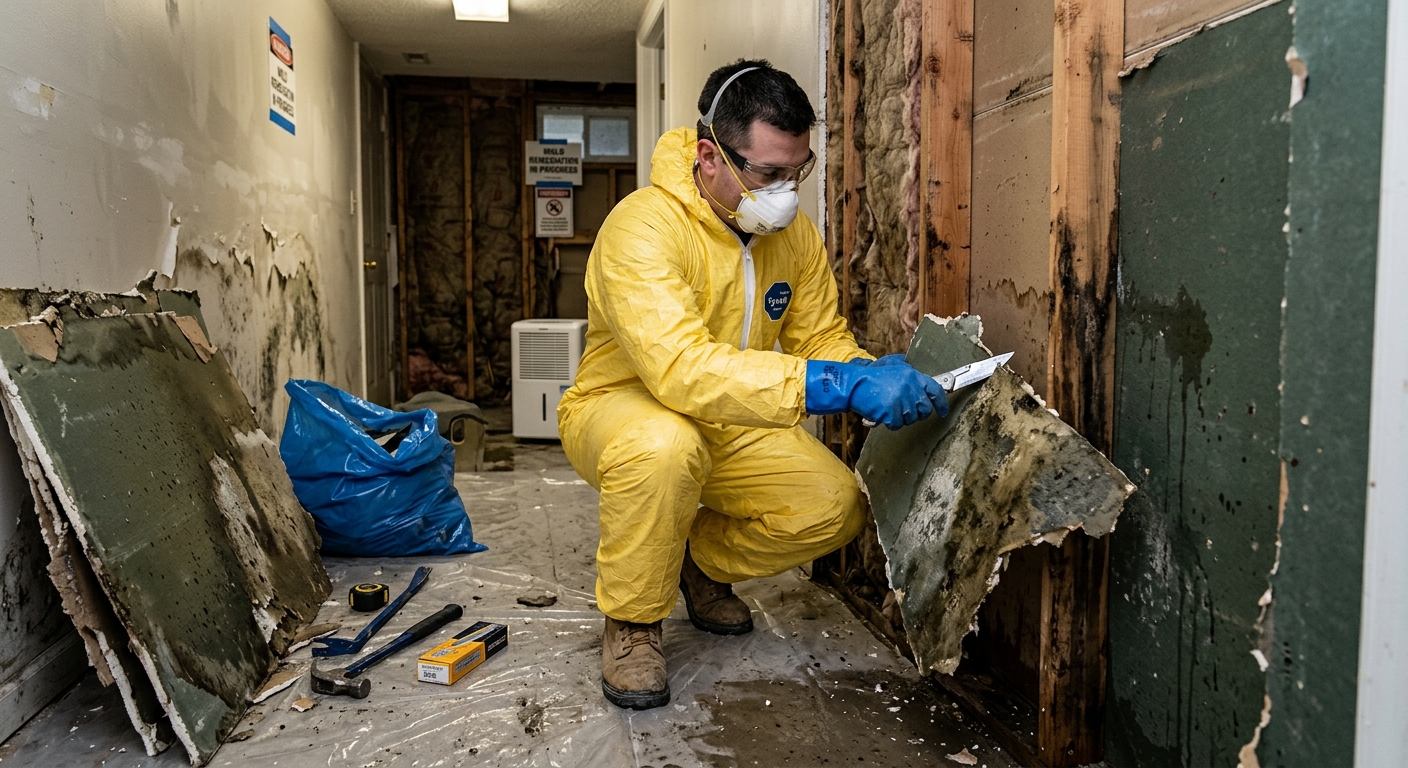
water damage restoration costs in Washington — 2026
If you’re looking up water damage restoration prices in Washington, PA right now, there’s a good chance you or someone you know is dealing with active water in the house. With nearly 90% of homes in Washington County built before 1980 and most properties relying on full basements—common in this county’s hilly postwar neighborhoods—the odds of sump pump failure or seepage are high. That typical postwar construction means repairs often go deeper than surface drying, and many homeowners here underestimate the costs.
Here are typical 2026 price ranges for professional water mitigation and restoration services in Washington County. These numbers reflect the reality of structures that almost always have a basement, often with aging supply lines or older plaster walls. Prices swing most based on how long the water has sat and whether it’s clean water or a sewage backup.
| Service |
What it covers |
Typical duration |
Price range |
| Water extraction + emergency drying (Cat 1) |
extraction, air movers, LGR dehumidifiers, daily moisture monitoring |
3–5 days |
$1,100–$6,800 |
| Structural drying only (post-extraction) |
drying to standard after water is already out |
3–5 days |
$900–$6,400 |
| Mold remediation with containment |
containment, HEPA filtration, removal, antimicrobial, clearance test |
3–7 days |
$1,350–$9,500 |
| Sewage backup cleanup (Cat 3) |
biohazard protocol, disposal of porous materials, disinfection |
2–5 days |
$2,300–$11,000 |
| Emergency board-up / tarping |
stop further water entry, secure the structure |
same day |
$350–$900 |
Estimates for a typical Washington home. Category, affected area and how long the water sat move these figures more than anything else.
Credentials and permits for restoration work in Washington
Pennsylvania does not license contractors specifically for restoration or mold work. This means that a company’s business card, letterhead, or claim to “certification” has no weight with the state. Instead, most insurance companies and adjusters in Washington County expect contractors to follow IICRC S500 for water damage and IICRC S520 for mold remediation. You should always ask to see your lead technician’s IICRC card—a reputable Washington-area firm will have no problem showing you.
Permits generally aren’t needed for water extraction, drying, or cleaning in places like Peters Township. But if your property in the City of Washington needs interior reconstruction involving framing as part of the repair, you should expect to pull a building permit through the city’s code enforcement office. Always check your local municipality’s requirements if you aren’t sure where you fall.
Before any crew does work over $500 in Pennsylvania, you should see a written contract (HICPA requires this), and you have the right to cancel within three business days. To check that a company is registered as a Home Improvement Contractor, use hic.attorneygeneral.gov. For workers’ compensation insurance, ask for a certificate and verify via WCAIS (wcais.pa.gov). Always get scope and pricing in writing before work starts—an honest crew will not pressure you to sign off on a blank or open-ended invoice.
Your belongings after a water loss
Contents are often the most overlooked part of a water claim for Washington homeowners. In most cases, professional restoration companies handle a “pack-out,” where damaged and undamaged belongings are inventoried, photographed, and moved safely off site for cleaning or drying. This process is important because insurance policies treat your contents (personal belongings) separately from the structure itself—getting what you’re owed depends on documenting losses upfront.
Before a single item is moved, photos from all angles—including serial numbers and make/model tags—are essential. Restoration crews will use barcodes or inventory forms, but most property owners in Washington County will want their own photos for claims backup. Off-site contents cleaning facilities use methods like freeze drying for documents or specialized wash systems for soft goods, but some items usually can’t be salvaged after a major water loss—especially with sewage or long-standing water. Upholstered furniture exposed to Category 3 water, particleboard cabinets and shelves (which swell and crumble), and most mattresses are almost always a loss. Items like solid wood furniture, electronics that were above the water line, and non-porous items are generally worth cleaning and restoring.
Washington's housing and its water damage profile
Washington County’s housing is overwhelmingly pre-1980, with nearly 90% built before that year (U.S. Census Bureau, ACS 2024). Most of these homes are postwar construction, favoring full basements, 1950s–1970s supply lines, and a mix of plaster over lath and early drywall. Many homes here have galvanized or copper supply lines which are now at or past their 50–70 year service life, making pipe failure a leading cause of basement water issues.
Cast iron drains are common in earlier homes, often partnered with clay tile in the yard—both far more prone to root intrusion and fracture than modern PVC systems. Interior finishes, particularly plaster on wood framing, can add both time and cost to drying jobs because the materials hold moisture longer than drywall and often require more demolition if mold takes hold. Conversely, homes with older drywall may suffer faster crumbling and require full wall removal sooner. The near-universal presence of a basement means even small leaks can affect wall cavities, insulation, and flooring systems below grade, making thorough inspection crucial after any water intrusion event. Overall, the building stock’s age and materials mean jobs rarely end with just fans and dehumidifiers—selective demolition is usually required.
When water damage becomes a mold problem
In southwestern Pennsylvania’s climate, with its baseline humidity and full basements, mold colonization can begin within 24–48 hours after water intrusion. For Washington homeowners, this short window makes immediate response the difference between a straightforward dry-out and a full mold remediation scenario.
In the first 24 hours, most building materials—especially in typical postwar homes—can be dried in place, limiting the scope to water removal and drying, typically running $1,100–$6,800 depending on area and equipment. If water sits longer than 48 hours, drywall, insulation, and any hidden cavities may need to be opened up, and the price more often falls near $2,700 for structural drying and selective demolition after extraction.
Once mold growth is active (often as early as day three), full containment, HEPA air filtration, and clearance testing become necessary. This can move your cost into the $1,350–$9,500 band for professional remediation with proper verification. A clearance test means a third party samples the air or surfaces after work and verifies the area meets IICRC S520 standards—your insurer or buyer may require this in writing.
Local humidity and basement conditions in Washington County—where homes are often below grade and moisture can linger in block or stone—push the need for rapid, professional intervention. The earlier the water is removed, the lower the cost and disruption.
What actually reduces water loss risk in Washington
For Washington County homeowners, some upgrades deliver far more value than others. The highest return comes from replacing aging washer and water heater supply lines—if your house still has 1950s–1970s rubber or galvanized flex lines, swap them for stainless braided lines for under $250–$400 per appliance. Automatic water shutoff valves cost around $500–$1,100 installed, and are most worthwhile if you travel often or have a finished basement.
A sump pump with battery backup—critical in our hilly, basement-heavy county—runs $700–$1,800 installed. For homes near Chartiers Creek or in areas with chronic sewer issues, a backflow valve ($900–$2,400) adds another layer, but isn’t needed in every house. Putting water heater pans and floor drains in laundry/furnace rooms offers cheap insurance—parts run $60–$180 plus basic labor.
Don’t waste money on “smart” leak sensors in unfinished basements unless you have finished spaces below grade. Place any sensors or shutoffs close to supply pipes in the lowest part of the house. With a 36-inch frost depth and 8°F winter design temperature, pipe freeze in crawlspaces happens—insulate and air-seal where cold meets plumbing.
Basements: where most Washington losses happen
Nearly every house in Washington County has a full basement, thanks to postwar building patterns and rolling terrain. This below-grade space is the most common scene of water losses here, especially as hydrostatic pressure builds during freeze-thaw cycles and heavy rains force water through block, stone, or weak walls. Unlike above-grade spaces, basements don’t allow gravity drainage—once water enters, evaporation is slow, and humidity rises quickly. This sets up ideal mold conditions and hidden damage, especially behind finished drywall and paneling.
The single most frequent cause of big losses is sump pump failure. In most homes, a simple float failure or power outage drops water right onto finished flooring or wall cavities. Installing a battery backup is the only reliable way to buy hours during a storm. If your basement is finished, expect that even a minor flood will impact insulation, wall framing, and floors—doubling both demolition and restoration scope compared to unfinished space. Drying times stretch, surfaces trap moisture, and hidden mold becomes likely if drying doesn’t start quickly.
With a local frost depth of 36 inches, seasonal freezing can drive basement wall cracks and aggravate seepage, especially in older homes clustered near creek banks or areas with clay subgrade. Basements here don’t just store boxes—they routinely demand professional drying and careful inspection after any water event.
Frequently asked questions — water damage restoration in Washington
What water damage can I safely handle alone?
For a typical Washington homeowner, you can tackle small clean water spills on non-porous floors (like tile or vinyl), provided you’re certain the source is not contaminated and you remove water within the first few hours. Removing a few gallons from a surface with towels or a wet/dry shop vac is reasonable. However, most losses here involve basements, wall cavities, or older building materials that hold moisture—harder to fully dry out without professional tools. If any water sat for more than 24 hours, or if drywall, insulation, or finished basements are wet, professional extraction and drying are the only way to prevent mold and structural issues. Dry-outs run from $900–$6,400, and that can easily be recouped through your insurer if you act fast. Never attempt cleanup of sewage or water that’s traveled across multiple rooms, as hidden hazards are likely.
Can hardwood floors be saved after flooding?
In Washington County’s older homes, true hardwood floors (not laminate) can sometimes be saved if clean water is removed within 24 hours, and professional drying equipment—like LGR dehumidifiers and floor mats—starts right away. Costs range from $1,100–$6,800 for extraction and specialty drying, depending on square footage and how much water reached subflooring. After two days, wood begins to cup and buckle, and the odds of full restoration fall sharply; mold risk rises, especially with our region’s humidity. Engineered or laminate flooring, common in finished basements here, typically swells beyond repair once saturated and must be replaced. If water came from a sewer backup or sat unseen under flooring, replacement is almost always required for health reasons.
How much does water damage restoration cost in Washington?
Restoration costs in Washington, PA, depend on the kind of water, how much of your basement or living space was affected, and crucially, how long the water sat before anyone responded. For most jobs—water extraction, drying, and basic demo—the cost lands between $1,100–$6,800, with complicated cases like sewage backups running to $11,000 if drywall, insulation, and flooring need removal. Local prices track closely with the need for demolition: old houses with layered flooring or plaster, and finished basements, push scope and cost up quickly. Early response keeps costs down; delays invite mold and turn a dry-out into a much bigger project.
What equipment should a restoration crew bring?
Professional crews working in Washington County should always arrive with high-capacity water extractors, multiple high-velocity air movers, and at least one large LGR (Low Grain Refrigerant) dehumidifier per 500–700 square feet of affected area. For basement projects, moisture meters for wall cavities and non-penetrating meters for hardwood are a must. On mold or sewage jobs, HEPA air scrubbers, containment barriers (poly with zip doors), and antimicrobial products are standard. For a typical dry-out ($1,100–$6,800), expect lots of noisy equipment and daily moisture readings. Crews shouldn’t need anything from you beyond power and access. Be wary if the team shows up with only fans and a mop—Washington homes’ age means hidden problems need real detection tools.
Is basement flooding covered by insurance in Pennsylvania?
In Pennsylvania, standard homeowners’ insurance doesn’t cover water entering through basement walls, floors, or windows from outside sources—like surface water or creek overflows common near Chartiers Creek. Coverage usually kicks in if a burst pipe or appliance inside the house fails; sump pump overflows and sewage backups require specific endorsements or riders. It’s vital to know if your policy includes a backup or sump pump overflow rider—those claims, which can easily cost $2,300–$11,000 for cleanup and restoration, are the most common in Washington’s postwar homes with full basements. Always check your policy’s specific wording before disaster strikes.
Is sewer backup a known problem in Washington?
Yes, the City of Washington has an aging sanitary sewer system with documented inflow and infiltration problems. During heavy rains, it’s not unusual for residents to report basement backups, sometimes with contaminated water (Category 3). Cleanup and restoration for this kind of loss is much different—and more expensive—than simple water extraction. You’re looking at $2,300–$11,000 for full Category 3 protocol: removing affected building materials, disinfecting all surfaces, and clearance testing. If you live in an at-risk neighborhood, consider a backflow valve and make sure your insurance policy includes sewer backup coverage.
Does Pennsylvania license mold remediation contractors?
Pennsylvania does not have a state mold remediation license or board. In Washington County, or anywhere else in PA, there is no state credential beyond basic Home Improvement Contractor registration for jobs over $500. The insurance industry and adjusters expect to see IICRC S520 standards followed—so ask for the lead technician’s IICRC certification card before work starts. Professional mold remediation with proper containment and clearance testing typically costs $1,350–$9,500, depending on area and complexity. Always insist that your contractor documents everything in writing, as there’s no licensed registry to dispute shoddy work.
What should I do in the first hour of a water leak?
In Washington, your first hour matters most. If the leak is safe to access, stop the water at its source (main shutoff or appliance valve). Unplug electronics and move valuables above the waterline. Take clear photos for insurance—both close-up and whole-room. Only remove water yourself if it’s clean and localized. If there’s any sign the water’s been sitting or the area is finished space, call a certified restoration company immediately. Extraction and drying for rapid response jobs average $1,100–$6,800, but the quicker the crew starts, the less likely you’ll need costly demolition or face mold claims. Don’t let anyone start demo unless you have documentation and a written contract in place; Pennsylvania law protects you here.
Does insurance cover mold after water damage?
Most standard homeowners’ policies in Pennsylvania exclude mold damage itself, especially if it’s judged to result from neglect or delayed response. Some policies include limited coverage for mold resulting directly from a covered water loss, up to a cap ($5,000 or $10,000 typical). Washington County homes with frequent basement leaks may struggle if a claim shows long-term seepage. Professional mold remediation, with proper documentation and clearance testing, costs $1,350–$9,500. The best strategy is always immediate water extraction and thorough drying within 24–48 hours to avoid mold claims altogether. Check your policy and ask your agent how losses are defined and what, if any, mold coverage you have.
How much does a flooded basement cost to restore in Washington?
For a typical full basement in Washington County—with its aging homes and frequent sump pump or groundwater issues—a full restoration can range from basic dry-out ($1,100–$6,800) to complete demolition of walls, insulation, and flooring in the case of long-standing or contaminated water ($2,300–$11,000). Finished basements nearly double the cost because every structure—studs, drywall, electrical—needs assessment, and most floor coverings must be replaced. Crews here expect to find hidden water behind paneling or inside wall cavities. Fast action reduces both cost and total scope. Always ask for a full written estimate before agreeing to any major demo work.