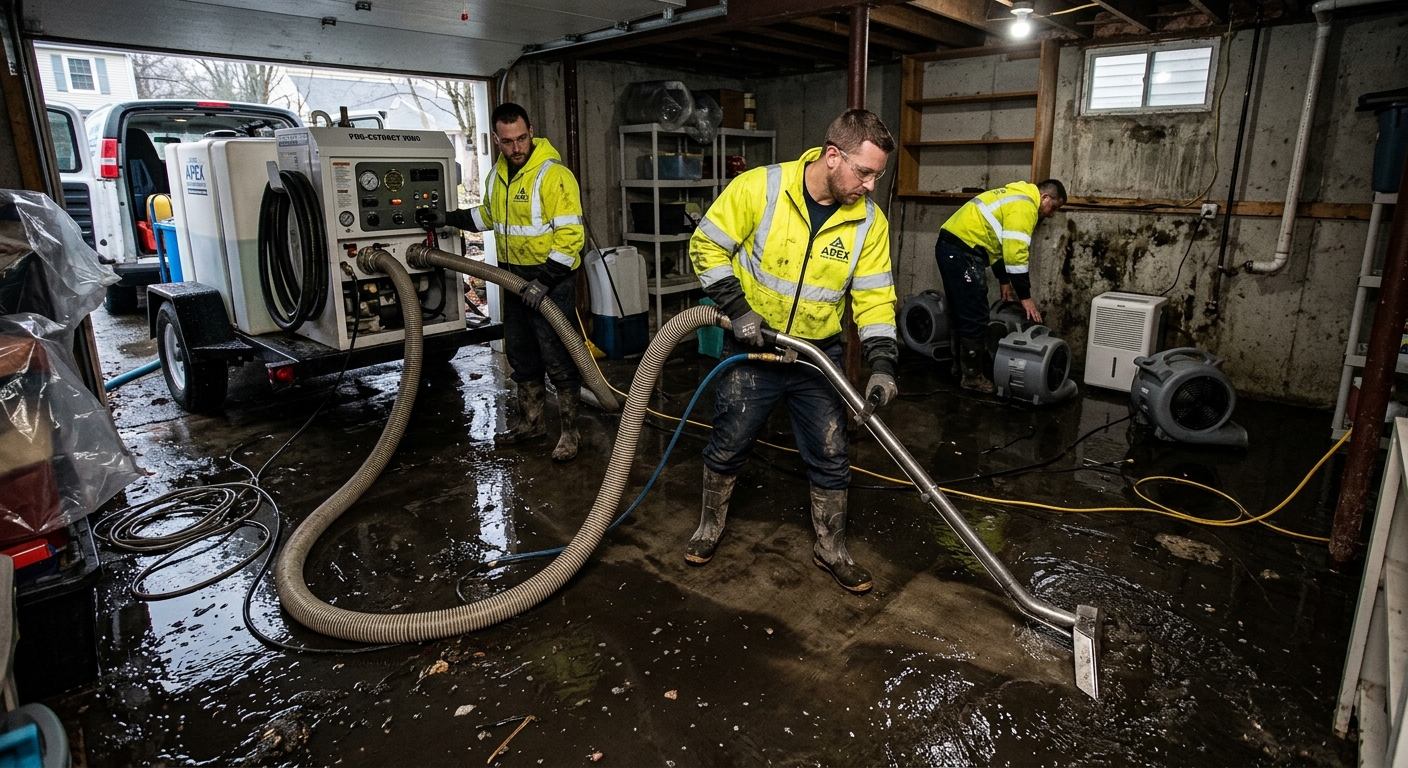
What water damage restoration costs in East Pennsboro
If you're dealing with water damage in East Pennsboro—whether from a recent supply line leak or a backed-up drain—you're likely thinking about both recovery and the bill. In this market, the typical homeowner is working with housing stock where more than half of homes were built before 1980 and 65.6% own their properties (U.S. Census Bureau, ACS 2024). That mix of post-1960 construction and aging plumbing means recurring losses from supply and drain failures, especially in neighborhoods where copper and cast iron are nearing the end of their useful life. In short: water events here aren’t rare, and costs land where the construction era and loss type dictate.
Here’s what you can expect for the most common restoration services in East Pennsboro:
| Service |
What it covers |
Typical duration |
Price range |
| Water extraction + emergency drying (Cat 1) |
extraction, air movers, LGR dehumidifiers, daily moisture monitoring |
3–5 days |
$1,200–$7,500 |
| Structural drying only (post-extraction) |
drying to standard after water is already out |
3–5 days |
$1,000–$7,000 |
| Mold remediation with containment |
containment, HEPA filtration, removal, antimicrobial, clearance test |
3–7 days |
$1,500–$10,500 |
| Sewage backup cleanup (Cat 3) |
biohazard protocol, disposal of porous materials, disinfection |
2–5 days |
$2,500–$12,000 |
| Emergency board-up / tarping |
stop further water entry, secure the structure |
same day |
$350–$900 |
Estimates for a typical East Pennsboro home. Category, affected area and how long the water sat move these figures more than anything else.
Category and class: the two words that set your price
One reason water damage estimates in East Pennsboro surprise people is two overlapping systems: “category” and “class.” These are not the same thing. Category refers to how contaminated the water is—think of it as a spectrum from clean (Category 1) to severe biohazard (Category 3). Class, meanwhile, is about how much and how deeply the structure got wet—how many layers, how far the water traveled, and what had to be cut or dried.
A small Category 3 sewage backup in just half a basement can hit the top end of local pricing—think $2,500–$12,000—while a much larger, clean Category 1 supply line leak may run less if it’s caught before water soaks walls and subfloors. Class matters, but a high-category event multiplies cost quickly, regardless of size. Here’s the big kicker: time. Any Category 1 (clean) water will degrade to Category 2 (gray) after 24-48 hours, then Category 3 if left over 72 hours. So the original source might be “clean,” but after a weekend delay it’s handled and billed as a higher category.
| Classification |
Source or extent |
Health risk |
Cost effect |
| Category 1 — clean |
supply line, appliance line, rainwater |
low |
baseline |
| Category 2 — grey |
washing machine, dishwasher, sump failure |
moderate |
+20–40% |
| Category 3 — black |
sewage, groundwater, water standing 72+ hrs |
biohazard |
$2,500–$12,000 |
| Class 1 |
small area, little absorption into structure |
— |
low end of service |
| Class 2 |
whole room, water into walls and subfloor |
— |
$1,200–$7,500 |
| Class 3 |
saturation from above; insulation and walls wet |
— |
$1,000–$7,000 |
| Class 4 |
deep saturation of hardwood, plaster, concrete |
— |
service upper range |
The first hour: what to do before anyone arrives
If you’ve just discovered water on your basement floor or running down a wall in East Pennsboro, here’s the actionable order: First, turn off the water main if you know where it is and can reach it safely—most main shutoffs are in basements here, where they’re easy to locate. Next, only touch the electrical panel if it’s dry and above the water line—never risk a shock for the sake of flipping breakers. Take clear, well-lit photos of every wet area before moving a single item. Insurers in this area want to see untouched damage for claims on both structure and contents.
If you can safely move contents, prioritize getting items—particularly electronics, wood furniture, and area rugs—up off wet floors and onto dry surfaces. Don’t ever use your household vacuum on standing water; it isn’t designed for this and risks both shock and motor failure.
After basic safety steps, it doesn’t matter much whether you call your insurer or a local restoration company first. The main thing is to document everything with photos and item lists before any removal or extraction. The mistake most homeowners make? Waiting until morning because it’s “just water.” Letting water sit can take a $1,200 job and turn it into a $7,500 demolition plus mold remediation, especially given how quickly things escalate in finished basements with carpet and drywall.
Contents: pack-out, cleaning and what you can claim
Many East Pennsboro homeowners miss out on significant claim dollars simply by not documenting or claiming personal property damaged in a water event. The “contents” side of your policy is separate from the structure—think couches, electronics, books, and clothing. Restoration firms offer pack-out services: they inventory, photograph, and remove goods off-site for cleaning and drying in a controlled facility, then return what’s salvageable after the structure itself is restored.
Before moving anything, take photos from multiple angles—especially of sets or collections. The insurance adjuster needs to see both the damage and that the items were there to begin with. Your claim will go smoother with a line-item inventory: model numbers, serials, fair descriptions.
What’s usually unsalvageable? Upholstered furniture and mattresses exposed to Category 3 (sewage/contaminated) water should be replaced, not cleaned. Particleboard furniture swells and crumbles—it isn’t cost-effective to restore. What’s worth cleaning: real wood furniture, non-porous electronics, metal items, and area rugs exposed only to clean or Category 1 water events (and sometimes Category 2 if acted on fast).
What a Pennsylvania restoration contractor must actually hold
Pennsylvania does not license water damage restoration or mold contractors at the state level. That surprise is worth stating plainly: in Cumberland County, anyone can call themselves a restoration pro, so a magnetic business card means little. Instead, insurers and the industry expect IICRC certification—ask for the lead technician’s wallet card, which shows they know the IICRC S500 (water) and S520 (mold) standards. Your township only requires a permit if the project includes reconstruction—like replacing framing or wall systems, not for initial water extraction or drying.
Contractors must carry Home Improvement Contractor (HIC) registration for contracts over $500; you can verify this at hic.attorneygeneral.gov. Workers’ compensation coverage is mandatory for anyone with employees. Always ask for a certificate that explicitly lists workers’ compensation validated through the state’s system (WCAIS at wcais.pa.gov), and make sure your home’s address is listed as the job site. Never hire on a handshake. Require a written contract before a crew starts—Pennsylvania law gives you a 3-business-day right of cancellation and prohibits any offer to waive deductibles.
Older and newer homes in East Pennsboro
East Pennsboro’s housing is a blend: more than half of homes were built before 1980 (U.S. Census Bureau, ACS 2024), but the region is marked by a wave of post-1960 suburban development in townships like Hampden and Lower Allen. That means you’ll see both old-school cast iron drains and early copper supply lines—each now decades past their typical lifespan and prone to leaks and bursts.
Drying and demolition needs shift by era. In older homes, plaster walls and lath slow down drying and often require more aggressive demolition if water is trapped behind them. Newer homes lean more heavily on drywall, which wicks water up fast—sometimes requiring “flood cuts” 12–24 inches above the floor to prevent hidden mold. Most structures have full basements, built that way to meet local frost-depth requirements, so water incidents often impact finished below-grade spaces where carpet, drywall, and stored contents are at risk.
Don’t assume a 1990s or 2000s subdivision reduces your risk—first-generation copper supply lines, water heaters, and sump pumps are now aging together. Failures in these systems, not historic flooding or storms, are the most common source of insurance claims here. Both eras create water damage, just with different materials and failure modes.
The mold clock: 24, 48 and 72 hours
If your home in East Pennsboro gets wet, your mold risk follows a tight timeline. Colonization can begin within 24–48 hours when temperatures and humidity are right. That’s not theory—it’s why restoration companies race the clock. Within the first 24 hours, you may be able to dry in place, saving finishes with targeted extraction and air movement: the cost here usually lands in the $1,200–$7,500 band for most homes, depending on scope.
At 48 hours, risk increases. Damp drywall and carpeting may require partial removal; the project starts edging toward the higher end of structural drying or supplemental mold prevention work. Post-72 hours (especially in basements, which stay humid year-round due to local freeze-thaw and under-slab moisture), water-damaged drywall, insulation, and flooring are considered high risk for mold and bacteria—even if the original leak was “clean.” Now, restoration moves into selective demolition, full containment, and often a clearance test. Mold remediation with air scrubbing and post-work sampling can run $1,500–$10,500.
Clearance testing means an independent party samples the air or surfaces after remediation, verifying that spore counts meet industry standards. It gives you and your insurer documented proof that the property is clean—and it should always be provided in a written report, not just stated verbally.
Frequently asked questions — water damage restoration in East Pennsboro
Are East Pennsboro basements especially prone to flooding?
East Pennsboro basements face a unique set of risks. The area’s full-basement construction (common to Carlisle and surrounding townships for frost protection) puts more finished and storage space below grade. Add in local creeks—like the Conodoguinet and Yellow Breeches—plus municipal sewer backups, and homeowners here do see basement water claims more often than slab-on-grade homes elsewhere. If you own an older property with cast iron drains or aging sump pumps, these issues compound. When water does get in, the cost to extract and dry a basement typically runs $1,200–$7,500 for clean water, but doubles if the event is a sewer backup.
What water damage can I safely handle alone?
In East Pennsboro, it’s reasonable to mop up minor spills or remove a small area rug, especially if the water is clean and hasn’t soaked into walls or the subfloor. But once carpet, drywall, or insulation are wet—or the water has any odor, color, or comes from a drain—you’re out of “DIY-safe” territory. Trying to vacuum up standing water with household equipment or missing water trapped under baseboards is a common local mistake, leading to bills in the $1,500–$10,500 zone for mold remediation if not handled fast and right.
Does wet insulation have to be replaced?
Most of the time, yes. In the kinds of basements and walls found in East Pennsboro, fiberglass batt insulation loses its R-value and becomes a mold risk once saturated. If the wetting is minimal and discovered almost instantly, it’s sometimes possible to dry “in place” with aggressive dehumidification, especially in a clean water event, but this is the exception. In most losses, especially after 48 hours, expect local contractors to remove and replace insulation as part of demolition, which moves your project cost toward the top of the $1,200–$7,500 range for extraction plus drying, and higher if mold takes hold.
What does structural drying cost if I extracted the water myself?
If you were able to get all standing water up quickly and just need professional help drying carpet, pad, drywall, or subfloor in your East Pennsboro home, you’ve saved good money and time. Structural drying services then typically run $1,000–$7,000 depending on affected area and how long the materials sat wet. The faster you act, the closer you stay to the low end of that range—especially in basements common in local homes, where humidity lingers and slows evaporation without commercial equipment.
What is IICRC certification and does it matter?
IICRC certification (Institute of Inspection Cleaning and Restoration Certification) is the insurer-expected standard for water and mold work—including here in East Pennsboro. Since Pennsylvania does not license restoration contractors, IICRC credentials are the best assurance homeowners have that the company understands safety, drying science, and the standards your adjuster looks for. Always ask to see the lead technician’s IICRC card. Local insurers and adjusters are used to seeing paperwork and pricing grounded in the S500 (water) or S520 (mold) standards—they help keep your claim reasoned and your billings clear. Typical certified companies’ rates fall right in the $1,200–$7,500 band for water extraction and drying.
Does insurance cover mold after water damage?
In East Pennsboro, most homeowners’ insurance policies cover mold only if it’s the direct result of a “sudden and accidental” water event—like a burst pipe or a failed appliance. If the water damage is gradual (say, ongoing seepage or chronic humidity in a local basement), coverage may be excluded or capped. And if a homeowner delays reporting or mitigation, the insurer can argue that the subsequent mold growth was preventable. Mold remediation with containment and clearance testing can run $1,500–$10,500 here—so reporting and action time really matter.
Should I call my insurer or a restoration company first?
In practice, order matters less than you think for East Pennsboro claims. What’s most important is to document damage with photos before you or anyone else starts cleaning. Call your insurer quickly—they’ll document your claim “from the moment you knew or should have known.” Restoration contractors in Cumberland County are used to billing insurance directly, but your claim is smoother when you keep both parties informed. Most extraction and structural drying work locally falls into the $1,200–$7,500 zone—keep receipts and a copy of your contract, since the Home Improvement Consumer Protection Act (HICPA) requires written agreements over $500.
What if the insurer's estimate is lower than the contractor's?
Sometimes, East Pennsboro homeowners discover that their insurer’s estimate (often driven by software and averages) comes in lower than the contractor’s detailed proposal. Don’t panic or accept an underfunded offer—contractors with IICRC credentials can supply detailed line-item breakdowns following the carrier’s format, triggering a re-review. Variations happen if hidden damage (like wet insulation behind drywall, which is common in local basements) is only found during demolition. If your bill from a reputable local pro falls in the $1,200–$7,500 range for standard jobs, your carrier usually comes up on review—just insist everything is clearly documented.
Why did the crew cut my drywall two feet up?
The “flood cut” you see—typically 12 or 24 inches above the floor—is standard in East Pennsboro and all through Cumberland County’s basement-rich housing stock. Drywall and insulation wick moisture upward well beyond the visible wet mark. By cutting two feet up, crews ensure they remove all hidden moisture (and any start of mold) in the affected wall cavity. This approach also allows for efficient drying and later seamless repairs with new drywall sheets. The cost of demolition and rebuild is built into restorations here and is factored into the usual $1,200–$7,500 range for Category 1 events.
How much does a flooded basement cost to restore in East Pennsboro?
For East Pennsboro, a basement flood caused by a clean supply line or heavy rain (not sewage) usually runs $1,200–$7,500 for extraction, drying, and minor demo/repairs. If the water is contaminated (sewage or drain backup), the project becomes Category 3—the full cleanup, disposal, and disinfection can easily double that, falling in the $2,500–$12,000 range. Local homes with full, finished basements and stored contents cost more, especially if drying is delayed and mold sets in.