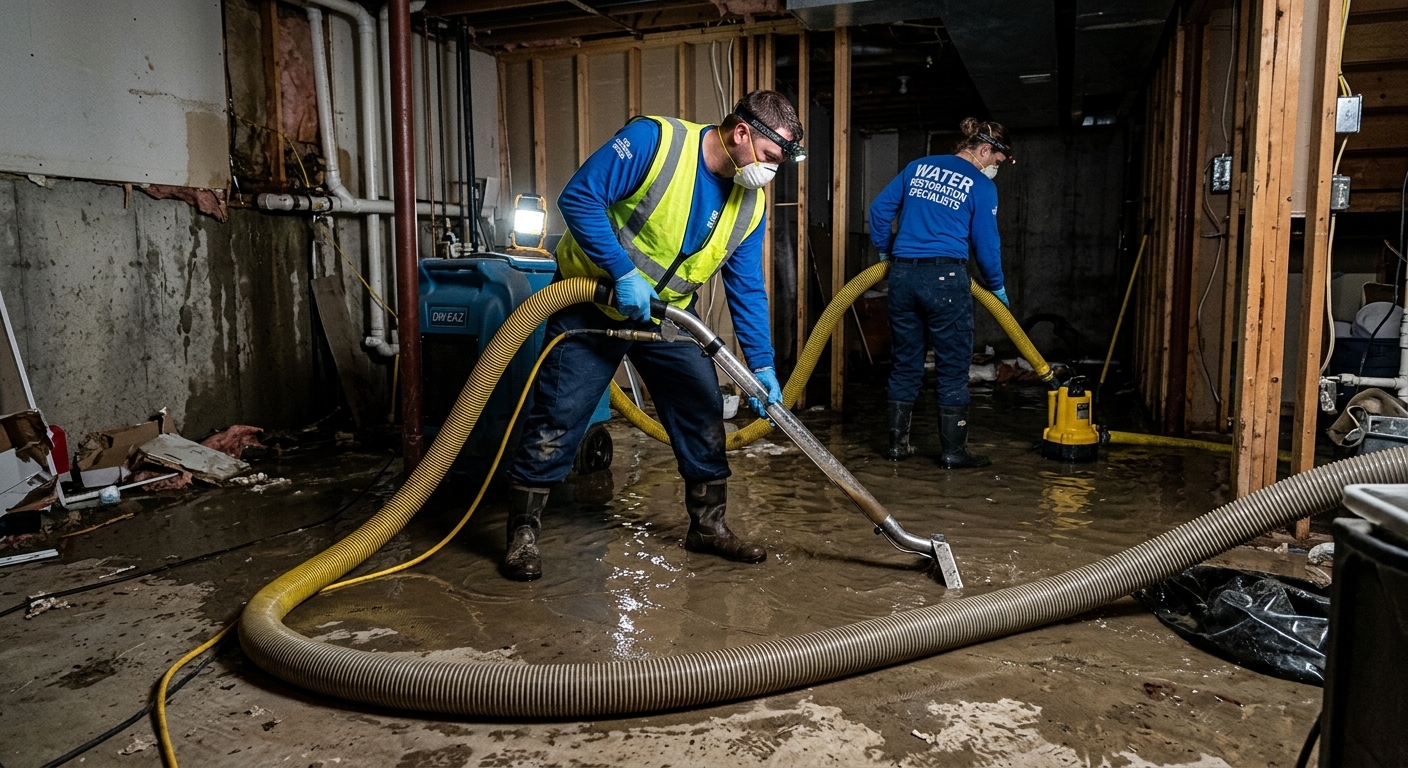
What water damage restoration costs in North Versailles
If you’re dealing with water in your basement or elsewhere in your North Versailles home, you probably want to know what this is going to cost. Restoration work here doesn’t run like other places—in North Versailles, 82.3% of homes were built before 1980 (U.S. Census Bureau, ACS 2024). Most are single-family houses, and many sit over full basements. Old plumbing, clay soil, and hillside drainage mean pipe breaks and basement seepage aren’t rare. In comparison to newer suburbs, older pipes, combined with mixed weather and frequent freeze-thaw cycles, lead to a higher risk of emergency calls and, often, bigger repairs. Restoration firms in Allegheny County respond to thousands of water events yearly, many in areas just like yours with pre-1940 construction, water intrusion behind finished basement walls, and slow-to-drain clay soil.
For most North Versailles jobs, you’ll see costs fall within these ranges:
| Service |
What it covers |
Typical duration |
Price range |
| Water extraction + emergency drying (Cat 1) |
extraction, air movers, LGR dehumidifiers, daily moisture monitoring |
3–5 days |
$1,150–$7,100 |
| Structural drying only (post-extraction) |
drying to standard after water is already out |
3–5 days |
$950–$6,600 |
| Mold remediation with containment |
containment, HEPA filtration, removal, antimicrobial, clearance test |
3–7 days |
$1,400–$9,900 |
| Sewage backup cleanup (Cat 3) |
biohazard protocol, disposal of porous materials, disinfection |
2–5 days |
$2,400–$11,500 |
| Emergency board-up / tarping |
stop further water entry, secure the structure |
same day |
$350–$900 |
Estimates for a typical North Versailles home. Category, affected area and how long the water sat move these figures more than anything else.
Regulation, certification and verification in North Versailles
Pennsylvania does not issue a state license for restoration, mold, or drying work—anyone can print a business card. In practice, insurance companies and reputable contractors work under the IICRC S500 standard for water damage and IICRC S520 for mold. Always ask to see the lead technician’s IICRC card; certified pros in Allegheny County carry theirs on jobs. For mold, state law is silent, so IICRC credentials are the best available proof of training, though not mandatory under code.
The Pennsylvania Uniform Construction Code (UCC) applies here, but water damage mitigation itself—extracting and drying—does not require a permit. Once you cross into structural repair (like replacing framing or load-bearing walls, common in older Pittsburgh homes), your local code office may require a building permit. For North Versailles, check with your borough permitting office if you move beyond drying and removal.
Any job over $500 demands a written contract under the Home Improvement Consumer Protection Act. Ask your contractor for proof of Home Improvement Contractor (HIC) registration (you can verify it at hic.attorneygeneral.gov). Request a certificate of insurance and check workers’ compensation coverage through WCAIS (wcais.pa.gov)—don’t rely on verbal assurances.
Before they begin, require in writing: a detailed scope of work, price or an agreed billing rate, what’s included/excluded, an estimated timeline, and confirmation of who will be onsite. If you live in a pre-1978 home, verify EPA Lead RRP certification at the federal registry if paint disturbance is possible.
Basements: where most North Versailles losses happen
Older Pittsburgh-area homes, including those in North Versailles, frequently have full masonry basements built into clay-heavy hillsides. These below-grade spaces are especially vulnerable to water intrusion. Groundwater builds pressure outside the walls (hydrostatic pressure), squeezing water through even hairline cracks. Since basements sit below grade, water can’t drain out by gravity—it pools and rises. High local humidity and the region’s 36-inch frost depth make drying challenging, especially in winter when condensation is worse.
The most common culprit is sump pump failure. Many North Versailles homes need a working pump to keep the basement dry; storms or outages can overwhelm or disable the system. Adding a battery backup is often the most cost-effective hedge—especially with frequent freeze-thaw cycles stretching equipment to the limit.
If your basement is finished (paneling, drywall, carpet), expect the same inch of water to cost almost twice as much as in an unfinished space. That’s because water gets trapped behind walls and under flooring, requiring demolition for hidden drying. Finished walls also complicate moisture detection—a problem in homes where past remodels concealed old foundation leaks.
For many houses here, drying out a saturated basement takes longer and can involve more demolition than above-grade rooms. If you routinely get seepage or smell a musty odor in spring, it’s not unusual in a North Versailles basement.
How restorers classify water damage
Professional restorers think about your water loss using two separate scales: category and class. Both matter for price and health risk, but they’re independent. “Category” describes how contaminated the water is. Clean supply line break (Category 1)? Low risk and lowest cost. Sump pump backed up with river water or a sewer main overflow (Category 3)? That’s a biohazard job with all contaminated surfaces removed—and you’ll pay more for safety protocols and hazardous waste disposal. A small Category 3 event—such as 20 square feet of sewage in a utility room—can cost more than a much larger Category 1 kitchen leak, with sewage cleanup costing $2,400–$11,500 in North Versailles.
“Class” is about how much of the actual structure got wet. Only the corner? That’s Class 1. Water across a finished basement with drywall and insulation saturated is Class 3 or 4—more demolition, more equipment, higher bills. Don’t confuse these terms on an estimate, as both can stack up fast.
Most important: The longer clean water sits, the dirtier it gets. A Category 1 leak becomes a Category 2 job in as little as a day, and quickly moves to Category 3 if bacteria grow or the water runs through debris or organic material. Delays aren’t just inconvenient—they fundamentally change the job type and cost. That’s why quick response is the make-or-break factor for many North Versailles homeowners.
| Classification |
Source or extent |
Health risk |
Cost effect |
| Category 1 — clean |
supply line, appliance line, rainwater |
low |
baseline |
| Category 2 — grey |
washing machine, dishwasher, sump failure |
moderate |
+20–40% |
| Category 3 — black |
sewage, groundwater, water standing 72+ hrs |
biohazard |
$2,400–$11,500 |
| Class 1 |
small area, little absorption into structure |
— |
low end of service1 |
| Class 2 |
whole room, water into walls and subfloor |
— |
$1,150–$7,100 |
| Class 3 |
saturation from above; insulation and walls wet |
— |
$950–$6,600 |
| Class 4 |
deep saturation of hardwood, plaster, concrete |
— |
service2 upper range |
After the repair: hardening the house
Once you’ve dried out and repaired your North Versailles home, consider your options to avoid another loss. Start with supply lines for washing machines and water heaters—swap those old rubber hoses for braided stainless. For under $100–$250 per appliance, it’s by far the best bang for your buck. Next in line: A sump pump with a reliable battery backup. That upgrade runs $400–$1,400 installed, and is worth every penny in this region’s hilly, clay-soil neighborhoods prone to water intrusion, especially when power fails during a storm.
If your home has a combined sewer and is prone to backups, a backflow valve (installed for $1,400–$3,200) can save thousands in future damages. For homes with water heaters on the main or upper level, a drain pan with a floor drain ($170–$600) is cheap protection from burst tanks. Leak detection sensors ($35–$250 per unit) should go near laundry, under basement pipes, and by the water heater. Automatic shutoff valves are great technology—but for North Versailles, the price tag ($350–$1,100) only pencils out for higher-value homes or those with frequent history of major leaks.
Water pipe insulation can help with freeze risk, but what matters most is heat in the basement. At a winter design temp of 8°F and a frost depth of 36 inches, pipe bursts are a reality in any unheated space—wrap pipes and seal foundation openings as a basic, cheap safeguard.
Older and newer homes in North Versailles
North Versailles, like much of the Pittsburgh metro, skews old—82.3% of the homes here were built before 1980 (U.S. Census Bureau, ACS 2024). That translates to cast iron drains, galvanized steel supply lines, plaster walls and ceilings, and almost always a full masonry basement. These homes often have original plumbing and electrical, which age poorly and fail more often than copper or PVC found in newer homes. Drying out plaster and lath (as opposed to drywall) takes longer, often requires higher airflow, and demolition in a historical home may cost more due to the heavier construction and finish work.
If your place is on the newer side for North Versailles—say, a 1970s subdivision—you might have copper or even early PEX supply lines, but even those are now well past their design life. Water heaters over 20 years old, original dishwasher hoses, and first-generation sump pumps in these houses are ticking time bombs. Expect to demo drywall instead of plaster, which is usually quicker and easier, but you’ll lose finished materials all the same if water seeps behind the walls.
Basements are nearly universal in the North Versailles market, and whether finished or unfinished, their age and build type directly impact how a restoration crew will dry and repair after a loss. In short, older homes see more hidden water, longer dry times, and more demolition per dollar spent.
Choosing a restoration company in twenty minutes
Most homeowners in North Versailles don’t have the luxury of shopping around for days when water is spreading through their basement. Allegheny County has plenty of restoration firms, with a dozen-plus providers who can be onsite in an hour or less—don’t let anyone pressure you into the first available just because they arrive first.
In a rush, confirm three things on the call: HIC registration (verify at hic.attorneygeneral.gov), up-to-date general liability and workers’ compensation, and that the dispatcher will send an IICRC-certified lead tech (ask to see their card before they unload). Then, before equipment comes off the truck, get these three documents—(1) a written scope, (2) an actual contract with pricing or rates and your right to cancel, and (3) proof of insurance with your address on the certificate.
- Confirm HIC registration (Pennsylvania Home Improvement Contractor number)
- Ask for IICRC certification of the crew chief
- Get a copy of the company’s insurance certificate
- Make sure workers’ compensation is current (check WCAIS by company name)
- Require a written scope of work—not just a work authorization form
- Demand to know the intended daily or total rate up front
- Check for a 3-day right of cancellation on the contract
- If your home is pre-1978, ask about EPA Lead RRP certification for demolition
- Confirm who will arrive—subcontractors or direct hires
- Ask what equipment will be used and for how long
Watch for these tactics: crews unloading equipment before you’ve signed anything; contracts with blank scopes or “TBD” pricing; or refusal to provide HIC registration up front. Never sign an open-ended work authorization or let equipment run without knowing the daily rate. You can always pause, or call another local provider—plenty operate here, so don’t let the high-pressure pitch rush you into a bad deal.
Frequently asked questions — water damage restoration in North Versailles
How long does water damage drying take in North Versailles?
For most North Versailles homes, standard water extraction and structural drying takes three to five days, depending on the extent of damage and the age of the house. Because local basements are often full masonry and sometimes finished with plaster or old drywall, moisture can get trapped in hidden wall cavities, making the process slower than in newer construction. Finished basements or those with thick plaster can require more demolition and may take up to a week. If you have a straightforward pipe break with immediate response, you’ll be on the lower end—$1,150–$7,100—but heavy water saturation or delays push things upward. The key takeaway: quick action keeps both cost and duration down.
What is an assignment of benefits and should I sign one?
An assignment of benefits (AOB) is a contract that lets a restoration company bill your insurance directly and take over many of your policyholder rights. In North Versailles, it’s less common than in some states but does appear in larger losses. The risk: you lose control over the claim, and the contractor can pursue payment, including litigation, in your name. For most jobs here—say a straightforward structural dry-out at $950–$6,600—you don’t need an AOB. Only sign after reading all terms and never under pressure. If your insurer requires direct dealings, keep the claim in your name and pay the contractor from insurance proceeds.
Do older North Versailles homes need different treatment?
Yes—restorers handle pre-1980 North Versailles homes differently because of building methods and materials. Original plaster and wood lath, thicker framing, and cast iron drains hold more water and take longer to dry than modern framing and drywall. Also, pipe failures in these homes often result in hidden seepage behind old finishes. Crews must use more demo and specialty drying, driving up costs—mold remediation with containment here may run $1,400–$9,900. It’s critical to hire a crew familiar with local housing stock; shortcuts or shallow dry-outs can leave hidden moisture and future mold.
Why is water damage priced per square foot?
Water restoration costs in North Versailles are typically driven by the area affected, because equipment, labor, and demolition all scale with the number of wet rooms and square footage. For a small basement cleanup, pricing could land at the low end ($1,150–$7,100), but a whole house or multiple rooms quickly pushes bills higher. Materials matter too—finished spaces with wallboard, insulation, and flooring require more effort than bare concrete basements. Crews will estimate costs by measuring the wet footprint, and you’ll want those details in writing for your insurance claim.
What should I do in the first hour of a water leak?
In North Versailles, your priorities are stopping the water source and preventing spread. Shut off the main valve, unplug electronics in wet areas, move valuables, and call a local restoration company with IICRC certification and HIC registration. Document everything with photos. If clean water hasn’t been sitting long, extraction and drying often stay in the $1,150–$7,100 range; delays increase category (contamination) and price, sometimes drastically. Don’t start tearing out walls yourself unless safety demands it. Get a rapid scope and contract before authorizing work, and don’t let anyone pressure you into services or signing forms on the spot.
How do I verify a restoration contractor's insurance?
When hiring in North Versailles, ask the contractor for a certificate of insurance listing both liability and workers’ compensation. Make sure your address is specifically named as the jobsite. Don’t rely on a photocopy—call the carrier listed on the certificate and confirm current coverage. Pennsylvania also offers online verification for workers’ compensation at wcais.pa.gov. Any reputable contractor serving Allegheny County will have a copy on hand and provide details up front. If you’re unsure, press pause—you’re entitled to solid proof before agreeing to anything, no matter if the loss is $1,400–$9,900 or less.
Do I need mold testing or just remediation?
In North Versailles, mold remediation is almost always the priority—if you can see mold or smell mustiness after water damage, it needs to go. Pennsylvania has no state licensing or mandatory clearance testing, but best practice under the IICRC S520 standard is to remediate all visible mold and any porous materials that stayed wet. Mold testing makes sense for disputes, rentals, or most selling situations, but is usually unnecessary for small, straightforward jobs. Typical containment and removal bills here run $1,400–$9,900. If you want peace of mind or need documentation, clearance testing can be added; otherwise, a thorough remediation is the surest route.
Is sewer backup covered under a standard policy?
Most standard North Versailles homeowners’ policies exclude sewer and storm water backup—unless you added “water backup” coverage as an endorsement. Given the age of local sewers and the prevalence of backups, this extra coverage can mean thousands in recovered losses, with sewage cleanup costs ranging from $2,400–$11,500. Always confirm your limits and exclusions before an event. Even if covered, you must follow documented cleanup protocols to get paid. Call your insurer immediately after a backup; don’t approve demolition or disposal before your adjuster gives the green light.
How much does sewage backup cleanup cost in North Versailles?
For residential homes in North Versailles, sewage backup cleanup, which is categorized as Category 3 water damage, typically costs between $2,400–$11,500, depending on the size of the affected area and how long the water has been present. Costs are highest when sewage stands for days or contaminates finished basements, as all porous materials (carpet, drywall, insulation) need removal and hazardous waste handling. Quick response can limit demolition and cost, but any sewer water exposure demands professional biohazard cleanup. Always request a written scope and pricing before authorizing work—this is one area where trying to DIY is both unsafe and often ends up costing more in the long run.
Can I clean up water damage myself in North Versailles?
If you catch a minor clean water leak fast—say, a sink overflow on tile—drying it yourself is possible. But in older North Versailles homes, especially with finished basements and hidden cavities, most jobs demand professional tools and skill. The true risk is missing moisture in walls, under flooring, or behind baseboards. DIY drying that leaves even 10% dampness can turn a basic $1,150–$7,100 extract-and-dry job into a mold remediation costing $1,400–$9,900 weeks later. Anything involving sewage, large saturation, or more than a single small room should be left to pros with proper extraction, drying, and monitoring equipment—and always with full written documentation for insurance.