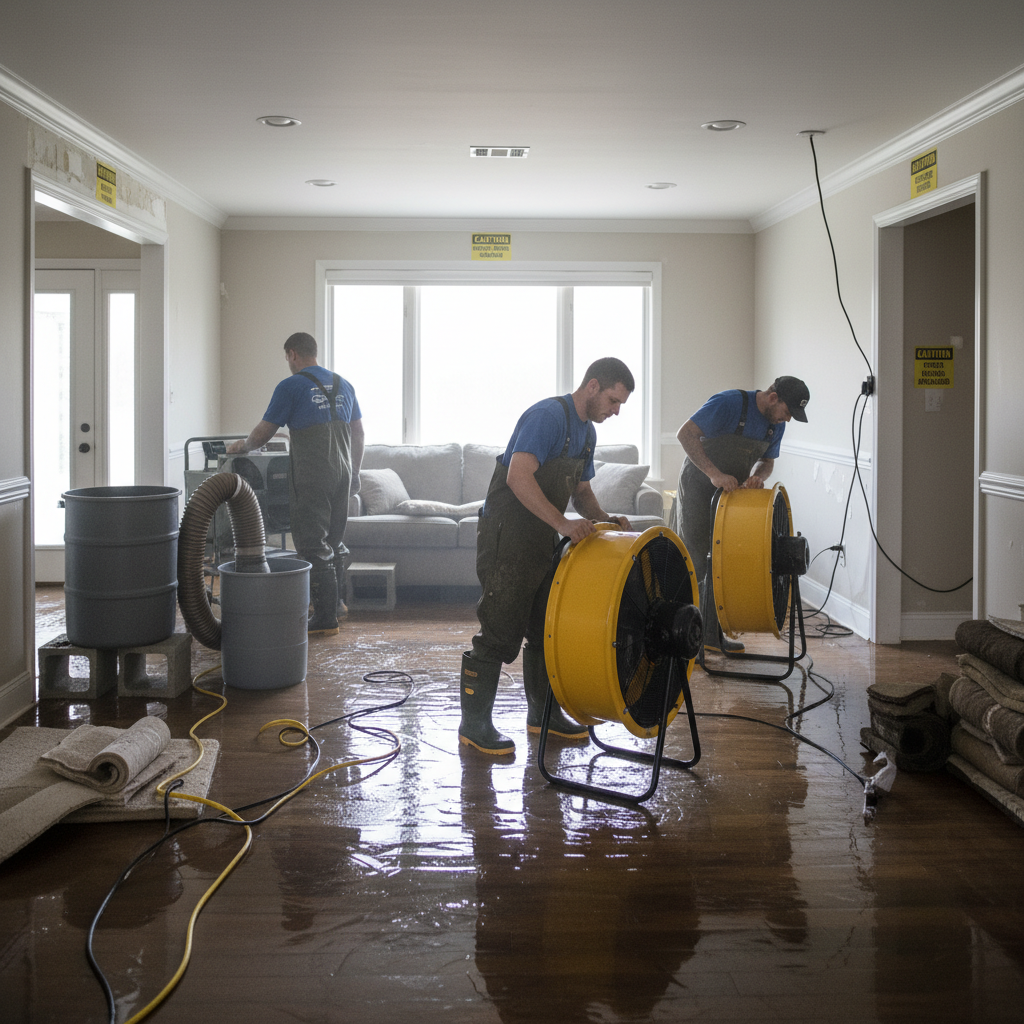
What water damage restoration costs in Lower Southampton
If you’re dealing with water damage in Lower Southampton right now, you want to know what you’re on the hook for, not two paragraphs from now. Costs here are driven up by the makeup of local housing: 72.5% single-family homes, most with finished basements, and nearly 70% built before 1980 (U.S. Census Bureau, ACS 2024). Large Levittown-era subdivisions from the 1950s–1960s dominate lower Bucks, increasing aging plumbing failures and recurring interior water losses. In plain terms: more old plumbing bursting, more water getting behind finished walls, and more square footage to dry out — which translates to higher bills than you’ll see for slab-on-grade homes or new construction elsewhere.
Here’s what you can expect for common emergency services in Lower Southampton. The price swings are real: a two-room loss from a failed supply line will be toward the lower end, but if the basement’s finished with older materials or water sat for days, you’re closer to the top.
| Service |
What it covers |
Typical duration |
Price range |
| Water extraction + emergency drying (Cat 1) |
extraction, air movers, LGR dehumidifiers, daily moisture monitoring |
3–5 days |
$1,300–$8,100 |
| Structural drying only (post-extraction) |
drying to standard after water is already out |
3–5 days |
$1,100–$7,600 |
| Mold remediation with containment |
containment, HEPA filtration, removal, antimicrobial, clearance test |
3–7 days |
$1,600–$11,500 |
| Sewage backup cleanup (Cat 3) |
biohazard protocol, disposal of porous materials, disinfection |
2–5 days |
$2,700–$13,000 |
| Emergency board-up / tarping |
stop further water entry, secure the structure |
same day |
$350–$900 |
Estimates for a typical Lower Southampton home. Category, affected area and how long the water sat move these figures more than anything else.
Finished basements and water damage in Lower Southampton
Full basements are the default in Lower Southampton’s mid-century neighborhoods, a legacy of Levittown-era suburban construction. Below-grade space in these homes isn't just more square footage — it’s a different animal entirely when it comes to water. Hydrostatic pressure builds fast against foundation walls after any significant rain or snowmelt, and our local frost depth of 30 inches means moisture finds its way in once the freeze-thaw cycle begins. With no gravity drainage, water pools instead of running off, pushing through cracks or entering by way of aging foundation drains.
Most losses in finished basements here start with a sump pump failure. When the pump stalls because of a power outage, mechanical fault, or just a tripped breaker, water can rise rapidly. Installing a battery backup is cheap insurance and can prevent one of the most expensive homeowner losses you'll ever see. The difference in impact is huge: if your basement has drywall, carpet, and a finished ceiling, it will likely cost double to restore compared to an unfinished concrete shell with the same amount of water. That’s because drying hidden wall cavities and replacing soaked materials means more labor, more specialty equipment, and a higher chance you’ll run into mold or insulation that must be replaced.
In short, finished basements in Lower Southampton not only raise the stakes — they complicate nearly every decision in the cleanup process. It’s rarely just about extraction; it’s opening walls, chasing moisture under plates, and making some tough calls on what to save.
The first hour: what to do before anyone arrives
If you haven’t made a call yet, there’s a sequence to follow that can prevent thousands in extra damage in Lower Southampton’s older homes with finished basements. First, if it’s a plumbing failure and you can reach the main, shut off the water supply to the house. If the electrical service panel is fully dry and within safe reach, flip off the breakers to affected areas — but never approach a wet panel. Photograph everything: document the standing water, the contents, and each impacted room before you move a single item. Insurers in Bucks County will want this, whether or not you push for every dollar. Next, move contents up off wet flooring — chairs, electronics, books — but resist the urge to drag waterlogged materials around, as this spreads moisture further.
Don’t use a household vacuum to try to “shop vac” up significant water; most are not rated for this volume or type of contamination risk. Once you’ve protected what you can, call your insurer. Whether you contact them before or at the same time as a restoration company is less critical than making sure you have solid documentation. In a high-homeownership area like Lower Southampton, people often hesitate until morning to avoid a late-night callout. That delay is costly; mold can start in as little as 24–48 hours, and just one night of “wait and see” can push a straightforward extraction in the $1,300–$8,100 band into a mold remediation scenario costing far more. Act on it now—don't let a minor panic balloon into a redo with higher stakes.
Mitigation, then reconstruction: two different timelines
Most homeowners in Lower Southampton expect that once crews show up, the job’s about to reach the finish line. Not so. There are two very different phases: mitigation and reconstruction. Mitigation is what happens in the first days — emergency extraction, setting up air movers and dehumidifiers, removing soaked materials, and stopping further damage. This phase is urgent, usually completed in 2–7 days depending on the situation, and is frequently direct-billed to your insurer. Once your house is dry and all unsafe materials are removed, mitigation wraps up and most or all equipment goes away.
That’s when the gap begins. Reconstruction is a separate contract and almost always a different crew, because the contractor who dried things out might not be the one to rebuild them. Scheduling in Bucks County, where multiple firms compete from surrounding counties, means plenty of choice but also wait times — especially if your loss hit during a local storm event. It’s common for weeks to pass before drywall, flooring, or cabinetry go back in. Knowing this ahead of time helps: if you feel “abandoned” after mitigation, it’s not personal, it’s market logistics. Getting it dry fast matters; rebuilding can’t start until every part of the structure is proven dry, and yes, you should insist on written moisture readings before closing up walls.
Drywall, hardwood, insulation: what survives
In Lower Southampton’s Levittown-era homes with dominant finished basements, most water losses turn into a game of material triage. Fiberglass insulation in walls or floors will almost always need to go; once it’s wet, it packs down and won’t dry in place. The same goes for carpet pad — it’s rarely salvageable, and leaving it risks hidden mold. Drywall that’s taken water below the halfway point usually gets a “flood cut” at least a foot above the visible waterline. Don’t let a contractor convince you that a quick blow-dry of soaked lower drywall is enough — in these basement walls with vapor barriers, moisture lingers and creates a breeding ground for mold.
Solid hardwood can sometimes be saved if specialty floor drying mats are set up quickly (and the floodwater is clean), but engineered laminate won’t survive once swollen. Plaster, found in some of the oldest Bucks County homes, holds moisture far longer than drywall, risking hidden damage. Cabinets are a mixed bag: real plywood boxes survive if dried early, while particleboard bases usually swell and crumble beyond repair. If a contractor pushes for full demolition of everything, that’s overkill in clean water losses — but if someone swears they can save all drywall, insulation and pad after a multi-hour soak, they’re setting you up for a future mold claim. In these local homes, honest restoration means picking your battles material by material.
What a Pennsylvania restoration contractor must actually hold
Pennsylvania does not license restoration or mold contractors — that means anyone can print a business card, but it doesn’t mean you should trust them with your home. In practice, insurers expect contractors to follow the IICRC S500 standard for water losses and S520 for mold remediation. Ask if the lead technician carries IICRC certification and request to see their card. For contracts over $500, all work in Lower Southampton must be accompanied by a written agreement per the Home Improvement Consumer Protection Act, and you have a three business-day right to cancel.
Permits in Bucks County, including Lower Southampton, are only triggered during reconstruction (like replacing framing or structural elements), not for emergency extraction or drying. To check that your contractor is actually registered, verify their Home Improvement Contractor (HIC) number at hic.attorneygeneral.gov. Workers’ compensation is mandatory for all employers; you can confirm coverage via WCAIS (wcais.pa.gov). Before any crew starts with hoses or extracting equipment, get their insurance certificate naming you and their written HIC contract in hand. Never wave anyone in who says permits or paperwork don’t apply—they only don’t apply to the emergency phase.
What a sewage loss requires
Sewage backup is not just water with an extra odor — it’s a Category 3 biohazard event that triggers an entirely different protocol in Lower Southampton. Personal protective equipment is essential for everyone onsite. Expect containment barriers to isolate the zone and negative air machines to vent contaminated air. All porous materials below the waterline—carpet, pad, insulation, and most drywall—must be removed and safely disposed of, regardless of apparent cleanliness. No reputable restoration firm will “clean and dry” these surfaces after a sewage spill, even if they look fine; the pathogen risk is real.
Disinfection with EPA-registered agents and a thorough deodorization are non-negotiable before reconstruction. Occupants should be out until clearance is passed, especially those with compromised immune systems. In lower Bucks, municipalities near Levittown have documented sanitary sewer inflow and infiltration problems, which means that another backup is a matter of “when,” not “if.” Backflow prevention valves can greatly reduce risk, but you’ll want to ask your local water and sewer authority about cost-sharing—they may or may not assist. For cleanup, pricing falls in the $2,700–$13,000 band; even on the low end, this is never a DIY situation.
Frequently asked questions — water damage restoration in Lower Southampton
How do I verify a restoration contractor's insurance?
Insurance verification isn’t just about seeing a logo or trusting paperwork handed over at the door. In Pennsylvania, especially in Lower Southampton, your contractor must provide proof of both general liability and workers’ compensation insurance. Ask for a certificate of insurance that names you as the certificate holder—this means their coverage is current and in force for your property. For extra safety, you can look up their workers’ compensation status online using WCAIS (wcais.pa.gov). Never settle for a verbal assurance or a photocopy with someone else’s name. A reputable contractor is used to the question. If they hesitate, walk. Financial risk is real here; a mishap or injury on site could cost you far more than the typical $1,300–$8,100 water extraction bill.
Can hardwood floors be saved after flooding?
In Lower Southampton’s older homes, solid hardwood—if caught quickly after a clean water event—might be salvageable using specialty drying mats and careful humidity control. The key is time: within the first 24 hours, swelling can often be limited, and cupping may flatten with expert drying. However, engineered floors and laminates almost always delaminate and should be removed. Don’t be fooled by firms promising to “dry anything.” Delaying removal can turn a basic water extraction in the $1,300–$8,100 range into a mold remediation project costing far more. Always demand a realistic explanation for what can be dried, and get documentation on moisture readings before approving repairs.
What is a clearance test and do I need one?
A clearance test is an independent air or surface test performed after mold remediation to verify everything meets health standards before reconstruction starts. In Lower Southampton and across Pennsylvania, clearance testing isn’t a legal mandate, but it’s standard best practice whenever mold work is done inside finished basements or habitable rooms. Without it, you risk covering up spores behind new drywall—a big liability if you ever sell. While adding a clearance test may bump your mold remediation into the higher end of the $1,600–$11,500 range, it gives both you and your insurer written proof the job was done right.
How much does a flooded basement cost to restore in Lower Southampton?
Restoration costs depend on the size and finish level of your basement, the amount of water, and how long it sat. In Lower Southampton, where full finished basements are typical and aged plumbing failures are common, homeowners can expect basic extraction and drying for a minor event to start at $1,300. If the water sat more than 24–48 hours, or if mold grows behind walls, those costs quickly approach the high end: a serious water loss often lands between $4,200–$11,500. The best way to limit cost is to get professional assessment and drying underway immediately—delays nearly always add labor, demolition, and mold remediation fees.
Can I clean up water damage myself in Lower Southampton?
Small spills from a washing machine or sink that only wet a few tiles in a Lower Southampton home are usually reasonable for a handy homeowner to address. But for water that spread through carpet, got into finished basements, or affected more than a few square feet, DIY rarely pays off here. Our below-grade spaces and abundant drywall make hidden moisture a big problem—what you miss behind the walls can turn a $1,300–$8,100 water loss into a mold remediation costing over $6,500. Even if you feel confident, at least get a professional’s opinion; many reputable restoration firms here will do a moisture map and verbal consult for little or no cost.
Do I need separate flood insurance in Lower Southampton?
Standard homeowners' insurance in Pennsylvania, including Lower Southampton, does not cover damage from overbank flooding of the Delaware River, Neshaminy Creek, or other natural sources. If your home is near these waterways—and especially if you’re in a mapped flood zone—a separate FEMA-backed flood policy is essential. While sewer backups caused by municipal inflow may be covered with a rider, you can’t rely on your base policy for “rising water.” And with finished basements dominating, a single event can easily surpass $8,100 in losses. Check your flood zone status and talk to your agent before disaster strikes; adding after the fact won’t help a current claim.
How does southeastern Pennsylvania's climate affect drying times?
Lower Southampton’s humid summers and moderate freeze-thaw cycles lead to higher ambient moisture, which extends necessary drying times. Even with commercial dehumidifiers running, drywall and subflooring in our below-grade basements can hold moisture longer than in drier parts of the country. The typical structural drying process here takes 3–5 days for most jobs, but deeply saturated materials or water that sat for a while can push to the higher end of the $1,100–$7,600 range simply from the extra days of equipment and labor. Always insist on actual meter readings—not just gut feel—before reconstruction begins, no matter what the calendar says.
Is it safe to stay in the house during drying?
For most water losses in Lower Southampton where drying equipment is set up in non-sleeping areas and no hazardous materials are present, it's generally safe to remain in the home—though it will be noisy, humid, and potentially stressful. Exceptions: sewage backup (Category 3) or mold remediation jobs, where airborne contaminants make it unsafe, especially for children, seniors, or anyone immunocompromised. If your home requires significant demolition (for example, in a sewage event costing $2,700–$13,000), you’ll almost always be advised to relocate. If unsure, ask your contractor if ongoing air quality monitoring is included or recommended.
Is basement flooding covered by insurance in Pennsylvania?
Insurance coverage for basement floods in Lower Southampton depends on how the water got in. Sudden plumbing failures—like a burst pipe—are usually covered, subject to your deductible. Overbank flooding is not covered by any standard homeowners' policy and requires separate flood insurance. Coverage for sewer backups is only available if you specifically added a backup rider; even then, coverage may be capped. It’s not uncommon to see restoration bills in the $2,700–$8,100 range after a basement loss, and without the right coverage riders, most of that is on the homeowner. Always review your policy each renewal, especially if your finished basement is a major living space.
What does structural drying cost if I extracted the water myself?
If you've managed to extract the standing water using pumps or mops and only need professional drying in your Lower Southampton home, you can expect to pay less than for full-service mitigation. The typical price range for structural drying only (once all water is gone) is $1,100–$7,600 in our area. The lower end covers smaller, single-room jobs; the upper end applies if drying equipment needs to run in finished basements or multiple rooms for several days. This work includes air movers, commercial dehumidifiers, and ongoing moisture checks. It's recommended to ask for a written, room-by-room moisture map as part of this service for your records and insurance claim.