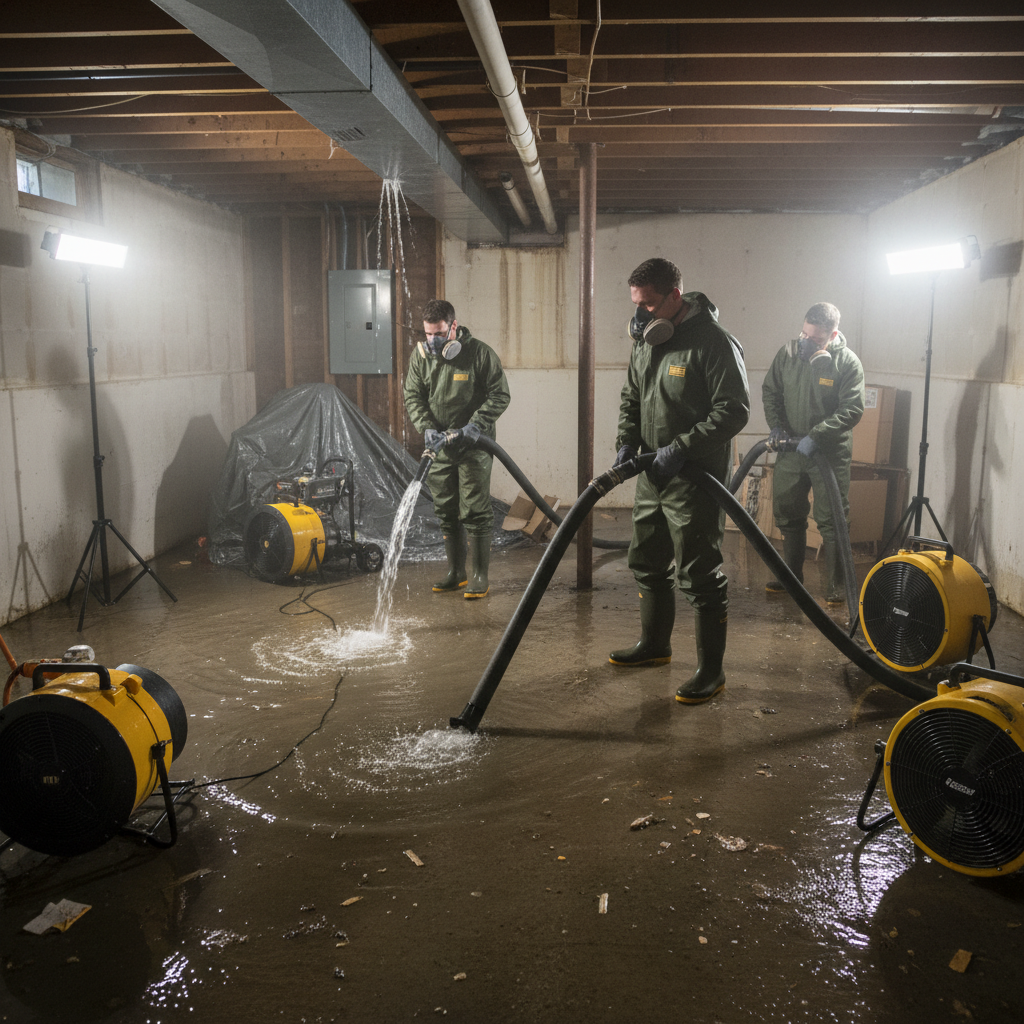
What water damage restoration costs in Archbald
If you’re in Archbald and you’re seeing water on your floors or walls, you probably want a number right away: water extraction and emergency drying for an average home here falls in the $1,200–$7,300 range, depending on the situation. Nearly three-quarters of local homes are owner-occupied and most are single-family (U.S. Census Bureau, ACS 2024), so losses here tend to involve basements and finished spaces, not just a small utility closet. The age of housing in our area—64.8% built before 1980—means plaster, lath, and maze-like finished basements that hold onto moisture. That often drives up both drying times and what you have to open up, compared with a newer build elsewhere.
Professional drying isn’t cheap, but letting water sit usually costs more. In older homes with hidden cavities, a small leak can escalate quickly if ignored. And if you’re dealing with a sewer backup or a flood, expect extra safety steps and demolition, which show up on the bill.
| Service |
What it covers |
Typical duration |
Price range |
| Water extraction + emergency drying (Cat 1) |
extraction, air movers, LGR dehumidifiers, daily moisture monitoring |
3–5 days |
$1,200–$7,300 |
| Structural drying only (post-extraction) |
drying to standard after water is already out |
3–5 days |
$1,000–$6,900 |
| Mold remediation with containment |
containment, HEPA filtration, removal, antimicrobial, clearance test |
3–7 days |
$1,450–$10,500 |
| Sewage backup cleanup (Cat 3) |
biohazard protocol, disposal of porous materials, disinfection |
2–5 days |
$2,400–$12,000 |
| Emergency board-up / tarping |
stop further water entry, secure the structure |
same day |
$350–$900 |
Estimates for a typical Archbald home. Category, affected area and how long the water sat move these figures more than anything else.
What to do right now
If water is still coming in, shut off the main water supply to your house. If you can safely access your electrical panel (and it is dry), cut power to any affected circuits before you step into wet areas. Next, photograph every angle of the damage—floors, walls, furniture, and anything you think might end up in a claim. Take pictures before moving anything.
Then, if you can, lift belongings and furniture up off wet floors. Use plastic bins, not cardboard, if you have to prop things. Do not use your household vacuum to remove standing water—especially not a regular upright. If you’re dealing with more than a puddle, that machine could become hazardous.
Call your insurance carrier before or alongside calling a restoration company. Documentation (photos, videos, a written timeline) matters more than the sequence. Insurers want to see the state of your home before work starts, but they also expect you to act quickly to prevent further damage—the clock runs on both sides. Even a delay until morning can let hidden water in an Archbald finished basement become a mold claim, which costs far more—a typical mold remediation here runs $5,900, and it rises quickly if you miss the window for simple drying.
Address the immediate risks and document every step. The sooner you take action, the less you’ll see on your final bill.
Regulation, certification and verification in Archbald
Pennsylvania does not require a special license for water damage restoration or mold remediation. Anyone can print a business card, so don’t assume a company is qualified until you’ve checked. The expected standard in the industry is IICRC certification: ask for proof (the lead technician’s card) before work begins. For major repairs or reconstruction beyond emergency drying—like opening up walls or replacing floors—Scranton requires a permit, but most of Lackawanna County’s smaller municipalities only require permits for structural work, not mitigation or minor finish replacement.
Any contract over $500 must include a written agreement under Pennsylvania’s Home Improvement Consumer Protection Act. You have a mandatory three-day right to cancel, and legally, no contractor can waive your insurance deductible. To be sure your contractor’s insurance and workers' compensation are valid, ask for a certificate of insurance and verify workers’ comp coverage through WCAIS (wcais.pa.gov).
Before work starts, you should have a written scope of work, clear cost estimate, and an agreement on who’s responsible for communication with the insurance adjuster. Do not allow extraction or demolition to begin with just a handshake or a phone call—get everything in writing first.
Contents: pack-out, cleaning and what you can claim
Most homeowners in Archbald pay close attention to their floors and walls, but contents losses add up quickly—especially in finished basements common to this area. The best approach is thorough documentation: photograph every room and item before movers or the restoration crew touches a thing. If your contents are soaked or exposed to a sewage backup, they’ll need to be inventoried for the insurance adjuster.
Pack-out is the removal of your personal possessions to an offsite facility for cleaning and storage while your home is dried and repaired. Every item packed out is inventoried—serial numbers, makes, models, and damage notes—to support your claim. There’s a difference between the structure (walls, floors, built-ins) and contents (furniture, clothing, appliances) on your policy. Miss this paperwork, and it’s easy to be shortchanged.
Generally, upholstered and particleboard furniture, mattresses, and anything porous exposed to Category 3 (sewage) water has to be discarded. Hardwoods, solid wood furniture, and most electronics may be salvageable if cleaned immediately. Take photos and keep a master list for your own records. What you prove, you can claim.
Vetting a contractor when you have no time
In the Archbald/Scranton-Wilkes-Barre area, you’re in a moderate suburban market with several restoration firms in play, but not saturated like a larger city. That means you’ll likely speak to someone local the same day, but if crews are busy, the first one available might be coming from Scranton or outlying areas. With no state license for restoration or mold work in Pennsylvania, being in a hurry means you must be extra cautious.
When time is tight, confirm these three things by phone before anyone shows up: 1) Are you IICRC-certified, and can your lead technician show ID? 2) Will you provide a written scope of work and contract before starting? 3) Are you registered as a Home Improvement Contractor with the Pennsylvania Attorney General (check hic.attorneygeneral.gov)?
Before any equipment is unloaded, make sure you get these: a signed written contract (over $500, required by law), a copy of the contractor’s insurance certificate, and a written itemized estimate. Never let a crew start demolition or run equipment until this paperwork is in hand.
- Verify IICRC certification (ask to see the card)
- Check HIC registration with the state lookup tool
- Get a written contract—no blank forms
- Request insurance and workers’ comp certificates
- Confirm scope of work and costs in writing
- Who communicates with your insurer—get it spelled out
- Don’t allow “just a signature” on a work authorization as the only paperwork
- Photograph pre-existing damage for your records
- Insist on documentation for any demolition or disposal
- Don’t accept high-pressure pitches or scare tactics
Common pressure tactics in this trade: asking you to sign an open-ended work order or blank contract, unloading equipment before the deal is agreed, or leaving out mention of your three-day cancellation right. If you see any of these, stop and get another quote—you have options, even in a hurry.
When water damage becomes a mold problem
The reality in Archbald: mold can start colonizing wet surfaces within 24–48 hours if conditions are right—and in our region’s climate, with basements and plenty of humidity, that’s the norm. This isn’t about scaring you; it’s why fast response is more about money than convenience.
If you catch and dry the water quickly—say, air movers and dehumidifiers within hours of the loss—restoration can often be done with minimal demolition and lower costs (typical drying, $3,800). Wait past the two-day mark, and you may face selective demolition to reach trapped moisture behind lath, plaster, or finished basement walls, which is common in Archbald’s older homes. After several days, microbial growth can take hold, requiring full containment, HEPA filtration, and professional clearance testing—pushing costs toward $5,900–$10,500 for substantial mold remediation.
A clearance test is an independent air or surface sample collected after remediation to document that mold spore counts have returned to normal. You want this in writing. It protects you with your insurance company—and when you eventually sell the house. In older homes with hidden moisture, the longer water sits, the more likely a minor problem becomes a major claim.
Quick action saves money here, especially where finished basements and old plaster hide water longer than modern drywall. Responding fast isn’t just about service; it controls both costs and your scope of work.
Archbald's flood exposure and what it means for coverage
Living in Archbald, flood exposure comes from the Lackawanna River—so if you’re close, you may be in a designated flood zone. Here’s the thing: standard homeowners insurance doesn’t cover water that comes from the river, groundwater, or surface flooding. You have to purchase flood insurance separately, and if you wait for a major storm in the forecast, it’s too late; most flood insurance policies have a waiting period before taking effect.
Flood and burst pipe damage look nearly identical when you’re staring at a wet basement—ripped up carpets, ruined walls—but they are handled completely differently by your adjuster. A pipe break in your finished Scranton-era basement is a standard water loss, but if the Lackawanna River overflows and water comes through your foundation, that’s flood, and only a separate flood policy can cover it.
Flood zone maps determine whether coverage is required by your lender, but even outside the designated zone, flood insurance can be a good idea. Remember: you can’t add the policy after a warning. That difference between water coming “from above” or “from below” matters every time a claim is filed in this valley. Make sure you know which kind of coverage protects your address—don’t assume your regular policy covers every kind of water.
Frequently asked questions — water damage restoration in Archbald
How does northeastern Pennsylvania's climate affect drying times?
Drying times in northeastern Pennsylvania—including Archbald—are often longer compared to warmer, drier parts of the state. That’s down to our climate: relatively high humidity, frequent snowmelt, and basements that stay cool year-round. A typical emergency drying project here lasts 3–5 days, assuming you catch it right away and work starts promptly (see $1,200–$7,300 for extraction and drying). In a damp valley town like Archbald, older finished basements and plaster walls can keep moisture hidden, so it’s not unusual for the job to run on the longer end of that range—especially in the spring when humidity is high.
Should I call my insurer or a restoration company first?
Ideally, you’ll contact your insurance company and a restoration contractor at nearly the same time. What matters most is documentation—take photos before anyone touches anything, then get the loss reported and scheduled for drying without delay. Insurers expect fast mitigation; if you wait, and mold develops, they may deny part of your claim (a typical mold remediation here runs $5,900). In Archbald, if damage spreads overnight, hidden issues in finished basements become expensive fast. Just don’t wait for an adjuster to visit in person—triage and drying should start once the insurer is notified and you’ve recorded the damage.
How much does sewage backup cleanup cost in Archbald?
Sewage backup cleanup, or Category 3 water loss, follows strict safety protocol and requires special equipment—biohazard suits, HEPA filtration, and full disposal of anything contaminated and porous. In Archbald, this kind of job typically ranges from $2,400–$12,000. Most jobs run closer to $6,400, depending on how much the backup affected and whether finishing materials had to be torn out. Basements in the area tend to flood quickly from sewer blockages, often requiring significant cleaning and drying, plus disposal of flooring and furnishings.
Is sewer backup covered under a standard policy?
In Pennsylvania, including Archbald, most standard homeowners policies do not cover sewer backup by default. You have to add a sewer or drain backup endorsement to your policy—otherwise, you’ll be paying out of pocket for a Category 3 cleanup, which typically runs $6,400. It’s a good idea to review your current coverage before an event occurs, particularly since finished basements in this area are especially vulnerable to sewer and sump pump backups.
How much does water damage restoration cost in Archbald?
Water damage restoration costs depend on how much water, how long it sat, and the area impacted. For an Archbald home, extraction and emergency drying usually runs between $1,200–$7,300, with the typical project around $3,800. Mold issues or sewage backup push the price higher—toward $5,900 for mold and up to $12,000 for extensive sewage cleanup. Older homes, finished basements, and hidden moisture all drive up both effort and cost in this region.
What water damage can I safely handle alone?
You can typically handle minor cleanups yourself—think a gallon or two of clean (Category 1) water on a tile floor, as long as you act fast. Use towels, move belongings, and run fans or a dehumidifier. But if water soaks into walls, gets below carpet, or contacts insulation—especially in Archbald homes with older finishes—stop and call a professional. Basements and walls can hold hidden moisture, and a missed pocket can cost you later; professional extraction and drying starts at $1,200, which is almost always less than the cost of missed damage turning into a mold claim.
Does wet insulation have to be replaced?
Yes, wet insulation—especially fiberglass or cellulose—should be replaced if it’s come into contact with category 2 or 3 water, or if it can’t be dried within 48 hours. In Archbald’s older housing stock, insulation is often hidden behind plaster or finished basement walls, making thorough drying next to impossible. Left in place, wet insulation becomes a mold risk. Replacing it adds some cost, but not doing so could turn a small water loss (roughly $1,200–$7,300 for whole mitigation) into a full remediation costing several thousand more.
Do I need a permit for water damage repairs in Archbald?
For emergency drying and minor repairs, you usually do not need a permit in most Lackawanna County municipalities, including Archbald—the focus is on fast mitigation, not paperwork. If restoration moves to structural repairs or substantial interior reconstruction, a permit is triggered (Scranton requires it; others often do for big jobs). When in doubt, ask your contractor to confirm with your local code office. Permit or not, you still need a written contract for any job over $500 under state law.
Why did the crew cut my drywall two feet up?
Cutting drywall two feet up—the “flood cut”—is standard practice after water damage, especially in older Archbald homes with finished basements. The cut lets technicians check for hidden moisture and remove wet insulation, which is common behind older walls. By cutting a manageable section, they can speed drying, prevent hidden mold, and keep costs down by targeting what actually needs repair. This approach helps minimize the need for full demolition (mold remediation in the area averages $5,900 if not caught early).
Does insurance cover mold after water damage?
Insurance coverage for mold in Pennsylvania, including Archbald, depends on your policy and how quickly you report the damage. Most carriers cover mold remediation only if it results from a “covered peril,” like a recent sudden pipe burst. Long-term leaks or delayed reporting often aren’t covered. If your water loss becomes a mold remediation job—costing between $1,450–$10,500 in the area—you may have to pay out of pocket if you let time slip or if your policy has a low mold limit. Act promptly and document everything to improve your chances of coverage.