What water damage restoration costs in Nanticoke
If you’re a Nanticoke homeowner facing water where it shouldn’t be, you need numbers fast. In Luzerne County—especially in Nanticoke, where 90.6% of homes were built before 1980 and over half are single-family structures—water losses tend to move fast and hit hard, because older plumbing and full basements are the norm. Many homes here are post–World War II tract houses, which means sudden pipe breaks and repeating basement water intrusion aren’t rare.
For most water incidents, costs break down into specific services. Water extraction followed by emergency drying is usually the first bill you’ll see, but if water sat for more than a day or two, you might also need mold remediation. If the problem is a sewer backup, expect higher bills and hazardous materials handling. Emergency board-up or tarping costs less, but it’s a stopgap—used mostly when structure or contents need immediate protection from further exposure.
| Service |
What it covers |
Typical duration |
Price range |
| Water extraction + emergency drying (Cat 1) |
extraction, air movers, LGR dehumidifiers, daily moisture monitoring |
3–5 days |
$1,100–$6,800 |
| Structural drying only (post-extraction) |
drying to standard after water is already out |
3–5 days |
$900–$6,400 |
| Mold remediation with containment |
containment, HEPA filtration, removal, antimicrobial, clearance test |
3–7 days |
$1,350–$9,600 |
| Sewage backup cleanup (Cat 3) |
biohazard protocol, disposal of porous materials, disinfection |
2–5 days |
$2,300–$11,000 |
| Emergency board-up / tarping |
stop further water entry, secure the structure |
same day |
$350–$900 |
Estimates for a typical Nanticoke home. Category, affected area and how long the water sat move these figures more than anything else.
Credentials and permits for restoration work in Nanticoke
The state of Pennsylvania does not issue a license or certification specifically for water damage restoration or mold remediation contractors. This means that, in Nanticoke, a business card alone is no proof of skill or insurance. The industry standard most insurers expect is IICRC certification—ask to see the lead technician’s IICRC card and credentials before work begins. For homes built before 1978, federal law requires EPA Lead RRP certification for any work that disturbs painted surfaces; you can verify this status online.
Permitting is generally not required for emergency water extraction and drying when no structural changes are made, but if walls, flooring, or framing have to be removed and replaced after a flood or sewage backup—especially in Wilkes-Barre or nearby townships—local code offices may require a permit. Always ask the contractor if a permit is needed for any part of the work involving reconstruction, not just drying or cleaning.
Pennsylvania law requires every contractor doing $500 or more in work to have a written contract, and you can verify their Home Improvement Contractor registration at the state’s lookup website. Workers’ compensation coverage is mandatory for all employers and can be checked in WCAIS. Before any crew starts extracting, get proof of both general liability and workers’ compensation insurance in writing, along with a job contract that spells out scope, price range, and your 3-day right to cancel.
Basements: where most Nanticoke losses happen
Basements are where water damage shows up most in Nanticoke. Nearly every home in this part of Luzerne County sits on a full basement—an approach typical for Northeast Pennsylvania, especially in the hilly parts of Wilkes-Barre and Kingston. Below-grade spaces come with their own risks: groundwater and rain don't drain away by gravity like upstairs leaks, and hydrostatic pressure can force water in even if no pipe fails. Humidity is naturally higher in these spaces, making drying trickier and hiding dampness behind finishes common in finished basements.
The most common culprit for sudden basement flooding here is a failed sump pump, made worse during spring melt or heavy rain. If your pump doesn’t have a battery backup, a power outage can turn a routine storm into a disaster. Once water gets into a finished basement—where walls, trim, and insulation trap moisture—restoration often requires gutting part or all of the finishes to reach and dry what’s behind. Compared to unfinished basements, the same amount of water can easily double the repair scope and price in a finished space.
Because our frost depth runs to 36 inches, foundation cracks and old block walls are weak points for water to enter when the ground heaves or drains poorly. In short, if your Nanticoke basement is finished, count on more time and higher costs to get dry and back to normal.
What to do right now
If you haven’t called anyone yet, here’s your step-by-step. First, shut off the main water supply—usually at the meter or where the main enters your basement—if the source is a leaking pipe or appliance. Next, only attempt to kill the power to flooded areas if the breaker panel is dry and safely accessible; if there’s any doubt, wait for an electrician or the fire department. Before you start moving anything, photograph rooms and contents from several angles. Those photos will be needed by insurance—for proof of what was damaged and how badly.
Move anything you can—boxes, small furniture—up off wet floors. If you must stack things, separate them with plastic or foil to stop dye transfer and further staining. Never use a regular household vacuum, especially a shop-vac, on standing water—besides the risk of shock, it’s easy to wreck the vacuum motor with even small amounts of water in the base.
Contact your insurance company as soon as possible—ideally right after (or while) calling a professional restoration contractor. The order isn’t as important as having your loss documented from the start. Waiting until morning is the biggest (and costliest) mistake: mold can begin to colonize within one to two days, and turning a $1,100–$6,800 extraction job into a $1,350–$9,600 mold remediation is why time matters here more than in any other household emergency.
Who pays for water damage in Nanticoke
The biggest financial shock for Nanticoke homeowners comes from what is—and isn’t—covered by insurance. Damage from a sudden internal source, such as a burst pipe or failed appliance, is generally covered by a standard Pennsylvania homeowners’ policy. In contrast, water that comes from outside—surface flooding caused by the Susquehanna River or Solomon Creek, or groundwater entering through basement walls—is almost always excluded unless you have separate flood insurance. Many people only discover this gap when they file their claim.
Gradual leaks, long-term seepage, or “maintenance neglect” are typically not covered, and policies can exclude mold if it’s tied to slow leaks you did not fix. Sewer backup coverage isn’t standard; most Luzerne County policies require a special rider to cover losses from heavy rains or overwhelmed city systems. Your compensation will depend on whether you have actual cash value or replacement cost coverage—replacement cost gets you the value to restore to pre-loss condition, not just the depreciated value.
Once restoration is underway, the contractor or your adjuster will create a scope of loss—a detailed account of damages and repairs. Some firms offer direct billing or assignment of benefits, where you sign over rights to your claim in exchange for the company dealing with the insurer and waiting for payment. This speeds up work but means less direct decision-making for you. Under the Home Improvement Consumer Protection Act, a written contract is required for any work over $500, and you have a 3-business-day right of cancellation. If any contractor offers to waive your deductible, that’s illegal in Pennsylvania, and a warning sign to walk away—they are likely breaking other rules, too.
Drywall, hardwood, insulation: what survives
Whether to save or remove materials after a water loss in Nanticoke depends on what was wet, for how long, and how your home was built. With so many post–World War II tract homes in Nanticoke and nearby Wilkes-Barre, recurring pipe bursts and water intrusion often soak full basements made of typical materials—drywall, fiberglass insulation, carpeting, and plywood subfloors.
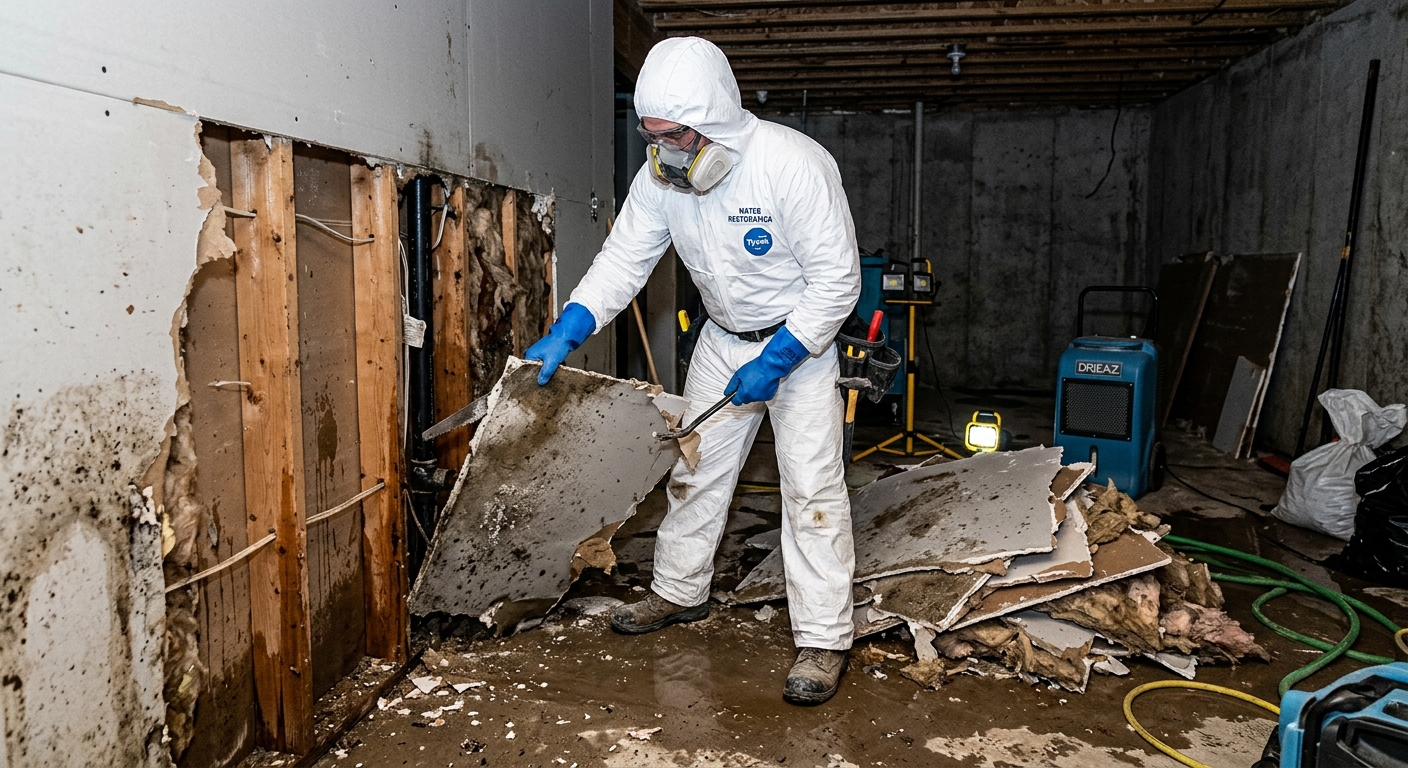
Generally, fiberglass insulation and carpet pad need to be removed once saturated, because they can’t be dried to a safe standard. Drywall that was below the waterline is usually cut out (often 12–24 inches above the highest mark); replacing is cheaper and cleaner than risking hidden mold. Solid hardwood can sometimes be saved by specialty drying equipment, but it’s case by case. Engineered or laminate flooring almost never survives water intrusion intact—they often cup or delaminate within a day, especially if basements are involved. Plaster, present in some older homes here, takes much longer to dry than drywall, but can often be saved if drying begins almost immediately and there’s no visible breakdown.
Cabinets with plywood boxes may be restorable if wet briefly and from clean water, but anything made from particleboard usually fails rapidly. If a contractor proposes demolishing everything on the first visit, insist on seeing clear moisture meter readings and a written scope. On the flipside, if someone claims they can save soaked walls or floors in a finished basement without opening anything, get a second opinion: unseen moisture is the fastest route to a mold problem and a bill in the $1,350–$9,600 range weeks later.
How fast mold starts after a leak in Nanticoke
In Nanticoke, mold can begin to colonize in as little as 24–48 hours after a water loss—so the clock is not on your side if water sits overnight or over a weekend. In our region’s full-basement homes, especially with higher humidity and limited sunlight, mold growth under finishes or behind walls is even more likely once that first-day window closes. What happens next depends on how long the water sits, and how thoroughly initial drying is done.
If a professional crew gets started within the first 24 hours, it’s often possible to dry in place with minimal opening up—keeping costs to the lower side of a $1,100–$6,800 restoration. Wait 48 hours and you’re often looking at selective demolition to catch hidden moisture, with new drywall and insulation costs. Beyond the third or fourth day, or if water comes from a sewer backup, every affected space needs containment, HEPA-filtered cleanup, and a third-party clearance test to confirm the home is safe to reoccupy. That’s when the cost can climb to $1,350–$9,600 or more.
Clearance testing means taking air or surface samples for mold or bacteria, and you should always ask for a written report. It’s the best way to protect yourself when selling a home, or to document for insurance that you fixed the underlying problem, not just the cosmetic signs of water.
Frequently asked questions — water damage restoration in Nanticoke
How much does sewage backup cleanup cost in Nanticoke?
Sewage backup cleanup in Nanticoke typically costs between $2,300–$11,000 depending on the extent of contamination, the amount of affected square footage, and how long the material sat before cleanup began. In homes with finished basements—a common setup in Luzerne County—the price tends toward the higher end because all porous materials like drywall, carpet, and insulation must be removed and safely disposed of as biohazard waste. Unlike clean water leaks, sewage (Category 3) events require full disinfection and may trigger permitting and inspection requirements if reconstruction is needed afterward. Most jobs are finished within a week, but access, hidden contamination, and delays in response time can stretch both the timeline and cost.
How fast do restoration companies respond in Nanticoke?
Restoration companies serving Nanticoke and the greater Wilkes-Barre area are generally able to respond the same day, often within just a few hours of your call. Many firms have crews based in Wilkes-Barre or Hazleton, making rapid response possible even during high-claim weather events. Fast response is critical because waiting until the next morning can turn a straightforward $1,100–$6,800 water extraction job into a much more expensive mold remediation. In an emergency, always confirm when crews will arrive—and make sure the first technician can show you IICRC credentials and proof of insurance before work starts.
Why is water damage priced per square foot?
Water damage costs in Nanticoke are frequently quoted per square foot because the size and complexity of the affected area are the main drivers of both labor and drying equipment needs. A small area—like a bathroom leak—might run toward the low end of the $1,100–$6,800 range, while whole-basement floods or multiple rooms naturally cost more and may require specialty setups like extra dehumidifiers or floor-drying mats. Pricing this way ensures transparency: larger affected spaces require more time, removal, and materials to restore, while smaller jobs cost less and finish quicker.
What causes most water damage in Nanticoke homes?
The most common sources of water damage in Nanticoke are burst pipes, failed sump pumps, and basement seepage—especially in full-basement homes common across Luzerne County. Post–World War II tract houses in the area often experience pipe failures due to aging materials, and heavy rains or high groundwater can overwhelm sump systems. Basement finishes, if present, mean a larger and costlier cleanup—potentially doubling the restoration cost. Typical water damage restoration (Category 1 extraction and drying) falls between $1,100–$6,800 here, but finished basements or delayed responses drive up those numbers quickly.
Does insurance cover mold after water damage?
Whether insurance covers mold after water damage in Pennsylvania—including Nanticoke—depends on the policy’s language and the cause of the water loss. If the mold results from a “sudden and accidental” event like a burst pipe (and you reported and dried it promptly), many policies will pay for a portion or all of cleanup, up to stated limits. Coverage for slow leaks, seepage, or deferred maintenance is often excluded, leaving homeowners with the bill. Mold remediation can range from $1,350–$9,600 if not caught quickly, making it crucial to both act fast and document everything for the insurer.
Is a shop vacuum enough for standing water?
A basic shop vacuum often isn’t enough for serious standing water in a Nanticoke basement. Small amounts—a few gallons—can be moved, but most household vacuums can’t keep up with a true flood, and using them without proper GFCI (ground fault protection) risks electric shock. In jobs requiring water extraction services, professionals bring commercial pumps and high-capacity LGR dehumidifiers, both of which are necessary for drying a basement or large area quickly. Costs for professional extraction run from $1,100–$6,800, but prevent longer-term problems like mold and rot. If you only have a small spill, a shop vac might do, but do not use one if water covers electrical outlets or the cause is sewage.
Do I need mold testing or just remediation?
In most Nanticoke water losses, mold “testing” before cleanup isn’t necessary if you can already see visible growth or smell mustiness—remediation should start without delay. However, after remediation, a clearance test by a third party is highly recommended. This process checks air or surface samples to confirm the home meets safe standards (per IICRC S520 practices). The especially high rates of finished basements in Luzerne County mean hidden mold is a real risk. Mold remediation, including testing, costs between $1,350–$9,600, but proper clearance documentation is crucial for future sales and insurance records.
Do I need a permit for water damage repairs in Nanticoke?
Permits in Nanticoke and the rest of Luzerne County depend on the type of work being done. For most emergency water extraction and drying—with no structural repairs—permits are usually not required. If, after water damage, your repairs involve removing and replacing structural elements like framing, drywall, or flooring (especially in Wilkes-Barre), local code offices may require a permit before work begins. Contractors should clarify if your job crosses the line into construction that needs a permit. Either way, work over $500 always requires a written contract in Pennsylvania under the Home Improvement Consumer Protection Act.
How long until reconstruction starts?
Reconstruction (putting everything back after tear-out and drying) in Nanticoke starts only after the structure is confirmed dry—usually within three to seven days for typical jobs. Timing can be affected by the extent of demolition, required permits, and how quickly insurance approves the scope of work. Following a sewage backup or mold remediation—which may cost between $2,300–$11,000—getting a third-party clearance test before rebuild is standard practice in Luzerne County homes, especially to protect resale value. Make sure your contractor provides a written drying log or clearance test before starting any reconstruction.
Is basement flooding covered by insurance in Pennsylvania?
Basement flooding coverage in Pennsylvania—including Nanticoke—is typically not included under standard homeowners’ insurance if water enters from outside the home (surface flooding, river overflow, or groundwater through foundation walls). You need a separate flood policy for that, available through FEMA’s National Flood Insurance Program or private carriers. Standard homeowners’ policies do, however, cover sudden and accidental events such as a burst pipe or failed water heater. Perils related to sewer backup also require a policy rider; without it, you’ll be on the hook for the full $2,300–$11,000 range of a typical cleanup. Always review your coverage specific to your risk zone in Luzerne County.