What water damage restoration costs in Lower Macungie
If you’re in Lower Macungie and staring down a water loss, you want to know what you’re in for financially—not tomorrow, but right now. Water damage restoration costs here tend to run higher than some might expect, and there’s a reason for it. Lower Macungie sits in the heart of Lehigh County, where over 30% of homes were built before 1980 (U.S. Census Bureau, ACS 2024). That aging plumbing and original materials in Allentown-area housing—especially the pre-1950 row and twin homes—drive up both the frequency and severity of interior water incidents. Basements are the standard, and when one floods, you’re rarely dealing with just damp carpet. This, combined with a high homeownership rate and typical single-family footprints, means larger affected areas and more extensive work per claim. Now let’s get down to the numbers. Whether it’s a sump pump failure on a snowy Lehigh Valley night or a washer hose burst, most water restoration jobs locally fall within these price bands—don’t let anyone tell you there’s no standard.
| Service |
What it covers |
Typical duration |
Price range |
| Water extraction + emergency drying (Cat 1) |
extraction, air movers, LGR dehumidifiers, daily moisture monitoring |
3–5 days |
$1,350–$8,400 |
| Structural drying only (post-extraction) |
drying to standard after water is already out |
3–5 days |
$1,100–$7,800 |
| Mold remediation with containment |
containment, HEPA filtration, removal, antimicrobial, clearance test |
3–7 days |
$1,700–$11,500 |
| Sewage backup cleanup (Cat 3) |
biohazard protocol, disposal of porous materials, disinfection |
2–5 days |
$2,800–$13,500 |
| Emergency board-up / tarping |
stop further water entry, secure the structure |
same day |
$350–$900 |
Estimates for a typical Lower Macungie home. Category, affected area and how long the water sat move these figures more than anything else.
Credentials and permits for restoration work in Lower Macungie
Pennsylvania does not issue a specific state license for water damage restoration or mold remediation contractors. If someone shows you a “licensed” card for water or mold jobs, know that it means nothing for regulation here. Instead, the industry in Lower Macungie is governed by IICRC standards—ask to see your crew leader’s IICRC card, which proves real technical training for S500 (restoration) or S520 (mold). Statewide, contractors must register as a Home Improvement Contractor (HIC) with the Office of Attorney General for jobs over $500. You can check this registration at hic.attorneygeneral.gov for peace of mind.
For immediate mitigation—removing water, setting up drying equipment, stopping mold—permits are not typically required in Lower Macungie. However, if your loss involves replacing framing or drywall, that's reconstruction and may require a permit, especially in municipalities like Allentown. Always get a copy of the company’s certificate of insurance; the policy should show active general liability and a workers’ compensation certificate, which you can look up at WCAIS (wcais.pa.gov).
Before saying yes to any work, get a written contract. It’s not just smart—it’s required by the Home Improvement Consumer Protection Act (HICPA) for jobs over $500. No Pennsylvania company can legally waive your insurance deductible, and beware anyone offering to do so. Define scope, price, and expectations upfront—do not accept only a handshake.
Category 3 cleanup in Lower Macungie
Category 3 water (sewage backup) is a whole other animal from the run-of-the-mill supply line break. It’s not just water with a worse smell—it’s a true biohazard situation. Cleanup in a Lower Macungie home must be done with full PPE: respirators, gloves, and protective suits, with strict containment set up to keep airborne particles from spreading to the rest of the house. Every porous material that touched this water—carpet, drywall below the water line, boxes, soft furniture—gets disposed, regardless of how ‘clean’ it looks after. You cannot salvage these safely. Post-removal, crews do a thorough disinfection and deodorization pass before any thought of rebuilding.
Lehigh County’s older neighborhoods, including parts of Lower Macungie, face repeated issues with sanitary and storm sewer inflow during heavy rains. If you get a sewage backup, you are not alone—it’s a recurring risk, not just a bad-luck accident. Prevention options exist: ask about backflow valves, which can stop future backups. Some municipalities cost-share, but this is not universal—check locally before budgeting.
Full Category 3 remediation for a lower-level room generally falls between $2,800–$13,500, driven by affected area and material loss. If anyone proposes “spot cleaning” instead of full removal, they are cutting corners you cannot afford.
Preventing the next one
For Lower Macungie homeowners, careful prevention pays off—most future water damage can be stopped for less than your deductible. Here’s what actually works, in order of bang for your buck:
- Supply line replacement: Old rubber hoses on washing machines and water heaters fail regularly in Lehigh County’s older homes. Flexible braided steel replacements cost around $90–$175 installed; do these long before the next snowmelt or freeze.
- Sump pump + battery backup: With full basements standard and local groundwater issues, install a battery backup ($600–$2,300). It’s your single best defense against spring or river flooding—and many claims happen during power outages.
- Leak sensors: Place them at water heaters, under sinks, near sump pits—costs under $30–$60 per unit and can save thousands by alerting you before water spreads.
- Automatic shutoff valves: Smart main shutoffs with sensors run $350–$850 plus installation; high up-front, but worthwhile if your travel often or own higher-value property. Lower Macungie’s winter design temp is 4 °F, so freeze breaks are a real risk.
- Backflow prevention valve: Only needed if you’re in a flood zone or neighborhood with sewer backup risk. Expect $950–$2,000 installed.
- Water heater pans and drains: Cheap ($60–$160), but only matter when installed right and drained outdoors—not always practical in older basements.
Skip high-priced “flood barriers” and plug-in dehumidifiers as prevention—real effectiveness is limited and not worth the ongoing cost for most homes in this region.
Why your neighbour's bill was half of yours
Here’s why water loss costs swing so widely in Lower Macungie: “category” and “class” are two axes every adjuster uses, but most homeowners think they’re just about square footage. Category is about how dirty—or hazardous—the water is. Class is about how deeply it gets into the house structure. You could have a Category 3 (sewage) loss in one room and pay over $13,500, while a Category 1 (clean supply break) that soaks three rooms comes in at $4,400. Contamination trumps size quickly in restoration, since sewage or groundwater requires loadout and disposal, extra PPE, more containment, and full disinfection, not just drying.
What many miss: water upgrades category as it sits. Clean water in a basement on Friday night becomes Category 2 (“gray”) if it’s left for 48 hours, and Category 3 (biohazard) after 72+ hours due to bacteria and mildew. That means a Saturday-morning call can make the difference between $3,400 and $7,000+—not the size of the puddle, but time is the critical factor.
| Classification |
Source or extent |
Health risk |
Cost effect |
| Category 1 — clean |
supply line, appliance line, rainwater |
low |
baseline |
| Category 2 — grey |
washing machine, dishwasher, sump failure |
moderate |
+20–40% |
| Category 3 — black |
sewage, groundwater, water standing 72+ hrs |
biohazard |
$2,800–$13,500 |
| Class 1 |
small area, little absorption into structure |
— |
low end of $1,350–$8,400 |
| Class 2 |
whole room, water into walls and subfloor |
— |
$1,350–$8,400 |
| Class 3 |
saturation from above; insulation and walls wet |
— |
$1,100–$7,800 |
| Class 4 |
deep saturation of hardwood, plaster, concrete |
— |
upper range of $1,100–$7,800 |
Outside water, inside water
Not every water problem is alike—especially in Lower Macungie. The Lehigh River and Little Lehigh Creek corridors cut through Lehigh County, and any home near them faces a specific flood risk. If the water came from the Lehigh River, overland flow, or rising creek water, you’re dealing with a flood zone issue. Private insurance sold here doesn’t cover flood by default—it must be purchased separately and the purchase comes with a waiting period, so getting a policy when you see a river warning is too late.
On the ground, flood-affected basements and pipe-break flooded basements may look exactly the same to you and to the restoration contractor, but insurance adjusters treat them differently. Coverage for flood events is based on your FEMA flood zone designation. If the water came in from a river or creek, expect more hoops, more documentation, and possibly less coverage. For standard pipe, appliance, or roof water, your homeowner’s policy applies—flood, it doesn’t. Always check your address’s flood zone before closing on a policy or starting restoration.
How long the whole thing takes
In Lower Macungie and greater Lehigh County, two phases get confused: mitigation and reconstruction. Mitigation—removing water, drying structure, cutting out mold or sewage impacts—happens first and moves fast: generally 3 to 7 days, depending on severity and how soon crews can get on site. This is the urgent phase, often direct-billed to your insurer, and it’s over when the fans and dehumidifiers come out and the last meter check is dry.
Then comes the slow part: reconstruction. If you need new drywall, floors, or cabinets after water or sewage, expect 2–8 weeks to finish the job. Multiple restoration firms base their crews in Lehigh County, so mitigation is rarely delayed. However, actual trades for “put-back” often schedule out due to market density and the volume of older housing needing work. The biggest frustration point? There’s a gap after mitigation—when equipment leaves but repairs haven’t started. You may need to chase your adjuster, select a contractor, and get on their schedule. That waiting is normal here; knowing it’s coming helps you plan around it.
Frequently asked questions — water damage restoration in Lower Macungie
Can I rent dehumidifiers instead of hiring a company?
Renting dehumidifiers from a big box store seems like a cheap fix, but in Lower Macungie it’s often a false economy. Small retail dehumidifiers don’t move enough air or moisture for a typical basement, especially those found in Lehigh County’s full-basement homes. Professional setups use LGR (Low Grain Refrigerant) dehumidifiers and industrial air movers, which dry at a much faster rate. Even one room often needs more equipment than you can rent without spending close to $1,100–$1,700, just in rental fees and time. More critically, pros check for hidden moisture and prevent mold before you see it. If it’s a light surface spill, DIY might suffice—but for any submerged carpet, wall, or large footprint, call a company.
What if the insurer's estimate is lower than the contractor's?
This tension is normal in Lehigh County, including Lower Macungie, where every job brings its own curveballs—hidden moisture, old building materials, or code upgrades. Insurer estimates are guidelines, and their software may use average prices from other regions. Restoration contractors base their figures on standards (using IICRC S500) and real local pricing. If there’s a big gap, ask both sides to break down the details line by line. Typical extraction and drying in Lower Macungie costs around $4,400, so estimates wildly lower than that for a full basement are probably missing something. Your adjuster and contractor usually can negotiate; don’t just accept the lower number without clear explanation.
What equipment should a restoration crew bring?
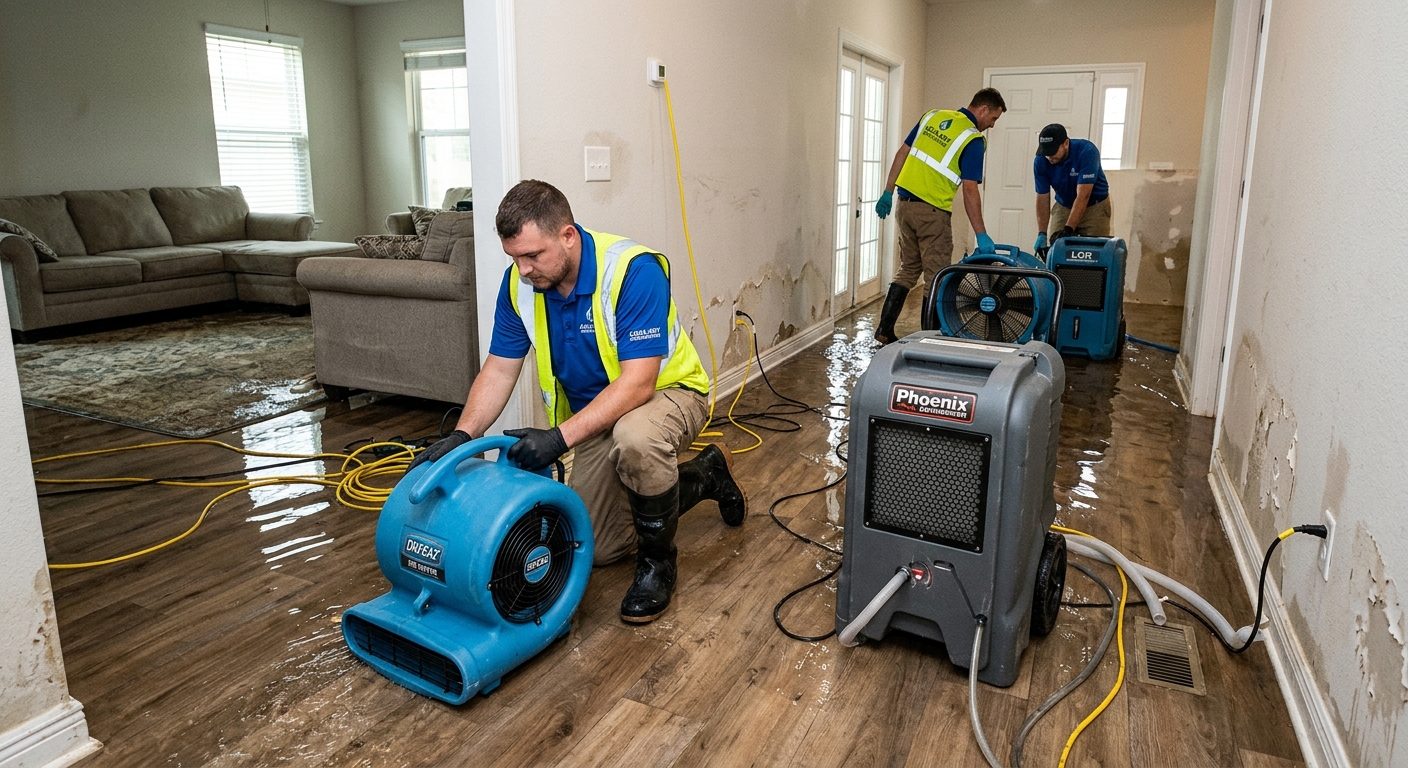
For work in Lower Macungie, expect a professional water restoration crew to arrive with commercial-grade truck-mounted or portable water extractors, LGR dehumidifiers, high-velocity air movers, and meters for moisture mapping behind walls and subfloors. For Category 3 (sewage), they’ll also bring PPE and containment setup. If they’re only setting up small consumer dehumidifiers and fans, that’s not proper mitigation for Lehigh County’s standard-sized homes. Gear costs are built in—you’re paying for $1,350–$8,400 worth of equipment and skill, not just hourly labor.
Why is water damage priced per square foot?
Pricing jobs per square foot in Lower Macungie makes sense when you consider the average full-basement or multi-room exposure typical to this area. The scope scales fast—equipment, labor, and time multiply as area increases. But don’t fixate on price per square foot alone: contamination (the category) can triple the bill. Water extraction plus drying often comes in at $1,350–$8,400 for typical structural classes, but a smaller sewage (Category 3) cleanup can exceed $7,300. Size matters, but so does the type of water and the materials involved.
What is IICRC certification and does it matter?
IICRC stands for Institute of Inspection, Cleaning and Restoration Certification, and it’s the nationally recognized (and insurer-expected) standard for water damage and mold work—even though Pennsylvania does not license restoration or mold contractors specifically. In Lehigh County, most quality firms will show an IICRC S500 card (for water, structural drying) or S520 (for mold) for each crew leader. Ask for this: it ensures someone on your job has actual hands-on training, not just a business card or franchise logo. Most insurers in Lower Macungie require work be done to IICRC standards before they’ll consider paying the bill—which can be anywhere from $1,100 to $11,500 depending on scope.
How much does a flooded basement cost to restore in Lower Macungie?
The typical Lower Macungie basement, if fully flooded (but not with sewage), costs in the range of $4,400 for water extraction and emergency drying. If you catch it fast and the water is clean, stick to the low end; if it sits, or if storm or sewage water is involved, mold and Category 3 cleaning can push you anywhere from $7,300 up to $13,500. Full basements are more common than slabs locally, so square footage and finishing levels drive the range. Always get a detailed scope from a local professional before approving service.
Does insurance cover mold after water damage?
In Lower Macungie and the rest of Pennsylvania, whether insurance covers mold depends on the policy and the event that started it. Most homeowner’s policies exclude long-term or pre-existing mold, but will often cover mold remediation $1,700–$11,500 if it results from a covered water claim (like a burst pipe discovered quickly). If the insurer determines the water sat more than a few days or notices you didn’t report promptly, they may deny coverage. Take detailed photos and start drying ASAP, but always check your policy for specific exclusion or coverage language about mold.
Can hardwood floors be saved after flooding?
Salvaging hardwood floors in Lower Macungie is possible, but only if action is immediate—within 24 hours, preferably less. The wood and especially the subfloor saturate fast (think Class 3 or 4), and delayed drying leads to cupping, warping, and mold. Specialty drying mats and dehumidifiers are required, which puts the service in the $1,100–$7,800 range, depending on area and equipment need. If sewage or extended standing water is involved, removal is nearly always the answer. Don’t let anyone “guarantee” hardwood restoration before a meter reading; sometimes replacement is cheaper and safer.
How long before mold starts growing?
In Lehigh County’s full basement homes—including most of Lower Macungie—mold can start to grow in as little as 24 to 48 hours after water intrusion, especially at summer humidity levels. Older buildings with original materials are even more vulnerable. That’s why restoration crews emphasize immediate drying and moisture checks right after extraction. Waiting longer risks needing mold remediation, which costs from $1,700–$11,500. The clock starts the minute the water hits wood or drywall—don’t delay getting the space aired out and drying equipment on site.
Is sewer backup a known problem in Lower Macungie?
Yes—Lower Macungie and neighboring Lehigh County areas have documented sanitary and storm sewer inflow problems. Allentown and other older neighborhoods struggle when heavy rain overwhelms legacy infrastructure, causing backups that enter basements and lower levels. Sewer backup cleanup is not rare here; claims for Category 3 cleaning average $7,300 and go higher with extensive disposal and mitigation. Preventative backflow valves can help, but ongoing risk means most households should have a rapid-action plan when summer storms hit.