Altoona water damage pricing by scope — 2026
If you’re a homeowner in Altoona facing a water emergency right now, you want to know what to expect—not vague numbers, but realistic local costs. Blair County is made up mostly of owner-occupied, single-family homes (65.5% and 73.4% respectively, U.S. Census Bureau, ACS 2024), with the majority built before 1980. That means water losses here are often complicated by older plumbing and materials. Many Blair County homes are early-20th-century Altoona rowhouses with aged plumbing that increases interior leak-related restoration calls. These details matter, both for drying times and for what can or cannot be salvaged after a loss.
Here’s what typical Altoona water damage work looks like for 2026—by scope, duration, and the costs you’ll see quoted on real jobs:
| Service |
What it covers |
Typical duration |
Price range |
| Water extraction + emergency drying (Cat 1) |
extraction, air movers, LGR dehumidifiers, daily moisture monitoring |
3–5 days |
$1,050–$6,700 |
| Structural drying only (post-extraction) |
drying to standard after water is already out |
3–5 days |
$900–$6,300 |
| Mold remediation with containment |
containment, HEPA filtration, removal, antimicrobial, clearance test |
3–7 days |
$1,350–$9,400 |
| Sewage backup cleanup (Cat 3) |
biohazard protocol, disposal of porous materials, disinfection |
2–5 days |
$2,200–$10,500 |
| Emergency board-up / tarping |
stop further water entry, secure the structure |
same day |
$350–$900 |
Estimates for a typical Altoona home. Category, affected area and how long the water sat move these figures more than anything else.
Regulation, certification and verification in Altoona
Pennsylvania does not have a state license specific to restoration contractors or mold remediation. In Altoona, anyone with a Home Improvement Contractor (HIC) registration can contract for work over $500, but that registration is not a quality guarantee—it means they registered with the Pennsylvania Office of Attorney General. Always ask to see a copy of their HIC registration and verify it yourself at hic.attorneygeneral.gov before signing anything.
IICRC certification is the de facto performance standard for restoration and mold work in Pennsylvania. The IICRC is a nationally recognized body—not a state regulator—but insurance adjusters expect this credential. Ask the lead technician for their IICRC card on arrival. For projects in homes built before 1978, federal law (EPA RRP Rule) also applies for any restoration disturbing painted surfaces—especially if demolition is needed—so ask to see an EPA Lead Renovator certificate if this applies.
Permits in Altoona are triggered by structural repairs after a flood, such as framing replacement, so mitigation like water extraction or drying itself does not usually require permitting here. Before crews begin work, ask for a written contract (required for jobs over $500) that lists the full scope, pricing, and your 3 business-day right to cancel, per the Home Improvement Consumer Protection Act.
Insurance matters: All employers must carry workers’ compensation (check at wcais.pa.gov) and general liability. Insist on proof naming your property and check expiration dates. Good contractors will provide this without complaint before setting up a hose or air mover.
Category and class: the two words that set your price
When you call for water damage help in Altoona, your contractor will use “category” and “class”—terms that sound like insurance talk but drive price and process. These are not interchangeable. “Category” means how contaminated the water is: Category 1 is clean (broken supply line), Category 2 carries some dirt or chemicals (appliance runoff), Category 3 is true biohazard (sewage, river water, or water that’s been sitting too long). “Class” is about how much material the water has soaked—are just the floors damp, or is everything from walls to insulation saturated?
Don’t make the mistake of thinking a big fresh clean-water loss will necessarily cost more. A modest-sized Category 3 sewage backup, common in Altoona basements when the sanitary system is overloaded, can easily cost from $2,200–$10,500, while a larger but clean loss could come in much lower.
Most important for homeowners to know: Water category often gets worse with time. Clean water (Category 1) that sits for a few days can degrade into Category 2 or 3 as bacteria grow—especially in Blair County basements. Rapid intervention almost always saves money and health risk.
| Classification |
Source or extent |
Health risk |
Cost effect |
| Category 1 — clean |
supply line, appliance line, rainwater |
low |
baseline |
| Category 2 — grey |
washing machine, dishwasher, sump failure |
moderate |
+20–40% |
| Category 3 — black |
sewage, groundwater, water standing 72+ hrs |
biohazard |
$2,200–$10,500 |
| Class 1 |
small area, little absorption into structure |
— |
low end of service1 |
| Class 2 |
whole room, water into walls and subfloor |
— |
$1,050–$6,700 |
| Class 3 |
saturation from above; insulation and walls wet |
— |
$900–$6,300 |
| Class 4 |
deep saturation of hardwood, plaster, concrete |
— |
service2 upper range |
What construction era means for a water loss here
In Altoona and surrounding Blair County, homes built before 1980 account for 91.8% of the housing stock (U.S. Census Bureau, ACS 2024). This means most water losses here happen in houses with cast iron or galvanized drain stacks, copper or even older steel supply lines, and traditional plaster walls over wood lath. The full basements typical in Altoona, Hollidaysburg, and other boroughs also set the stage for sump pump failures or seepage through stone or block walls.
Older plaster takes much longer to dry than drywall—sometimes requiring wall demolition for proper restoration—while historic wood subfloors can survive if dried promptly. Cast iron drains, common in early-20th-century rowhouses, are more prone to leaks and can complicate the source of the water loss. Reconstruction in these homes often means careful demolition to avoid disturbing lead-based paint or old finishes. When drywall is present (as in later renovations), it still gets cut below the waterline after significant flooding.
Even in newer subdivisions, Blair County’s full basements and transition from copper to PEX or PVC supply lines mean losses often start with plumbing failures as water heaters and pipes hit their third or fourth decade. Understanding what’s behind your walls helps you judge the recommendations your contractor gives—what’s “normal” demo for one Altoona house may be extensive for another just a few streets over.
Mitigation, then reconstruction: two different timelines
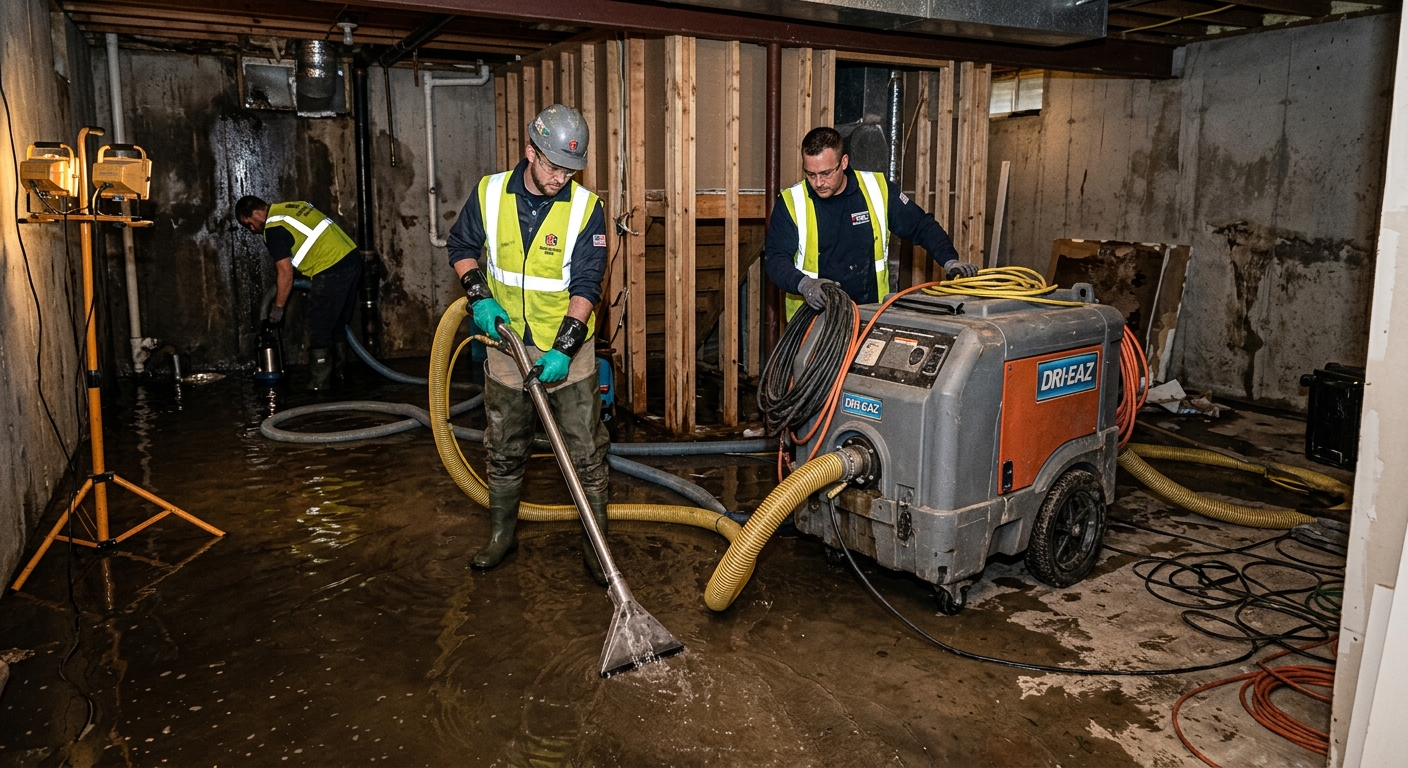
Water damage jobs in Altoona are always two phases: mitigation and reconstruction—and they are not the same. Mitigation comes first: extraction, drying, demolition of unsalvageable material, and environmental cleaning, usually done in a few days and by a crew set up for speed and emergency response. This team may even direct-bill your insurance company. Once they finish, equipment is pulled and the house is dry—but you could be looking at exposed studs, missing drywall, or open floors.
The reconstruction phase comes next. Here, a new estimate is drawn up, the job may require a permit if structural repairs are involved (especially within Altoona city limits), and the crew may be different—sometimes even a different contractor entirely. Scheduling can take a week or more, especially in the thinner rural pockets of Blair County where travel surcharges and lower market density stretch lead times. Actual repairs—drywall, flooring, painting, trim—can add several weeks, particularly when material or labor are short locally.
Many Altoona homeowners are caught off guard when the mitigation crew packs up and the house sits quiet. This gap is normal—between the “emergency” and “restoration to normal.” Knowing to expect it means you’re not left chasing calls or feeling abandoned after the drying fans shut off.
Equipment, monitoring and drying standards
Effective water mitigation in Altoona isn’t just about turning on big fans and hoping for the best. The process is guided by clear standards and careful monitoring—especially in our climate, with high ground snow load and long heating seasons that influence indoor moisture behavior.
It starts with moisture mapping: technicians use meters to check moisture levels in floors, walls, and hidden spaces, logging readings daily. This log is your proof that areas are actually drying—not staying wet under the surface where mold risk rises. Air movers are placed to circulate air across wet surfaces; Low Grain Refrigerant (LGR) dehumidifiers draw moisture out of the air, speeding up evaporation. Equipment will run continuously for three to five days. Turning it off overnight (or because of noise) stalls the process—Altoona’s winter temps and humidity can make moisture linger otherwise.
Competent crews return daily to check progress, record meter readings, and compare to a pre-set “drying goal”—a target moisture content based on unaffected building material nearby. This isn’t a gut-feeling call. If a contractor won’t show you daily moisture logs with readings for every area treated, insist—quality work is measurable, not a guessing game.
In north-central Pennsylvania’s climate, with its 6300 heating degree days, outdoor air often isn’t helpful and can even delay drying if misused. The right local firm will know the difference.
Salvage decisions after a water loss
In Altoona’s early-20th-century rowhouses, restoration nearly always comes with hard choices about what can be saved and what has to go. Many Blair County homes are early-20th-century Altoona rowhouses with aged plumbing that increases interior leak-related restoration calls. When water invades, fiberglass insulation and carpet pad are almost always removed—they hold bacteria and stay wet too long. Drywall below the watermark gets cut (a process called “flood cut”), especially if water sat more than a day or two. Plaster, more common than drywall in older Altoona homes, dries slowly and often hides wet wooden lath beneath; some can be saved, but persistent dampness means sections may still need demolition later to prevent mold.
Solid hardwood flooring is sometimes salvageable with specialty drying mats, but once it cups badly or if a Category 3 loss happens, removal is usually best. Engineered wood and most laminates rarely survive even brief submersion. Cabinets depend on their composition—solid wood boxes dry, but particle-board cabinets often swell and must be replaced, particularly after basement or kitchen supply line failures.
If a contractor pushes to gut every wall or ceiling immediately in a modest clean-water event, that’s overkill for most Blair County houses. The opposite—promising to “dry everything in place” no matter what—can set you up for later mold growth, which insurance is less likely to cover. Honest restoration means explaining the why behind each removal or salvage, not just quoting a demo number.
Frequently asked questions — water damage restoration in Altoona
What does mold remediation cost in Altoona?
Mold remediation in Altoona typically ranges from $1,350–$9,400, with most projects for owner-occupied homes falling near the middle of that range. Higher costs occur when the affected area is large or when demolition is needed to access mold behind plaster or within basements (which are common here). Clearance testing, containment barriers, and HEPA filtration are standard for a safe and insurable result. If a contractor quotes far outside this band, be wary—either too low (they’re skipping steps) or too high (they’re over-scoping for the job). Altoona’s high pre-1980 housing stock also means many jobs contend with lead paint and older building materials, which can modestly increase costs but should always be explained in advance.
Is it safe to stay in the house during drying?
In most Altoona water losses, it is safe to remain in the house during Category 1 or 2 drying with some precautions: keep pets and children away from equipment, don’t unplug fans or dehumidifiers, and limit time in heavily affected areas. However, Category 3 losses (sewage or groundwater) are a different case. Those jobs, especially in finished Blair County basements, often require partial evacuation for 2–5 days, with costs running $2,200–$10,500. The noise from equipment and disruption are real, but safety comes first—especially for elderly or immunocompromised residents. Always ask what “category” the water is and follow the technician’s safety advice specific to your case.
Why does plaster take longer to dry than drywall?
Plaster walls, still common in early-1900s Altoona homes, trap water within both the thick plaster and the wood lath behind. Unlike drywall, which is porous but thin and can be removed below the waterline, plaster distributes and holds moisture much longer, delaying drying goals and often requiring specialty equipment or some demolition. In north-central Pennsylvania’s cool, damp climate—with 6300 heating degree days—ambient drying is even slower across seasons. This extended hold of moisture explains why a water loss involving plaster can raise the job’s price into the upper end of the $900–$6,300 range for structural drying, even before repairs start.
What is an assignment of benefits and should I sign one?
An assignment of benefits (AOB) is a contract giving your water restoration contractor the right to handle your insurance claim directly, receive payments, and sometimes make repair decisions on your behalf. While AOBs are legal in Pennsylvania, it’s not always wise to sign one immediately in Altoona without understanding what you’re agreeing to. Signing can speed up direct-billing and fast-track urgent repairs—especially on larger jobs around $3,500 or more. But you lose control over some insurance negotiations, and disputes over scope or billing can become harder to settle. Read all terms carefully, get a copy, and never sign if you don’t understand your right to revoke within the three-day cancellation window provided by Pennsylvania law.
What causes most water damage in Altoona homes?
Most water damage calls in Altoona result from interior plumbing failures: aging water supply lines, failed pressure valves, and backed-up sump pumps, especially in full basements typical of the region. Many Blair County homes are early-20th-century Altoona rowhouses with aged plumbing that increases interior leak-related restoration calls. Secondary causes include overflowing appliances and, during heavy rain, localized flooding tied to the Little Juniata River and Beaverdam Branch creeks. Sewer backup is a growing issue due to the area’s aging sanitary system, with cleanup jobs typically falling in the $2,200–$10,500 range. Proactive plumbing and basement maintenance can prevent many losses before they start.
How long does water damage drying take in Altoona?
Emergency drying for a typical Altoona single-family home takes about three to five days once extraction and equipment placement begin. Complete structural drying timelines depend on how much water was absorbed and what materials are involved—older plaster or hardwood will slow the process compared to drywall. If you’ve experienced a flood or major leak, expect crews to monitor daily and only remove equipment once their moisture readings confirm a “drying goal” has been reached. The price range for drying services alone in our market is $900–$6,300. Severe cases (deeper saturation or Category 3 contamination) may run longer and higher.
What water damage can I safely handle alone?
If water is from a clean source (like a newly broken supply line) and hasn’t soaked much more than a small area of flooring—say, less than a single room’s worth—you can often mop up, set fans, and empty a wet/dry vacuum yourself. Do not attempt to handle sewage (Category 3 events) or water that has sat for more than 24 hours due to mold and biohazard risks. Even in Altoona’s older homes, DIY may suffice for contained, fresh leaks—but be realistic about your limits. If your efforts don’t lower moisture fast, call for help before the situation escalates: professional extraction and drying starts around $1,050.
Can a contractor waive my deductible in Pennsylvania?
No—waiving a homeowner’s insurance deductible is prohibited under Pennsylvania law and is considered insurance fraud. If a contractor in Altoona offers to pay, absorb, or “hide” your deductible to win your business, that’s a red flag. This is explicitly forbidden by the Home Improvement Consumer Protection Act (HICPA). Trustworthy restoration companies will explain this clearly and provide honest, upfront pricing within the legal range (for example, $1,050–$6,700 for most water extraction jobs), but will not break state law to get your signature.
What does structural drying cost if I extracted the water myself?
If you’ve already removed surface water but need professional help to fully dry out walls, floors, and other materials in your Altoona home, you’ll likely be quoted for $900–$6,300 for structural drying only. This scope includes air movers, dehumidifiers, and daily moisture checks to avoid mold or hidden damage—especially critical in Blair County’s frequent basement losses. The final number depends on how deep the saturation goes (class), and on how long the water sat before you began. Don’t skip professional drying if meter readings show materials are still wet—“almost dry” isn’t dry enough by insurance standards.
Does homeowner's insurance cover water damage in Altoona?
Most homeowner’s insurance policies in Altoona cover sudden and accidental water damage like burst pipes or overflowing appliances, but will generally exclude groundwater/flood (requiring separate flood insurance) or long-term leaks. Damage caused by sewer backups might be covered if you’ve added that specific rider—worth checking, since jobs in Altoona and Hollidaysburg can easily reach $2,200–$10,500 for cleanup and repairs. Always contact your agent right away after a loss, document all damage, keep receipts, and follow their reporting process. Having a reputable, registered restoration company on-site early is key to a smooth insurance claim.