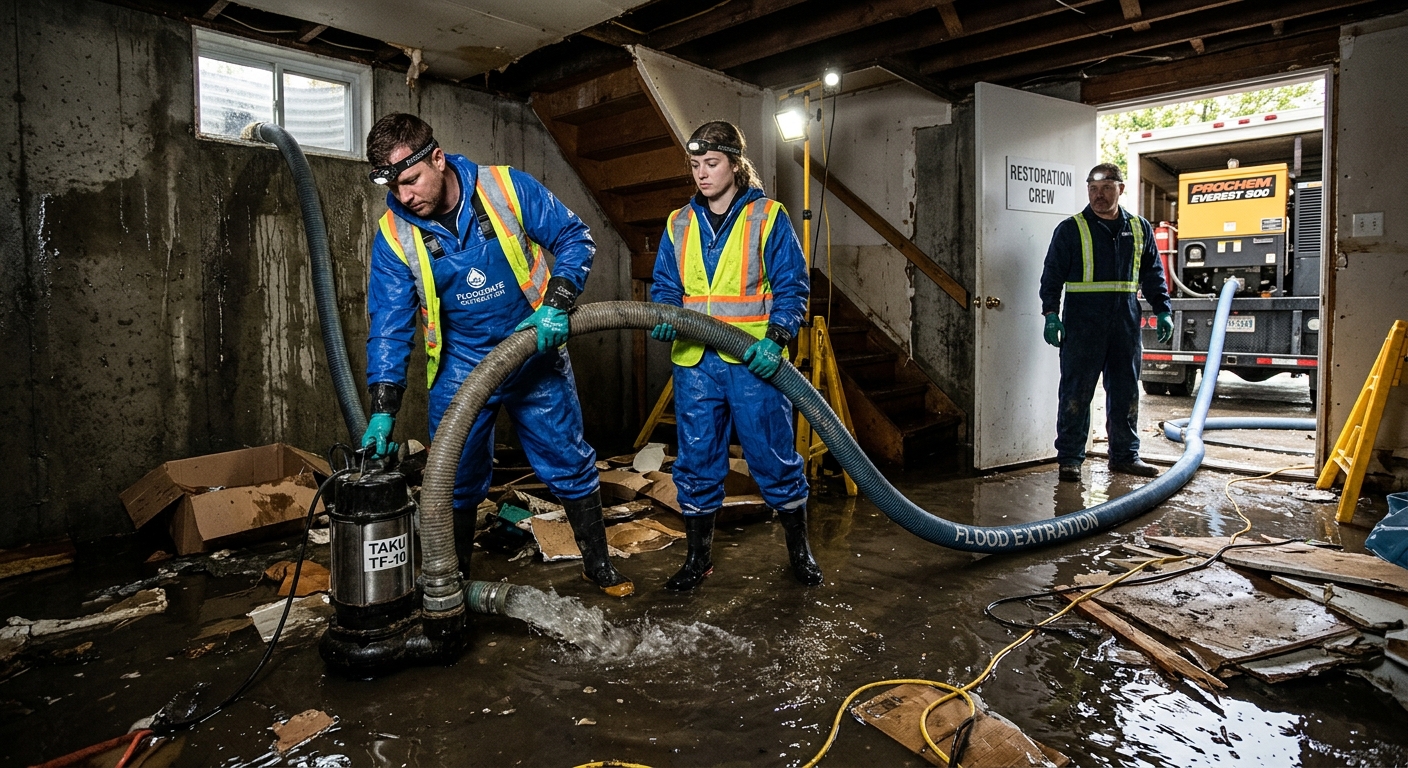
What water damage restoration costs in Clairton
If you’re in Clairton and facing water damage right now, you need a real sense of what this is likely to cost — not “national averages.” Water restoration here is shaped by the local housing scene: homes in Clairton are overwhelmingly older, with nearly 93% built before 1980 (U.S. Census Bureau, ACS 2024). Old plumbing and basements are a common equation, and pipe breaks or seepage aren’t rare, especially after freeze-thaw cycles or heavy rain filling those old masonry walls. Paired with the city’s typical household income, costs are a serious concern for most.
In Clairton, most straightforward jobs — like clean water extraction and drying after a supply line break — start at $1,150–$7,100. But if the water is contaminated or sits for days (as happens in vacant properties or when owners wait till morning), costs can escalate quickly. Basement floods from old drains or backups require biohazard cleanup, with a much higher top end. Here’s what homeowners can expect for common services:
| Service |
What it covers |
Typical duration |
Price range |
| Water extraction + emergency drying (Cat 1) |
extraction, air movers, LGR dehumidifiers, daily moisture monitoring |
3–5 days |
$1,150–$7,100 |
| Structural drying only (post-extraction) |
drying to standard after water is already out |
3–5 days |
$950–$6,600 |
| Mold remediation with containment |
containment, HEPA filtration, removal, antimicrobial, clearance test |
3–7 days |
$1,400–$9,900 |
| Sewage backup cleanup (Cat 3) |
biohazard protocol, disposal of porous materials, disinfection |
2–5 days |
$2,400–$11,500 |
| Emergency board-up / tarping |
stop further water entry, secure the structure |
same day |
$350–$900 |
Estimates for a typical Clairton home. Category, affected area and how long the water sat move these figures more than anything else.
Category and class: the two words that set your price
It’s easy to mix up the two factors that decide what your water damage job here will cost: “category” refers to how contaminated the water is, while “class” describes how much of your building absorbed it. They sound technical, but they drive your bill in different ways.
Category is about health risk. Clean water from a supply line (Category 1) is the cheapest to fix. Wastewater or water that’s sat for days (Category 3) requires strict biohazard protocols, protective gear, and full demolition of porous materials — even if it’s a small area. For example, a small Category 3 backup cleanup can run $2,400–$11,500, outpacing a much larger clean-water job on price.
Class is about the building itself. If water sits on top of stone or tile and is sopped up quickly (Class 1), costs stay low. But if water soaks through plaster, wood, or basement slab (Class 4), drying is extended and parts of the home may need demolition and specialty equipment.
The most costly error: waiting. Even a Category 1 incident — say, clean water from a supply line — will shift up the scale as hours pass, eventually reaching Category 3 if left untreated. That’s why you’ll hear urgency from every seasoned contractor.
| Classification |
Source or extent |
Health risk |
Cost effect |
| Category 1 — clean |
supply line, appliance line, rainwater |
low |
baseline |
| Category 2 — grey |
washing machine, dishwasher, sump failure |
moderate |
+20–40% |
| Category 3 — black |
sewage, groundwater, water standing 72+ hrs |
biohazard |
$2,400–$11,500 |
| Class 1 |
small area, little absorption into structure |
— |
low end of $1,150–$7,100 |
| Class 2 |
whole room, water into walls and subfloor |
— |
$1,150–$7,100 |
| Class 3 |
saturation from above; insulation and walls wet |
— |
$950–$6,600 |
| Class 4 |
deep saturation of hardwood, plaster, concrete |
— |
upper range of $950–$6,600 |
Hiring under pressure in Clairton
Most advice says to get three quotes, read all the fine print, and have days to think. If you’ve got an inch of water over your basement, that’s just not real. In Clairton and southern Allegheny County, you’re living in a saturated metro — service is dense, and a legitimate crew should be able to promise same-day arrival. Still, that doesn’t mean everyone showing up is operating above board. Move fast, but don’t drop the most basic checks: an emergency is precisely when fly-by-nights and overpriced out-of-towners exploit the situation.
When calling for help, confirm these three before anyone even rolls a truck: (1) Do they have a Pennsylvania Home Improvement Contractor registration, and will they show proof? (2) Are they fully insured and can they provide proof of workers’ comp? (3) Will their lead technician on site hold an IICRC certification card?
Before the crew brings in a blower or starts removing carpet, you want these three in hand: (1) A contract with a clear price scope (not blank!), (2) Proof of insurance, addressed correctly, (3) A copy of their HIC registration printout.
- Confirm arrival time — local firms should be able to get there within 2 hours.
- Ask for their HIC registration number and verify it online.
- Get proof of insurance sent directly, naming your property.
- Ask if their workers are covered by workers’ comp in Pennsylvania.
- Require the lead technician’s IICRC card, not just a company badge.
- Ask for a written scope before any work begins — avoid “to be determined” language.
- Ensure the contract gives the 3-day right to rescind (this is state law for jobs over $500).
- Refuse to sign anything with blank sections or that authorizes billing before a walkthrough.
- If there’s pressure to start before paperwork, that’s a red flag; let them wait or call someone else.
- Never pay up front — deposits are rare for mitigation, and should never exceed 1/3 by law.
Be wary of these pressure tactics: pushing an unsigned or blank contract in front of you “just to start drying,” crews unloading gear while you’re distracted by paperwork, or language that locks you in before you’ve seen a real scope. If someone won’t slow down to do it by the book, send them packing. There are plenty of qualified pros in Allegheny County who don’t need to rush you into a bad deal.
The first hour: what to do before anyone arrives
If you’re standing in water and no one’s come yet, you can help yourself in these exact steps:
- Shut off the main water valve — most are in the basement near where the water line enters the home. If it’s not safe, don’t force it.
- If the electric panel is in a dry area, switch off breakers feeding the affected rooms. Don’t touch any panel if there’s standing water around it.
- Take clear photos and videos of all rooms, including walls, baseboards, and anything that’s still dry. This is critical for insurance.
- Move small furniture and valuables up onto beds or atop dry surfaces. Don’t start stacking wet cardboard or fabric — keep things as dry as possible.
- Do not use a household vacuum on standing water; it’s a shock risk and will ruin the vacuum.
Now, call your insurance provider and a restoration contractor. The order isn’t vital; what matters is speed and solid documentation. Most insurers want to hear from you right away, but real damage control starts with which contractor you let in. Take five minutes to document the scene before anyone sets foot inside — these photos can make the difference on a claim. The big mistake? Waiting till the morning. In older Clairton homes, high humidity and saturated basements mean you’re already on the mold clock. By the time Category 1 turns to Category 3, that $1,150–$7,100 problem is rapidly heading for $2,400–$11,500. Minutes count; just don’t forget the before photos.
How long the whole thing takes
People often expect water restoration to be a one-and-done process. The reality, especially in Allegheny County, is that restoration comes in two stages. First is mitigation: extraction, drying, and cleaning. This part is fast — typically 3 to 7 days for most Clairton-sized losses. This crew rarely swings hammers or makes permanent repairs; they get the area dry enough so the building doesn’t keep rotting or growing mold. Insurers usually pay this portion direct, with clear invoices and moisture logs kept daily.
After the last fan leaves, you’ll hit a quiet period. That’s normal — it’s the gap between mitigation and reconstruction. Permits, estimates, and insurance adjusters get involved before drywall or flooring is replaced. In a dense contractor market like ours, you should count on reconstruction lead times of a few weeks to a couple of months, with demand peaking in storm seasons. This separation can feel abrupt, but it’s not abandonment: different skill set, different paperwork, sometimes even a different company.
Knowing up front that there’s a waiting phase reduces frustration and helps you plan for displacement, especially when basements are vital living or storage space in older Clairton homes.
Clairton's housing and its water damage profile
Clairton’s water losses are dictated by a simple fact: nearly 93% of homes in town were built before 1980 (U.S. Census Bureau, ACS 2024). That means most properties have supply lines made of copper (or even galvanized steel), original cast iron or clay drains, and full masonry basements. Old lines are prone to failures, especially after freeze-thaw cycles, and older drains increase the chances of backups from aging city sewers — not just heavy rains.
Basements are usually unfinished or partially finished, with plaster or lath walls more common than drywall. Plaster soaks up water differently than modern drywall, holding moisture longer and requiring more specialty drying rather than tear-out. Where wood flooring meets a wet basement, or if water gets behind thick plaster, you’re looking at a Class 3 or 4 event — that means more drying days and a much higher risk of needing demolition.
Modern subdivisions, while newer, don’t escape risk: first-generation PEX and CPVC lines, or original water heaters, are now reaching initial failure ages. But the classic Clairton claim is a saturated plaster basement with original drains and no perimeter waterproofing. That’s why so many jobs here turn into both extraction and full structural drying, not just “fan and mop” jobs after a rainstorm. Knowing your property’s build era helps a contractor target hidden risks on day one.
Regulation, certification and verification in Clairton
Pennsylvania does not issue a state license for restoration or mold remediation contractors. That means a business card alone guarantees nothing about training or skill. The insurance industry standard is the IICRC S500 for water loss and S520 for mold — you want to see that the lead technician is certified, not just “the company.” Ask to see their IICRC card when they arrive. Written contracts are required for jobs over $500, as mandated by the Home Improvement Consumer Protection Act, entitling you to a 3-day right to cancel any agreement.
Permits are generally not needed for mitigation (drying, extraction, board-up), but if repairs require opening walls or replacing framing, a municipal permit is necessary, especially in Pittsburgh and some suburbs. For all contracts over $500, verify their Pennsylvania Home Improvement Contractor (HIC) registration online before signing. Insurance companies will expect contractors to have general liability insurance and Pennsylvania workers’ compensation. For proof, request a certificate of insurance that names your own property as the holder; workers’ compensation can be confirmed through the WCAIS system.
Before a restoration crew starts any work: demand a written (not verbal) scope of work, a signed HICPA-compliant contract, and proof of both insurance and HIC registration. For homes built before 1978, you can and should request proof they follow the EPA Lead RRP Rule. If anything is missing or unclear, do not let them unload equipment. In Clairton, good crews are common, so don’t settle for vague promises on paperwork.
Frequently asked questions — water damage restoration in Clairton
What is an assignment of benefits and should I sign one?
Assignment of benefits (AOB) is a legal agreement that gives your restoration contractor the right to communicate and receive payment directly from your insurance company. In Clairton, some firms use AOBs on large jobs, so your claim moves faster and you’re less burdened with paperwork. But it’s a trade-off: if you sign without reading, you can lose control over repairs or payment disputes. For most clean water jobs ($1,150–$7,100), a direct invoice signed by you is sufficient. Only consider AOB on major losses where you know and trust your contractor — and never sign an AOB with blanks or “open” price language. In Pennsylvania, AOB misuse is rare but not unheard of; always match AOB terms with your insurer’s advice before signing.
Is basement flooding covered by insurance in Pennsylvania?
In many Clairton homes, standard homeowners insurance may cover basement flooding only if it’s caused by sudden and accidental events, like a burst pipe or water heater failure. If your basement floods due to seepage through old masonry foundations or from the Monongahela or Allegheny river floodwaters, you almost always need a separate flood policy — regular policies won’t pay for that. Sewer backup is often an optional endorsement, so check your specific policy. For flood-caused sewage backup cleanup, insurance might cover $2,400–$11,500 if you have the right add-on. The age and prevalence of full basements in Clairton mean you must clarify with your agent what’s included before a storm season.
What equipment should a restoration crew bring?
Local restoration teams in Clairton’s older homes usually show up with powerful truck-mounted or portable water extractors, industrial air movers, low-grain refrigerant (LGR) dehumidifiers, moisture meters to check inside walls and floors, and HEPA air scrubbers if mold or sewage is a risk. On sewage backups or confirmed mold jobs, expect full-body PPE and containment sheeting. The days of a “shop vac” and household fans are behind us here. If a crew uses anything less than commercial-grade gear, or appears to be improvising in a 1930s basement, beware. The right tools keep the job within the lower bands ($1,150–$7,100) by avoiding hidden moisture and costly mistakes.
Should I call my insurer or a restoration company first?
The order isn’t critical in Clairton — what matters is documenting everything as soon as possible. Restoration companies in Allegheny County are used to working directly with insurers, but you don’t want delays. Take photos of every room before anyone touches a thing. If you’re dealing with a bigger loss, like a Category 3 sewage backup ($2,400–$11,500), it’s smart to call both at the same time, so you can’t be blamed for “delaying mitigation.” Many local insurers allow you to begin work before they send an adjuster, provided you keep receipts and daily logs.
Do I need mold testing or just remediation?
In nearly all Clairton homes, what you need depends on the source and timing of your water loss. If you see visible mold or musty odors after a basement flood, going straight to remediation is usually the right call — testing is only needed if you require documented clearance for a sale or for sensitive health cases. Good contractors in Clairton will follow IICRC S520 standards for containment and removal, with optional post-remediation testing. Mold remediation, including testing and clearance, ranges from $1,400–$9,900. Unnecessary testing upfront just delays getting the job moving. If in doubt, ask your contractor if testing is truly needed or if it’s just for billing.
Is emergency after-hours service more expensive in Clairton?
Yes, after-hours rates can be higher in Clairton and throughout Allegheny County, but the region’s dense contractor market helps prevent runaway pricing. Most local firms include some premium for calls received late at night or on holidays, especially for immediate response. However, the increase generally pushes you to the higher end of the published bands — for example, an after-hours clean water extraction might reach $7,100 instead of staying near $3,700. That said, fast response in older homes prevents a small loss from ballooning. A good contractor will tell you up front what, if any, surcharge applies.
Is sewer backup a known problem in Clairton?
Yes — Clairton shares the greater Pittsburgh region’s older combined sewer and storm systems. Backups, especially during heavy rains, are well-documented in the Pittsburgh Water and Sewer Authority’s area. Full masonry basements and legacy clay drains increase risk, particularly in pre-1940 Clairton homes. Cleanup for even a modest backup can run $2,400–$11,500, especially if building materials need removal. If you live downhill or near Chartiers Creek, consider a sewer backup rider for your insurance.
Can a contractor waive my deductible in Pennsylvania?
No legitimate contractor operating in Pennsylvania may waive or “absorb” your insurance deductible. State consumer protection law explicitly prohibits this. If any company in Clairton offers to do so, that’s a sign of bait-and-switch billing or outright fraud. Legitimate firms will collect your deductible as shown on the claim summary. For example, if you have a $1,000 deductible on a Category 1 water loss ($1,150–$7,100), you pay that portion. If a contractor says otherwise, walk away — you’re better off reporting them to the state so they can’t set up shop next door.
Is bleach effective against mold?
Bleach may temporarily lighten the appearance of mold, but it’s not effective at eliminating the hyphae in porous building materials, especially in old plaster or lumber common to Clairton homes. IICRC S520, the de facto standard in Pennsylvania, does not recognize bleach as an approved remediation agent. Proper mold remediation relies on removal of affected materials, HEPA-filtered air scrubbers, and EPA-labeled antimicrobials — not bleach. Attempting to clean up a larger outbreak yourself, rather than hiring a pro, can turn a small issue ($1,400–$9,900) into a full-blown replacement job. Save bleach for hard, non-porous surfaces only.
What does mold remediation cost in Clairton?
Mold remediation costs in Clairton typically run between $1,400–$9,900, depending on the size and class of the loss. Factors unique to the area — like basements built before 1980, old plaster lath, and lack of modern vapor barriers — can drive up costs because removing and safely containing mold in these materials is more labor intensive. The majority of jobs are in the $5,600 range, but jobs involving extensive demolition, clearance testing, or multiple rooms can easily approach the top end. Any contractor quoting far outside this range is worth a second look, especially since Allegheny County is highly competitive and rarely sees outlier pricing unless specialty restoration is required.