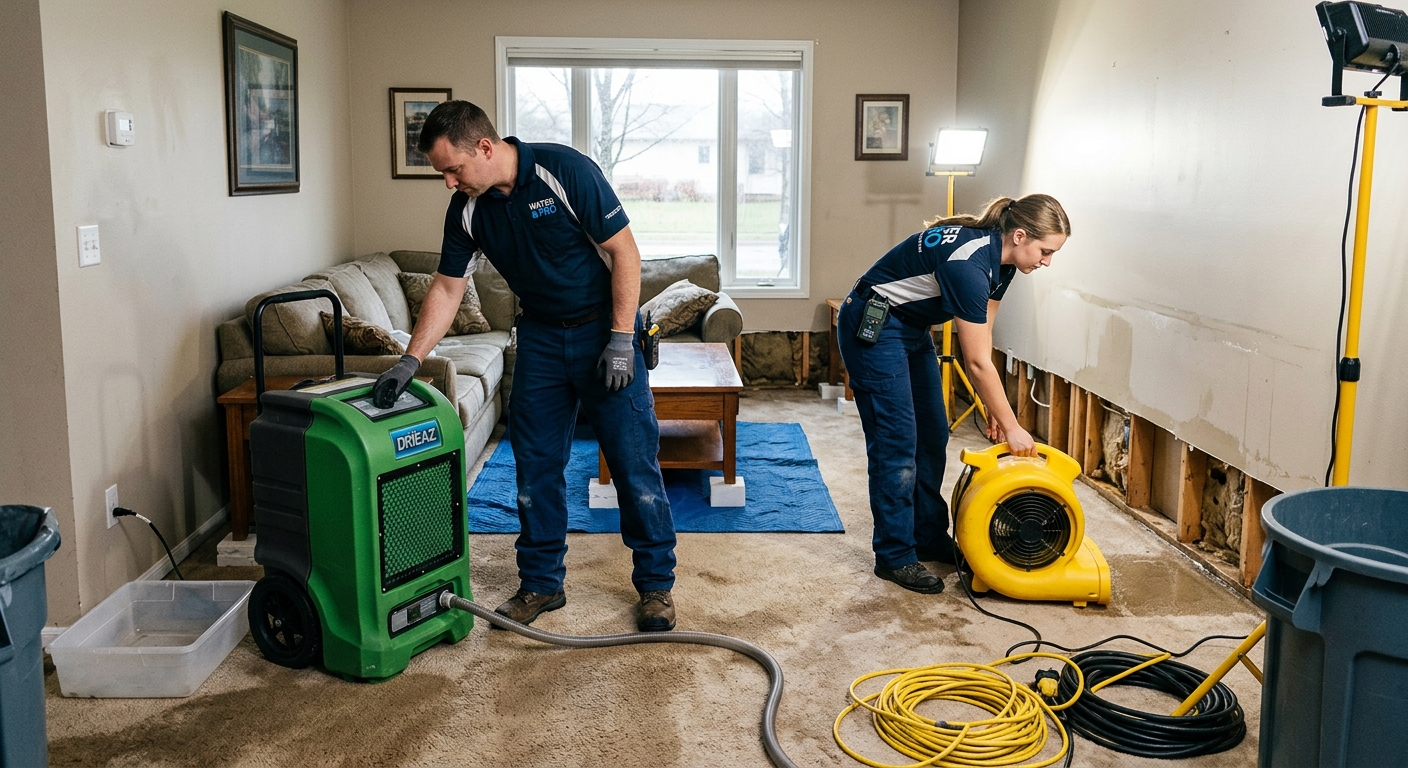
What water damage restoration costs in Scranton
If you’re reading this from Scranton, you may have water coming in right now—or dealing with the fallout after things have dried up. You’re not alone: with 87.2% of local homes built before 1980 (U.S. Census Bureau, ACS 2024), and so many finished basements, it isn’t just “clean up and go.” Age brings hidden lath, plaster walls, and spaces where water can hide, all driving up both the cost and duration of restoration. With just over half of households owning their home here, the way water gets handled— and paid for—matters to a lot of people.
In Scranton, the most common water loss calls are for extraction and rapid drying after a pipe burst or appliance leak. Supply lines fail, basements flood, and sometimes clean water quickly turns to a mold or sewage problem if not addressed right away. Early mitigation can keep certain jobs toward the lower end of the range, but houses that sit before work starts—especially with finished basements—almost always end up costing more, simply because the job gets bigger and more invasive.
| Service |
What it covers |
Typical duration |
Price range |
| Water extraction + emergency drying (Cat 1) |
extraction, air movers, LGR dehumidifiers, daily moisture monitoring |
3–5 days |
$1,050–$6,700 |
| Structural drying only (post-extraction) |
drying to standard after water is already out |
3–5 days |
$900–$6,200 |
| Mold remediation with containment |
containment, HEPA filtration, removal, antimicrobial, clearance test |
3–7 days |
$1,350–$9,300 |
| Sewage backup cleanup (Cat 3) |
biohazard protocol, disposal of porous materials, disinfection |
2–5 days |
$2,200–$10,500 |
| Emergency board-up / tarping |
stop further water entry, secure the structure |
same day |
$350–$900 |
Estimates for a typical Scranton home. Category, affected area and how long the water sat move these figures more than anything else.
Credentials and permits for restoration work in Scranton
Pennsylvania does not require any state-issued license for water damage restoration, mold remediation, or most emergency mitigation work. This means that in Scranton, a contractor’s business card does not guarantee skill, insurance, or even legitimacy. The recognized industry standard is IICRC certification (S500 for water damage, S520 for mold), so ask to see the lead technician’s IICRC card and confirm recent training. This is especially important here, since so much Scranton housing contains materials—like lath and plaster—that require careful handling.
Scranton only requires a municipal permit if you’re crossing over from emergency drying and mitigation into true reconstruction—replacing structural framing, large sections of drywall, or any plumbing/electrical work. For typical water extraction, drying, and minor finish replacement after mitigation, permits are not required within Scranton city limits.
All contractors must hold Home Improvement Contractor (HIC) registration if the total exceeds $500. You can verify this status at hic.attorneygeneral.gov. Workers’ compensation is required for any company with employees; Scranton homeowners can check a firm’s coverage through the state’s WCAIS system (wcais.pa.gov). Before letting anyone start extracting water, insist on a signed contract, including scope of work and pricing, as required by the Home Improvement Consumer Protection Act if your job is over $500.
Scranton's flood exposure and what it means for coverage
The Lackawanna River shapes Scranton’s landscape and drives much of the area’s water risk, especially for homeowners in flood-prone neighborhoods. If your address falls in a mapped flood zone, your lender likely required separate flood insurance. This is critical, as your standard homeowners policy specifically excludes rising water—no matter how identical the mess looks to an adjuster. In Scranton, that means whether the water came through a foundation wall from the Lackawanna River or burst from a supply line makes all the difference in how your claim is handled.
Flood policies in Scranton are always purchased separately (often via the National Flood Insurance Program), and practically speaking, you can’t buy one once you see the river rising—there’s typically a mandatory waiting period of 30 days before coverage begins. Too many local homeowners learn this after their finished basement is several inches under water.
Even if your flooded home looks no different from one with a pipe break, insurance companies view them as completely separate perils. Responders may need to document the source clearly for your claim to be processed. If you’re unsure of your flood risk or coverage, it’s worth checking now—the wrong policy could leave you covering a loss entirely out of pocket.
Preventing the next one
The most cost-effective defenses for Scranton homeowners start simple and scale with the level of risk you face. If you have an older finished basement—the local standard—installing a sump pump with battery backup (typically
$1,200–$2,500 installed) is your single best investment. Next, replace rubber washer supply lines and old steel water heater lines (under
$200–$400 for parts and labor) to prevent rupture. For homes with a history of sudden losses, a smart automatic water shutoff system can catch leaks before you ever notice a wet floor—budget
$600–$1,200 for install and monitoring.
You do not need an expensive whole-house water sensor system in most Scranton houses. Standalone leak sensors (
$25–$50 each) are best placed near water heaters, under sinks, at washer connections and in basements prone to seepage. Backflow valves make sense where sewers are combined (especially in sections of Scranton with older mains), at a cost of
$1,000–$2,500 depending on installation. Water heater pans and drains can help with slow leaks but won’t stop major events in a flood-prone basement.
Freeze risk matters here—scrutinize exposed lines in drafty crawlspaces or garages, as northeastern PA frost can reach 36 inches. Pipe insulation (
$100–$300) is cheap insurance for these problem spots, and critical during deep winter cold snaps.
What insurance covers — and the exclusion that surprises people
The biggest financial shock for Scranton homeowners comes from the coverage gap between sudden internal water losses—often covered—and anything from outside, which usually is not. When a pipe bursts inside your wall, your standard policy usually steps in to cover drying, restoration, and sometimes reconstruction. But if water comes from outside—like the Lackawanna River, a surface flood, or seepage through the basement wall—your standard policy excludes it. Separate flood insurance is required, with its own deductibles and limits.
Most policies also exclude slow, gradual leaks. If the source is long-term—like a drip from a corroded shutoff or a broken gutter allowing water behind siding—most insurers will classify it as lack of maintenance and deny the claim. Sewer backup coverage is not standard: it’s an optional rider many in Scranton should consider, typically for an added annual premium. With finished basements so common, the cost of cleaning up and replacing everything after a backup can easily hit
$2,200–$10,500.
Large losses are calculated as actual cash value (ACV) or replacement cost. ACV means depreciation is deducted; replacement cost is what it takes to buy new. Always check which applies before approving work.
A “scope of loss” document is the adjuster’s official tally of damages and allowable repairs—it’s what restoration crews work from and what payment is based on.
Direct billing and assignment of benefits let a contractor bill the insurer directly (not you), but you give up certain rights and must trust your contractor to act in your best interests. Always read contracts closely. In Pennsylvania, the Home Improvement Consumer Protection Act guarantees your right to a written contract on jobs over $500 and gives you three business days to cancel once signed. If a company offers to waive your deductible, walk away. That’s illegal here and should prompt you to check all other credentials twice.
Basements: where most Scranton losses happen
The dominant foundation across Scranton and Lackawanna County is the full basement—often finished, especially in older neighborhoods with steep valley lots. These below-grade spaces bring unique challenges. Moisture can’t simply drain away by gravity, as it might in a slab-on-grade house. Instead, hydrostatic pressure drives water through cracks and seams, keeping floors and walls damp long after the visible water is gone. With heating degree days at 6,100 per year and frost depth reaching 36 inches, deep freezes and heavy snowmelt both test these old foundations.
Sump pump failure is hands-down the single most common reason for flooded basements here, with losses routinely crossing into the thousands, especially if the backup battery isn’t maintained. If your basement is finished—drywall, pressed wood, carpeting, or old paneling—be ready for the scope (and cost) to double compared to the same volume of water in an unfinished basement. Water will wick behind everything, and with early-20th-century homes, you’re often dealing with hidden lath and plaster that dry slowly and can hold trapped moisture for weeks if not treated correctly.
Placing dehumidifiers or fans won’t cut it in this scenario—a real mitigation means full mapping and selective demolition to remove wet materials. That’s why finished basements tend to turn small water events into major restoration claims.
What proper drying actually looks like
Many homeowners in Scranton have seen crews arrive with air movers and dehumidifiers and disappear for days—leaving them unsure if anything is actually happening. The real test is measurement. Competent restoration means building a “moisture map”—taking readings with a calibrated meter at every affected surface, marking each spot, and returning daily to track progress. Every reputable Scranton crew should generate a drying log: a dated, room-by-room record of moisture readings. If they can’t produce one, they probably weren’t really measuring.
Air movers do the heavy lifting by pushing evaporation from surfaces, while modern LGR (low grain refrigerant) dehumidifiers pull the vapor from air even when the basement feels chilly. In the Scranton climate—long damp seasons and cold winters—leaving equipment running around the clock is essential, even overnight, because shut-downs let soaked materials reabsorb humidity.
Daily monitoring visits are non-negotiable, with readings tracked against a “drying goal”: that’s a scientifically derived moisture content, not just “feels dry to the touch.” This matters in Scranton, where saturated plaster and hidden framing can harbor moisture long after the surface is dry. Always ask to see the daily moisture log before work wraps up. That’s your best proof the job was finished to a measurable standard, not just a clock.
Frequently asked questions — water damage restoration in Scranton
How much does sewage backup cleanup cost in Scranton?
Sewage backup cleanup in Scranton almost always costs more than a basic water loss, mainly because of the biohazard protocols and the need to remove porous materials like carpet, drywall, and any affected contents. For a typical cleanup following a moderate backup, expect to fall in the middle of the range at $2,200–$10,500. Finished basements or larger affected areas push the cost upward quickly, especially since Scranton homes are often older, with layers of hidden materials that need careful disposal. Insurance may cover this if you have the right rider—make sure to check your policy’s language before authorizing any non-emergency work.
What does structural drying cost if I extracted the water myself?
If you've removed the bulk water on your own, but need professional drying to prevent mold and concealed damage, the scope and cost are far more predictable. For Scranton homes, targeted structural drying—using commercial-grade dehumidifiers and air movers with daily moisture checks—typically runs between $900–$6,200, with an average near $2,700. This assumes the area is accessible and surfaces can be dried without heavy demolition. Deeply saturated plaster and finished basements may run higher. The main value here is verified drying: crews should provide daily logs showing actual moisture drop, which DIY equipment often can't achieve.
Why does plaster take longer to dry than drywall?
In Scranton, where early 20th-century homes with plaster and lath walls still dominate whole neighborhoods, many homeowners discover a simple truth: plaster dries much slower than drywall. That’s because plaster is thick, dense, and remains humid at the core even as the surface feels dry. Drywall, on the other hand, is porous and lightweight, so it sheds water quickly—sometimes in a day or two with air movers. Plaster can require a much longer drying process, often stretching structural drying from three to five days for drywall up to seven days or more, especially during humid periods common in this region. Your costs will reflect the extra time and equipment—sometimes up to $6,200 for drying alone.
What is a clearance test and do I need one?
A clearance test, sometimes called post-remediation verification, is performed after mold remediation to ensure the area has returned to safe, healthy conditions. In Scranton, most contractors follow the IICRC S520 standard, which recommends that an independent party take air or surface samples, comparing the treated zone to outside conditions. This test is especially important for finished basements or areas with a history of water intrusion. While not always strictly mandated by code in Scranton, if you’re selling your home, dealing with an insurance claim, or have underlying health concerns, a clearance test is sound practice. Cost is usually included in full-service mold jobs, which locally run $1,350–$9,300.
Is sewer backup a known problem in Scranton?
Sewer backups are a recognized risk in certain Scranton neighborhoods, especially where aging combined sewer systems meet older housing stock. With basements so prevalent here, even a minor backup can mean big cleanup bills and extensive repairs. It isn’t always a chronic citywide issue, but it’s common enough that many insurance agents encourage a sewer or drain backup rider. These events can cost anywhere from $2,200–$10,500 to clean up, often escalating with the amount of finish and contents in the basement. Preventive measures, like backflow valves or regular sump pump checks, are especially important in these older areas.
How do I verify a restoration contractor's insurance?
In Pennsylvania, and especially in Scranton, reputable contractors will provide their certificate of insurance upon request. For workers' compensation, you can verify coverage through the state system at wcais.pa.gov. Make sure your contractor's certificate lists both liability and workers' comp coverage in your own name as certificate holder for the duration of your job. Home Improvement Contractor (HIC) registration is required for any work over $500; it’s easy to look up at hic.attorneygeneral.gov. This is especially important in Scranton, where the absence of state restoration licensing means these are your primary tools to protect yourself from uninsured operators on your property.
Is sewer backup covered under a standard policy?
Standard homeowners insurance policies in Scranton—just like elsewhere in Pennsylvania—almost never include sewer backup coverage automatically. It’s typically an add-on, called a rider or endorsement, that you must specifically request and pay an extra premium for. Given how common below-grade flooding or backup is with Scranton’s full basements, this is a practical must-have for many. Cleanup from a Category 3 sewage loss can easily be $5,800 or more. Read your policy carefully, or call your agent to confirm—assuming you have coverage could leave you exposed to the full cost in a single unlucky event.
How fast do restoration companies respond in Scranton?
Most Scranton-area restoration companies can be on site within a few hours for emergency water loss calls—often the same day, especially in the city or major nearby suburbs like Dunmore or Old Forge. Response is slightly slower after major events like a widespread freeze or heavy rain, but average wait time still runs less than 24 hours. Emergency services such as extraction and stabilization (which range from $1,050–$6,700 depending on job size) are almost always prioritized for active leaks, saturated basements, and any sewage exposure. If you’re outside Scranton proper, expect some firms to dispatch crews from the metro area.
Can I clean up water damage myself in Scranton?
For very small leaks, like a fresh puddle or minor wet carpet—especially if you catch it within hours—it’s reasonable to handle the job yourself using a wet/dry vac and fans. But in Scranton’s older homes, water may travel through lath, plaster, baseboards, and subflooring unseen. If more than 50–100 square feet is soaked, or the basement has standing water, it’s time to call a professional. Proper extraction and drying (about $1,050–$6,700 for a typical job) prevent hidden mold and structural rot. A pro will use moisture meters and daily logs—things you likely don’t have on hand. DIY is fine for very minor spills, but don’t gamble with the structure or your claim.
Does homeowner's insurance cover water damage in Scranton?
Generally, yes—homeowner’s insurance in Scranton will cover damage from sudden and accidental internal water losses, such as a burst pipe or broken supply line. That means extraction, drying, and repairs (costs here run from $1,050–$6,700 for extraction and drying, much higher with significant reconstruction). However, any damage from the Lackawanna River, surface flooding, or gradual long-term leaks is usually excluded unless you have a specific flood policy or endorsements. It’s essential to read your policy or talk to your agent; relying on standard coverage without confirming the details can leave you with large out-of-pocket costs.