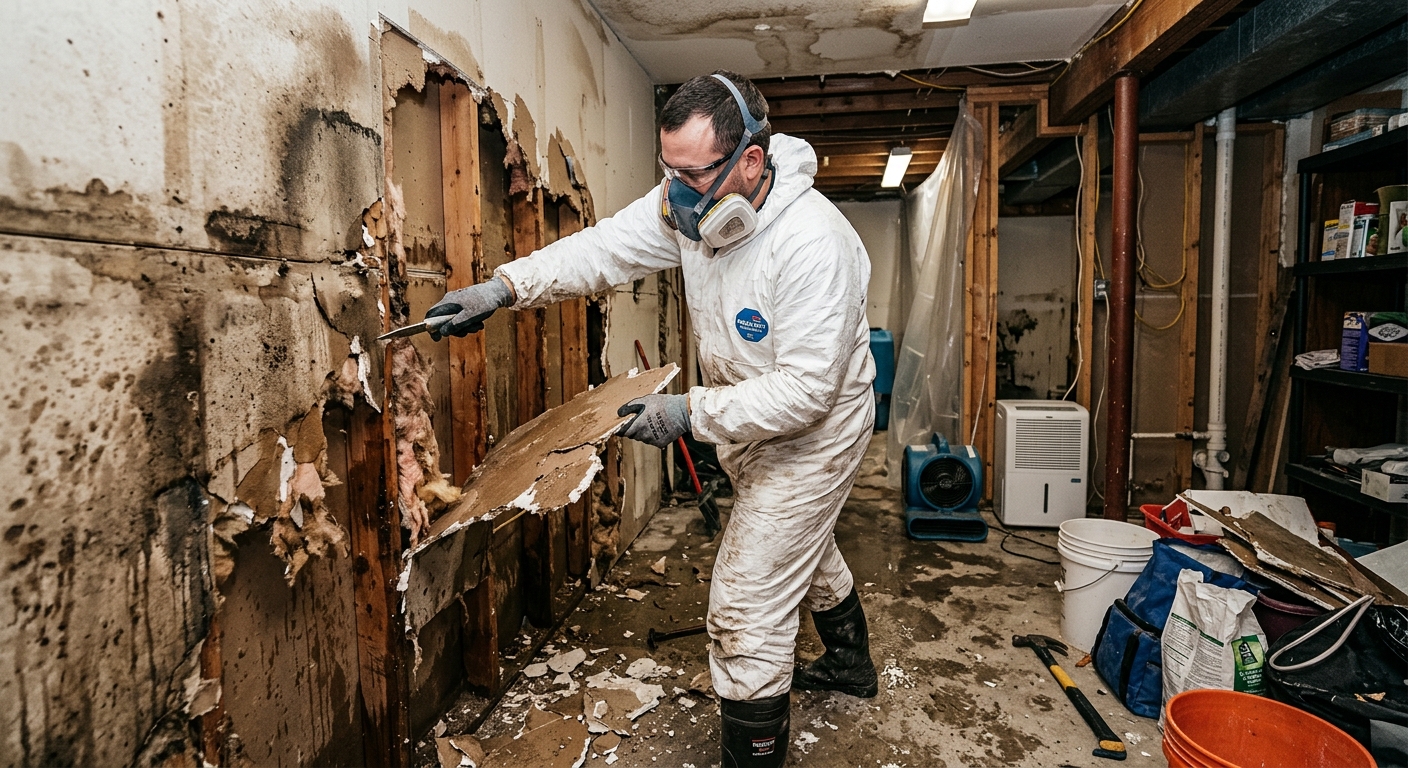
water damage restoration costs in Pittsburgh — 2026
If you’re in Pittsburgh dealing with water in your home, you’re not alone, and you need price clarity fast. Restoration costs here run higher than in many parts of Pennsylvania because most Pittsburgh homes (84.4% built before 1980 and nearly half dating before 1940 — U.S. Census Bureau, ACS 2024) were built long before today’s plumbing standards. These older homes, especially in neighborhoods hugging the hills around the county seat, are notorious for basement intrusion and sudden pipe failures, especially when freeze-thaw cycles hit our clay-heavy ground. The combination of age, frequent basement foundations, and local geography makes for more complicated and urgent drying jobs than in much of the country.
Here are typical costs to expect for key water damage services in Allegheny County:
| Service |
What it covers |
Typical duration |
Price range |
| Water extraction + emergency drying (Cat 1) |
extraction, air movers, LGR dehumidifiers, daily moisture monitoring |
3–5 days |
$1,150–$7,100 |
| Structural drying only (post-extraction) |
drying to standard after water is already out |
3–5 days |
$950–$6,600 |
| Mold remediation with containment |
containment, HEPA filtration, removal, antimicrobial, clearance test |
3–7 days |
$1,400–$9,900 |
| Sewage backup cleanup (Cat 3) |
biohazard protocol, disposal of porous materials, disinfection |
2–5 days |
$2,400–$11,500 |
| Emergency board-up / tarping |
stop further water entry, secure the structure |
same day |
$350–$900 |
Estimates for a typical Pittsburgh home. Category, affected area and how long the water sat move these figures more than anything else.
What can be saved and what has to go
The realities of water damage in a Pittsburgh home depend on materials and era. With most neighborhoods built well before 1940, all that old plaster, hardwood, and full masonry basements on hillsides mean some tough calls. Flooded fibreglass insulation and carpet pad almost always need to be removed—there’s no drying them safely. For drywall, anything below the waterline typically needs cutting out, since hidden moisture lingers in wall cavities, especially in our thick-walled homes. Plaster, common to many city houses, can stay damp for weeks and sometimes traps water against wood lath, raising mold risk if not opened up properly.
Solid hardwood flooring can sometimes be saved using specialty drying systems if drying begins within the first day or so—otherwise it starts to cup or buckle. Engineered flooring, on the other hand, rarely survives standing water. Older cabinets can sometimes be saved if they’re solid wood and caught quickly, but any particle board (which many post-war remodels used) almost always swells and has to go. Basement paneling in old Pittsburgh houses is nearly always a total loss after a flood or sewage event.
If a contractor is pushing full demolition for minor, short-duration clean water leaks, that’s overkill. But a promise to “save everything” after several days of standing water in your basement sets the stage for expensive mold remediation down the line. Honest assessment is about knowing Pittsburgh’s building era and the realities of our foundation types—neither aggressive demo nor wishful optimism serve you well.
How fast mold starts after a leak in Pittsburgh
In Pittsburgh, with our humid summers and so many homes set into hillsides with groundwater routes, mold can begin to colonize wet materials within 24–48 hours of a leak or flood. Basements, particularly those with old masonry or stone, trap this dampness even longer. This is why the response clock isn’t just a service issue—it directly affects your repair costs.
If water is extracted and properly dried inside of 24 hours, most clean-water (Category 1) losses remain simple: dry-in-place methods with minimal demolition, falling in the $1,150–$7,100 band for extraction and drying. Once 48 hours pass, especially in our below-grade spaces, selective demolition becomes likely: drywall, insulation, and sometimes baseboards must go, and the cost rises, especially if microbial growth is visible. After 72 hours, Pittsburgh’s old wood framing and plaster can harbor established colonies, requiring full containment, HEPA air filtration, controlled demolition, and—because insurance and buyers require closure—a post-remediation clearance test. At this stage, expect mold remediation costs in the $1,400–$9,900 range.
A clearance test means third-party air and/or surface sampling to verify mold was actually removed, not just bleached over, and you need the report in writing. Insist on it for any claim or resale in Allegheny County—a verbal “all clear” will not satisfy your adjuster or a future buyer’s inspector.
Why your neighbour's bill was half of yours
It’s easy to compare bills, but your neighbor’s low number almost always comes down to two things: water category (how contaminated) and class (how much absorbed). These axes operate independently. A small sewage backup (Category 3) in a Pittsburgh basement can easily cost more than a larger clean-water (Category 1) pipe break upstairs. For example, a 60-square-foot Category 3 job runs $2,400–$11,500, while a full-room Category 1 event might be as little as $1,150.
Time is a hidden variable. A clean supply line break is only Category 1 for the first several hours. Once that water sits—even in our cool basements—it picks up dust, bacteria, and mold as it migrates through walls and floors, quickly rising to Category 2 (grey) and eventually Category 3 (black water). The longer you wait, the higher the health risk and the more contaminated the job classification—and the pricier the repair, regardless of the source or room size. Prompt extraction isn’t just about comfort, it’s about controlling costs and keeping the loss category down.
| Classification |
Source or extent |
Health risk |
Cost effect |
| Category 1 — clean |
supply line, appliance line, rainwater |
low |
baseline |
| Category 2 — grey |
washing machine, dishwasher, sump failure |
moderate |
+20–40% |
| Category 3 — black |
sewage, groundwater, water standing 72+ hrs |
biohazard |
$2,400–$11,500 |
| Class 1 |
small area, little absorption into structure |
— |
low end of $1,150–$7,100 |
| Class 2 |
whole room, water into walls and subfloor |
— |
$1,150–$7,100 |
| Class 3 |
saturation from above; insulation and walls wet |
— |
$950–$6,600 |
| Class 4 |
deep saturation of hardwood, plaster, concrete |
— |
service2 upper range |
Outside water, inside water
Here in Allegheny County, three rivers—Allegheny, Monongahela, and Ohio—plus Chartiers Creek mean some neighborhoods see true flooding risk, not just plumbing failures. This distinction matters more than you might think. Flood damage from surface water entering your home is not covered by a standard homeowner’s policy in Pittsburgh—it requires separately purchased flood insurance, and there’s typically a 30-day wait after you enroll before coverage starts. You can’t add it once the forecast already calls for rain or snowmelt.
Your loss adjuster treats water from a river, creek, or street flooding very differently from a burst inside pipe, even if the ruined walls and flooring look identical at first glance. That means you may pay completely out of pocket for river or surface water events if you’re not in the right flood zone or haven’t secured a separate policy in advance. It’s a tough reality in places like the river valleys and Pittsburgh’s lower-lying neighborhoods. If in doubt, ask your insurance agent not just about “water damage” but explicitly about flood zone designation and what is—and isn’t—covered at your address.
What a Pennsylvania restoration contractor must actually hold
Pennsylvania does not issue state licenses for restoration or mold remediation contractors. For water or mold work, you want an IICRC-certified firm—this certification is the insurance industry’s de facto standard, but it is not required by law. Always ask the lead technician to show their IICRC card, not just a company logo. In Pennsylvania, any restoration contract over $500 requires a written agreement and you have three business days to cancel under state consumer protection law. Waiving an insurance deductible, however, is not permitted.
Pittsburgh restoration contractors must have Home Improvement Contractor (HIC) registration for jobs above $500. Verify the registration number is valid and belongs to the business you’re hiring—not a friend or affiliate. Workers’ compensation is mandatory for all employers; you can check coverage status via the state system. Permits are only triggered if a job involves structural repairs—demolition or drying, on their own, do not unless you’re in Pittsburgh and touch framing or load-bearing walls.
Before any extraction starts, get the HIC registration, proof of insurance, the estimate, scope in writing, and a contract signed. Don’t pay cash up front—Pittsburgh is a market with plenty of choices and good contractors are prepared to meet these standards.
Mitigation, then reconstruction: two different timelines
Water damage repairs really come in two main phases. First is mitigation—urgent, usually same-day, focused on getting water out, stopping mold, and drying materials. Crews arrive fast and bill directly or through your insurance. This phase is measured in days, not weeks, because every hour wasted adds risk and cost.
Once the home is clean and dry, there’s a gap before reconstruction starts—that’s when you restore drywall, floors, paint, or electrical. In Pittsburgh’s busy market, with so many local restoration firms and dense metro demand, there can be a wait of days to weeks for a rebuild crew to start, even after mitigation is done and equipment is picked up. This silent stretch is where many homeowners feel deserted, but the process is normal: drying must finish and permits, if triggered by structural work, must be cleared before rebuilding.
Expect to sign a separate reconstruction contract and deal with different trades or carpenters. Good mitigation companies in Allegheny County will talk you through this timeline upfront, so you’re not left wondering when the next phase starts or whether you’ve been forgotten.
Frequently asked questions — water damage restoration in Pittsburgh
Does homeowner's insurance cover water damage in Pittsburgh?
Homeowner’s insurance in Pittsburgh usually covers sudden and accidental water damage—like a pipe burst or appliance overflow. However, water from flooding, meaning the Allegheny, Monongahela, or Ohio Rivers, or seepage from ground water, is excluded unless you have a separate flood policy. Many local claims start at $1,150–$7,100 for extraction and drying, which is typically within policy coverage if the source is internal and sudden. Double-check your exact policy: some older houses in Pittsburgh weren’t updated to newer forms, so covered causes may be different than your neighbor’s even two streets away.
Is bleach effective against mold?
Bleach is not recommended for mold remediation in Pittsburgh, or anywhere, despite what you may hear. It only removes surface staining and doesn’t penetrate porous materials like wood or drywall. Most older city homes have lath, plaster, or thick baseboards that trap moisture—and mold regrows quickly if the real problem isn’t addressed. Professional mold remediation includes containment, HEPA filtration, and removal of affected material, ranging from $1,400–$9,900 for a typical project in Allegheny County. Skip the bleach and call an IICRC-certified pro for real clearance.
Do older Pittsburgh homes need different treatment?
Yes, older Pittsburgh homes—where over 84% were built before 1980—require extra care. Thick plaster holds moisture far longer than new drywall and old masonry basements often conceal water channels that don’t dry by air movers alone. Specialty drying may be needed for hardwood and lath, and assessing the condition of foundations is more difficult. Restoration costs can be higher in these homes due to these materials, with extraction and mitigation between $1,150–$7,100 depending on extent. Contractors experienced with Pittsburgh’s housing stock are less likely to cut corners or cause unnecessary demolition.
Does insurance cover mold after water damage?
In Pittsburgh, most homeowner policies exclude mold remediation unless caused by a sudden and covered water loss. If you delay notifying your carrier and the job shifts from a fresh-water event ($1,150–$7,100) to full mold remediation ($1,400–$9,900), you often pay out of pocket. Always report water intrusions quickly, keep your adjuster in the loop, and store records of all restoration work if you want a claim considered. Local adjusters are strict since so many homes here have old, damp basements where chronic issues can be hard to distinguish from new losses.
What is Category 3 black water?
Category 3—black water—covers the most severe water losses in Pittsburgh, including sewage backups, groundwater intrusion, or any water left stagnant in our old basements for over 72 hours. This water is a biohazard, carrying bacteria, viruses, and sometimes chemical contaminants. Cleanup always requires special containment and disposal, physical removal of porous materials, and thorough disinfection. Expect a bill in the $2,400–$11,500 range for even modest incidents. With the aging combined sewers in much of Pittsburgh, Category 3 jobs are not rare and require professional, certified response.
How much does sewage backup cleanup cost in Pittsburgh?
Sewage backup cleanup, or Category 3 water damage, is one of the priciest losses you can face in Pittsburgh—especially in city neighborhoods where combined sewers are common. Removal of contaminated materials, sanitation, and air scrubbing runs from $2,400–$11,500 depending on area and how long the water remained. Homeowner insurance may cover this in certain cases, but always clarify with your adjuster: not all policies automatically include sewer backup unless you have a specific endorsement.
What does mold remediation cost in Pittsburgh?
Mold remediation in Pittsburgh typically costs $1,400–$9,900 depending on square footage, containment needs, materials removed, and whether independent clearance is performed. The older, plaster-heavy homes and persistent groundwater in many city neighborhoods make some jobs more complex. Mold isn’t covered by all insurance without clear tie-in to a recent covered water loss, so don’t wait—prices climb with every delay, especially in our humid, below-grade spaces.
How fast do restoration companies respond in Pittsburgh?
Pittsburgh’s dense restoration market—dozens of firms operate locally—means you can usually get same-day emergency response, often within hours for water extraction. Speed matters: jobs kept to the $1,150–$7,100 band for clean-water extraction depend on immediate action. Any delay allows clean water to degrade, increasing both health risk and repair costs. The response window is one local homeowners benefit from—firms do not need to travel from outside Allegheny County and know local permitting and construction quirks.
What is a clearance test and do I need one?
A clearance test in Pittsburgh is a third-party verification, usually by air and/or surface sampling, that confirms mold or contaminated materials have been fully removed after remediation. For jobs in the $1,400–$9,900 range, you want this document for both insurance and resale. In older homes, especially with layers of plaster and wood, don’t assume visual “clean” is good enough—a report in writing is your record if a buyer’s inspector or insurance adjuster questions the history. Reputable restoration firms will coordinate or recommend one after the job.
Do I need a permit for water damage repairs in Pittsburgh?
Most water damage cleaning and drying jobs do not require a permit in Pittsburgh or surrounding Allegheny County suburbs. You only need a permit if structural repairs—like touching framing, load-bearing walls, or significant interior reconstruction—are required after mitigation. For basic drying and extraction, or minor wall cuts, no permit process is required. Larger repair projects in Pittsburgh proper go through the Department of Permits, Licenses, and Inspections. Always ask your contractor to explain their process and show proof of their Home Improvement Contractor registration, which is mandatory for any job above $500.