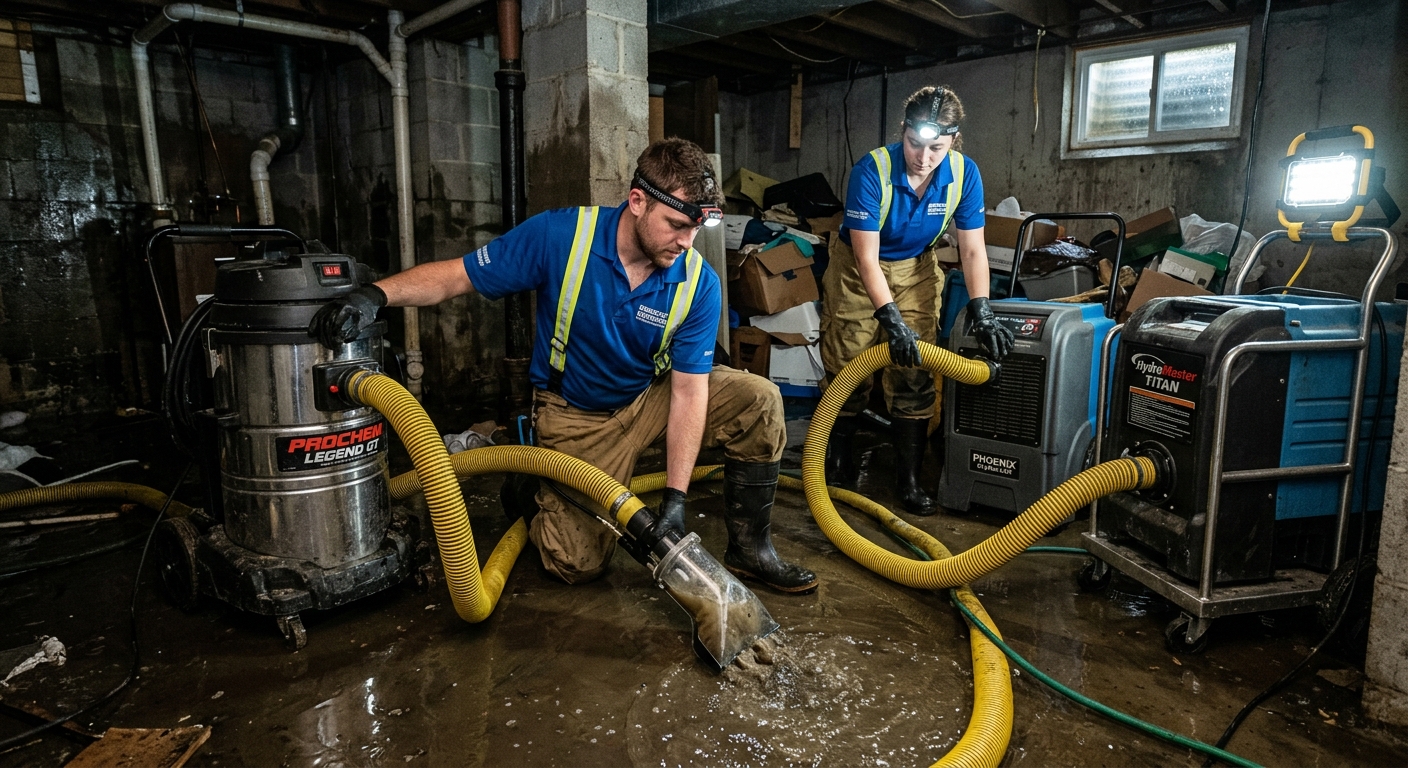
water damage restoration costs in Nether Providence — 2026
If you’re in Nether Providence dealing with water damage right now, you likely want numbers before anything else. Restoration costs here often surprise homeowners, especially those in neighborhoods with older homes, where aging cast-iron drain pipes mean sudden failures are more common. With 77.6% of local houses built before 1980 (U.S. Census Bureau, ACS 2024), repairs here are more complex — and costly — than in areas built out more recently. The Philadelphia metro restoration market is crowded with firms advertising fast service across Delaware County, but the reality is that more than 7 out of 10 homes are single-family and have full basements vulnerable to heavy water intrusion after storms or plumbing failures.
| Service |
What it covers |
Typical duration |
Price range |
| Water extraction + emergency drying (Cat 1) |
extraction, air movers, LGR dehumidifiers, daily moisture monitoring |
3–5 days |
$1,350–$8,500 |
| Structural drying only (post-extraction) |
drying to standard after water is already out |
3–5 days |
$1,150–$7,900 |
| Mold remediation with containment |
containment, HEPA filtration, removal, antimicrobial, clearance test |
3–7 days |
$1,700–$12,000 |
| Sewage backup cleanup (Cat 3) |
biohazard protocol, disposal of porous materials, disinfection |
2–5 days |
$2,800–$13,500 |
| Emergency board-up / tarping |
stop further water entry, secure the structure |
same day |
$350–$900 |
Estimates for a typical Nether Providence home. Category, affected area and how long the water sat move these figures more than anything else.
What a Pennsylvania restoration contractor must actually hold
Pennsylvania does not issue a state license for water damage restoration or mold work, and there is no official state board or certification to look up. In Delaware County, a crew’s business card essentially means nothing about their skill or reliability. For mold and water damage work, the de facto industry standard is IICRC certification (specifically S500 for water damage; S520 for mold), not a legal requirement but what every insurer expects. Ask to see the lead technician’s IICRC card before work starts, especially because anyone can claim the credential. For homes built before 1978, federal law (EPA Lead RRP Rule) governs renovation work, so ask to see the firm’s renovator certificate if paint will be disturbed.
Permits are not commonly needed for mitigation (drying, extraction), but if reconstruction is required (such as drywall or structural replacement), some municipalities such as Upper Darby Township require permits even for drywall removal after water losses. It’s smart to call your code office before agreeing to removal, since requirements vary block-to-block.
Every contractor must have a current Home Improvement Contractor (HIC) registration for contracts over $500—verify at hic.attorneygeneral.gov. Employers are also required to carry worker’s compensation, which you can check at wcais.pa.gov. Before letting the crew start extracting, ask for a written contract describing the services, total cost or formula, and your three business-day cancellation rights under state law.
Who pays for water damage in Nether Providence
The biggest financial shock for Nether Providence homeowners is often not the water, but discovering what insurance actually covers. Losses from a burst supply line or broken washing machine hose — what insurers call "sudden internal water" — are typically covered events under standard Pennsylvania homeowners insurance. But if water entered from outside, like a flooded basement after a Chester Creek surge, that’s considered flooding, a peril excluded from standard policies and only covered if you have a separate flood insurance policy.
Insurance generally will not pay for repairs due to gradual leaks or maintenance issues — for example, old cast-iron pipe failures in houses built 1920–1950 around Nether Providence. These fall under maintenance exclusions, and the claim will almost always be denied. Sewer backup, a real risk in Chester City due to combined system overflows, is usually only covered if you added a sewer backup rider to your policy.
Your claim payout may be based on actual cash value (depreciated value) or replacement cost. Review this before signing off. After a loss, your adjuster will create a “scope of loss” — a room-by-room breakdown of what was damaged and what qualifies for repair or replacement.
Most reputable restoration firms in Delaware County offer direct billing to your insurer, sometimes requiring an "assignment of benefits." This gives the contractor the right to negotiate and collect directly from your insurer, but you’re signing away some control, so always read carefully.
By law, your contractor must provide a written contract on any job over $500, along with a three-business-day right of cancellation. If a firm offers to “waive your deductible,” walk away: waiving a homeowner's insurance deductible is prohibited in Pennsylvania, and it's a red flag for insurance fraud.
What to do right now
If you have standing water in your Nether Providence home, act quickly — procrastination is the most expensive mistake locals make here. Start by shutting off your water at the main to stop the source, if possible. Only cut power to affected circuits from the panel if you see no water or moisture near it. Do not risk your safety.
Before touching anything else, take clear photos of every affected area and any valuables or furniture at risk. This record will help your insurance claim and justify any restoration costs later on. Once documented, move undamaged contents up off the wet floor to a dry space or higher level — but do not remove items already soaked through, as you may need to prove their condition to an adjuster.
Never use a household vacuum on standing water. Household vacuums are not rated for water removal and can create severe electrical risks.
Call your insurer promptly, at least before significant cleanup begins, but you don’t need to wait to call a restoration company. Insurers in Nether Providence expect you to act to "mitigate damages," so securing the property is essential, but detail what was done for documentation. The order in which you call matters less than ensuring each step is photographed and described.
The most common and costly mistake is waiting overnight before calling for help. Mold growth frequently starts within 24–48 hours — and turning a $4,400 drying job into a $6,800 mold remediation just by stalling is not rare here.
Equipment, monitoring and drying standards
Understanding the restoration process can help you spot whether you're getting competent help or just someone plugging in fans. Any real water damage drying job in Nether Providence should start with moisture mapping: the lead tech takes initial meter readings (pin or pinless) and writes them down, creating a drying log for all affected spaces. This baseline is repeated daily — you have the right to see these logs, so ask for them.
Air movers are set up to move large volumes of air across damp surfaces, while LGR (Low Grain Refrigerant) dehumidifiers pull moisture from the air, giving faster and more efficient drying in our humid, mid-Atlantic climate. This equipment should not be turned off at night; if you unplug it, you lose precious hours and risk mold starting in the wallpaper, trim, or subfloor, especially with our local summertime humidity (cooling degree days: 1,450 annually).
The drying goal is science, not guesswork: restoration follows IICRC S500 standards, aiming to bring every material to its "dry standard," or close to the normal, pre-loss moisture content for our region. Daily monitoring matters — if your crew cannot show you a written moisture log, they’re not truly managing the process. If exterior humidity spikes (like after a coastal storm), progress will slow, and true professionals will explain why.
Nether Providence's flood exposure and what it means for coverage
Some Nether Providence addresses face real risk from the Delaware River and Chester Creek — fluvial flooding is a fact for parts of Delaware County, no matter how far from the obvious floodplain you feel. Insurers will not cover “flood” losses (rising water from outside the structure, typically due to water bodies overtopping their banks) under standard homeowners insurance; coverage only applies to sudden internal events like burst pipes.
Flood insurance must be purchased separately; if your home is in a mapped FEMA flood zone, your mortgage lender may mandate you carry it. Even for homes outside high-risk zones, Chester and Upland have seen overland flooding beyond expected areas. Purchasing flood insurance involves a waiting period — usually 30 days — so you cannot buy it after watching the weather report the day before a major storm.
To an adjuster, a home with two feet of water from the Delaware River looks identical to one with a failed washing machine — but the claims process and coverage are entirely different. Know how your address is zoned, and don’t assume your base policy covers you. In this market, a flood loss lands entirely on the homeowner if not insured in advance.
Documenting and recovering contents in Nether Providence
The contents side of water damage gets shorted every time in Nether Providence — mostly because owners don’t document enough and insurers require proof. For a major loss, reputable restoration companies provide pack-out services: contents are inventoried, photographed, and moved to an offsite secure facility for cleaning and storage.
Your policy separates structural repairs from "contents" (furniture, clothing, rugs, electronics). Only what you can document as affected stands a chance at reimbursement, so take photos of every item before moving or discarding anything. The more you inventory now, the less you'll fight later.
What’s usually not worth saving: upholstered furniture touched by Category 3 blackwater (sewage backups), particleboard shelving, soaked mattresses. These are commonly inventoried as total losses in Delaware County claims. On the other hand, hardwoods, valuable area rugs, leather, electronics, and solid wood furniture may be restorable with professional equipment and specialty cleaning — but it should all be documented before removal or cleaning begins.
Frequently asked questions — water damage restoration in Nether Providence
Will my premium go up after a water damage claim?
Yes, filing a water damage claim in Nether Providence can lead to a premium increase on your next renewal. While Pennsylvania law doesn’t bar rate hikes after claims, most insurers weigh both the frequency and size of claims. One moderate sudden water damage claim (often in the $4,400 range for drying) isn’t likely to get you dropped, but a second claim within five years (especially for preventable issues) can make insurability difficult. Homes with aging plumbing — common here, with 77.6% pre-1980 stock — are flagged for repeat issues, and your insurer may even require documented repairs before writing future coverage. Always ask your adjuster precisely how this claim might affect your premiums long term, and get the answer in writing when possible.
Does wet insulation have to be replaced?
In most Nether Providence homes, once insulation (especially fiberglass batts or cellulose in walls or ceilings) has been saturated, it needs to be removed and replaced rather than dried in place. Wet insulation loses its R-value, can trap moisture against framing, and creates a great environment for mold if left intact. This is particularly true in basement ceilings or walls, which are common locally. The cost for removal and replacement is usually folded into a water mitigation estimate ($1,350–$8,500), but some policies cap these repairs, so clarify with your contractor whether it’s included. Never let anyone tell you that wet insulation will "dry out on its own" — that’s simply not true in Delaware County’s climate.
What is IICRC certification and does it matter?
IICRC stands for Institute of Inspection, Cleaning and Restoration Certification. In Pennsylvania, there’s no official state license for water damage restoration, but nearly every insurer expects firms to follow IICRC S500 (for water damage) and S520 (for mold) standards. Certified companies have trained techs who take classes and pass tests on best practices for extraction, drying, and microbial remediation. In Nether Providence, always ask to see your lead tech’s IICRC certificate or wallet card before work starts. It is the closest thing this market has to a "real" restoration credential. Jobs run by properly trained crews are more likely to hit the drying target efficiently, minimizing both price ($1,150–$7,900) and hassle later on.
What is an assignment of benefits and should I sign one?
An assignment of benefits (AOB) lets your Nether Providence restoration contractor handle billing and payment directly with your insurer, instead of you paying up front. It can make life easier — the contractor fights with the adjuster, not you — but you lose some control. Disputes about scope or payments may be resolved between the contractor and the insurance company, not with your direct say. AOBs are common on larger losses (sewage or large mold jobs, $7,300–$12,000), but always read the contract carefully. Never sign an open-ended AOB or one that waives your legal rights. Remember, Pennsylvania demands a three-day right to cancel for home improvement contracts — read before you sign.
Why did the crew cut my drywall two feet up?
Cutting drywall about two feet above the floor (a “flood cut”) is standard in Nether Providence when water has wicked up walls, or after a Category 3 event like a sewage backup. This lets crews remove soaked wall cavity insulation and ensure all hidden wetness is gone — critical for mold prevention in older homes. Leaving wet drywall in place risks a much more expensive mold remediation later ($6,800). Especially in basements or homes with 1920–1950 construction, you want walls opened up to allow structural drying and thorough cleaning. If only a few inches were wet and everything dried fast, a small removal might suffice, but two feet is typical for confirmed wall water infiltration here.
Can I rent dehumidifiers instead of hiring a company?
You can rent dehumidifiers in Nether Providence from a hardware store, but for any significant water event — more than a small spill — DIY drying rarely works. Consumer-grade equipment is less powerful than the commercial LGR units used by restoration companies ($1,150–$8,500 per job for drying). Without moisture mapping and daily monitoring logs, you have no idea if hidden materials are actually dry, and missing a damp cavity can result in expensive mold. For minor carpet-only events from a clean water source, DIY drying may be justified, but for anything else, especially in basements with old plaster and wood, it’s not worth the risk.
Why is water damage priced per square foot?
In Nether Providence, most water mitigation estimates reference square footage because equipment needs, time, and labor all scale with the size of the affected area. Drying 1,200 square feet of finished basement flooring takes more equipment (air movers, dehumidifiers), more monitoring visits, and more demolition than a 100-square-foot bathroom leak. While base prices in our area can range from $1,350–$8,500 for water extraction and drying, expect that costs climb quickly if the water spread, walls or insulation got wet, or complex finishes are involved. Per-square-foot pricing keeps estimates transparent for both insurers and homeowners.
What causes most water damage in Nether Providence homes?
The most frequent sources of water damage in Nether Providence are failed cast-iron drain lines and supply line bursts, due largely to the area’s 77.6% pre-1980 housing stock. These older systems are far more likely to rupture or leak suddenly, catching owners by surprise. Storm-driven basement seepage also accounts for a chunk of emergency calls, especially in neighborhoods with full basements common to Delaware County. These result in typical water extraction bills in the $4,400 range, but repairs can escalate fast if mold takes hold.
How long before mold starts growing?
In a humid Delaware County summer, mold may start growing within 24–48 hours after materials get and stay wet. The “mold clock” starts ticking immediately, especially in finished basements or older Nether Providence homes with less effective vapor barriers. That’s why best practice — and insurer expectation — is to dry affected spaces to normal moisture content quickly. If a loss is left unaddressed for more than a couple of days, you risk transforming a drying job ($4,400) into a mold remediation ($6,800) very quickly. Don’t wait and hope — act promptly.
Is emergency after-hours service more expensive in Nether Providence?
Yes, restoration companies serving Nether Providence often charge more for after-hours or holiday emergency response, though it is sometimes built into the overall price band ($1,350–$8,500 for extraction and drying). The market here is saturated, but real off-hours crews command a higher rate for overtime labor and quicker equipment deployment. If a spill happens in the evening, waiting until business hours can be far more expensive when mold sets in, so the added fee is often justified by savings down the road. Always get a written price before work begins, and make sure it spells out after-hours charges specifically.