What water damage restoration costs in Lititz
If you are reading this from Lititz and facing an active water loss, you probably want to know what you are in for—right now, not in generalities. Two things shape most jobs here: the age of the housing (72.5% built before 1980) and that almost half of homes are single-family (46.9%). Old supply lines and aging basements dominate the call-outs. Add in Lancaster city’s dense pre-1940 rowhouses nearby, which often lead to more frequent pipe failures and multiparty damage scenarios, and restoration here tends to run higher than in regions full of new construction.
Here’s what to expect based on recent work in Lititz and across Lancaster County. Price depends on water category, how long it sat, and how much material has to be removed. Typical jobs take several days, and multi-unit or basement impacts can climb quickly.
| Service |
What it covers |
Typical duration |
Price range |
| Water extraction + emergency drying (Cat 1) |
extraction, air movers, LGR dehumidifiers, daily moisture monitoring |
3–5 days |
$1,200–$7,500 |
| Structural drying only (post-extraction) |
drying to standard after water is already out |
3–5 days |
$1,000–$7,000 |
| Mold remediation with containment |
containment, HEPA filtration, removal, antimicrobial, clearance test |
3–7 days |
$1,500–$10,500 |
| Sewage backup cleanup (Cat 3) |
biohazard protocol, disposal of porous materials, disinfection |
2–5 days |
$2,500–$12,000 |
| Emergency board-up / tarping |
stop further water entry, secure the structure |
same day |
$350–$900 |
Estimates for a typical Lititz home. Category, affected area and how long the water sat move these figures more than anything else.
Credentials and permits for restoration work in Lititz
Pennsylvania does not license restoration or mold remediation contractors statewide, so a firm’s business card or ad is not a sign of skill. For water and mold work, IICRC certification is the trusted technical standard. Anyone leading a crew in Lititz should be able to show their IICRC card and identify the standard (S500 for restoration, S520 for mold) that will guide the work.
When it comes to permits, Lancaster County’s townships rarely require one just to dry out a home or run equipment. Full structural repairs after Category 2 or 3 losses in Lancaster city typically require building permits, but routine mitigation in the rest of the county often does not. If a contractor says a permit is needed, ask which locality wants it.
You should always insist on seeing a copy of the company’s Home Improvement Contractor (HIC) registration if the job is over $500—verify this number at hic.attorneygeneral.gov. Confirm that the crew carries general liability insurance and workers’ compensation; in Pennsylvania, you can look up workers’ comp at WCAIS (wcais.pa.gov), which lists coverage for every employer.
Before work starts, get a written contract (required by the Home Improvement Consumer Protection Act for jobs over $500) spelling out scope, price, and your 3-day right to cancel. Do not be pressured into signing until you have had a chance to read it.
Lititz's flood exposure and what it means for coverage
Floods are a real concern in Lititz and neighboring Lancaster County communities. The Conestoga River and Little Conestoga Creek are the main drivers for local flood risk. If your home sits near these waterways, your standard homeowner’s policy does not cover ground water flooding—a specific FEMA flood policy must be purchased separately and in advance. Flood insurance carries a standard 30-day waiting period, so it is too late to buy when a big rain or melt is already forecast.
Not everyone’s risk is the same. If your property is mapped within a FEMA-designated flood zone, your mortgage company may already require flood insurance, but many Lititz owners outside these zones skip it—only to be surprised after a loss. It’s possible for two identical wet basements to be treated completely differently by insurers: a flood, even one inch deep from the river or creek, is not covered by most homeowner policies, while a burst pipe or sump failure inside the house usually is, subject to your deductible and limits.
To be clear: adjusters will look at the source. A water-damaged house from surface flooding may look exactly like one with a plumbing break, but only the latter is covered on the standard policy. Homeowners in any flood-prone part of Lititz should check now—before the rain comes—if they carry separate flood coverage.
What proper drying actually looks like
In south-central Pennsylvania, proper water damage drying is science, not show. It starts with “moisture mapping”—using a calibrated meter to log baseline readings throughout all affected areas: drywall, floors, sills, and visible framing. These readings are documented daily, not guessed. A competent crew will deliver a written log, showing numbers going down toward a target (“drying goal”)—that’s a specific, manufacturer-recommended moisture content, not just “it looks dry.”
For equipment, you’ll see air movers and LGR (low-grain refrigerant) dehumidifiers. Air movers push moisture out of materials and into the air; LGR units pull that water out for removal. This equipment must run continuously, including overnight. Shutting off machines at night or whenever someone is out slows the process and risks mold growth. Crews should be present daily (or nearly so), making and recording new readings each time—not merely “checking in.”
Our region deals with 5,200 heating degree days—cold, sometimes humid winters and strong freeze-thaw cycles—so outdoor conditions matter. If there’s snow on the ground or outside humidity is high, professional crews must adjust equipment to maintain drying, not just open windows.
The best practical test: at the end of day one, ask to see the moisture log. If they can’t show you meter readings, the work is not being professionally measured or managed.
After the repair: hardening the house
Once you’ve been through a water loss, prevention becomes a lot more interesting. Here’s what actually works for Lititz homes, ranked by cost-effectiveness:
- Replace supply lines on washers and water heaters every 5–7 years. Stainless braided lines are inexpensive ($40–$120 per appliance) and stop most hose bursts cold.
- Sump pump with battery backup is a winner in basement-heavy Lancaster County. Installed cost runs $700–$2,000. It’s more important than any sensor for real basement water risk.
- Automatic water shutoff valves with leak sensors are fantastic for vacation homes or high-value properties. Expect install costs around $600–$1,800—worth it if you travel, but not for everyone.
- Backflow valve—this matters only if you’re on a combined or aging sewer branch, a documented risk in Lancaster city (not every Lititz address). Cost: $800–$2,500.
- Water heater pan and drain helps where the tank sits over finished space. Install for $150–$400.
- Leak sensors—smart sensors ($20–$60 each) at washing machine, water heater, and under kitchen sinks catch slow leaks but won’t stop a major line break.
Insulation and pipe heat tape are good if you have basement supply lines near foundation walls—our 30-inch frost depth and 12°F winter design temp mean freeze bursts are the usual cause here. Only skip major add-ons unless you’ve already seen repeat losses or travel often.
Immediate steps for a Lititz homeowner with active water
If water is flowing in your Lititz home right now, here’s what to do—every hour matters:
- Shut off the main water valve. Most basements in Lititz have theirs near the foundation wall or at the meter where the line comes in.
- Next, only if the electrical panel is dry and easy to access, shut off power to the affected circuits so fans or water don’t risk a shock.
- Grab your phone (before touching anything else) and photograph every room, every wet spot, and all contents. Good “before” photos set you up if there’s an insurance dispute.
- Move undamaged contents—especially furniture and electronics—off wet flooring to a dry area upstairs or on blocks. Don’t drag items through standing water, as this spreads it.
- Never use your household vacuum—shop-vacs are not rated for significant amounts of water and can become dangerous if used on wet floors.
- Call your insurer’s emergency line. This can be before or after you call a restoration contractor; your claim is stronger the sooner you start a log and photos.
The big mistake? Waiting until morning. Mold can get started in as little as 24 hours—in Lititz, that delay can move a job from a manageable extraction ($3,900 typical) to one requiring full remediation ($6,000). Time is money, and photos plus documentation matter at every step.
Lititz's housing and its water damage profile
Most homes in Lititz were built before 1980 (72.5%), which shapes water loss in distinct ways. Older homes here often feature copper or early galvanized supply lines, which corrode and leak after decades—watch for pinholes and connection failures, especially in hidden walls. Expect lath-and-plaster on walls and ceilings in homes before 1960; after that, drywall becomes standard. Plaster takes longer to dry and is harder to remove cleanly, sometimes requiring more demolition than typical drywall jobs.
Most drains in this era are cast iron, which rusts shut or cracks, although some 1970s and 80s homes start to show PVC replacements. Basement foundations are the default design for Lititz and wider Lancaster County, both as storage and utility space—these are what drive multi-day drying jobs, since fully finished basements add to complexity and demo scope.
For newer suburban homes (if you’re in a post-1990 development), supply lines and water heaters hit “old” at about 24–30 years. First failures in these houses are often plastic or copper lines, with “sudden burst” losses a bit less common until that age is reached. Regardless of era, nearly every Lititz home has below-grade spaces at risk—full dry-outs take days, not hours, and demolition is set by the building material, not just how wet it looks at first glance.
Frequently asked questions — water damage restoration in Lititz
Is basement flooding covered by insurance in Pennsylvania?
For most Lititz homeowners, standard homeowner’s insurance does not cover flooding from outside sources—such as the Conestoga River or Little Conestoga Creek overflowing. If water only enters through windows or doors from rising outdoor water, you need a separate federal flood insurance policy, which is purchased through FEMA-backed programs. However, if basement water is caused by a sudden pipe burst, failed water heater, or other interior plumbing issue, your homeowner’s policy typically covers the damage, minus your deductible. Restoration for a water extraction and emergency drying job generally falls in the $1,200–$7,500 range. The distinction between “flood” and “water damage” matters, because Pennsylvania insurers make the call based on the source—not the appearance—of the water loss.
Is sewer backup covered under a standard policy?
In Pennsylvania, sewer backup is not covered under most standard homeowner’s insurance policies unless you’ve added a specific endorsement for it. In Lititz, with its older sewer infrastructure in some areas, this is a real risk—especially if your property is near areas managed by the Lancaster Area Sewer Authority that have a history of backup incidents. Adding a sewer or sump backup rider is often inexpensive and can save you from out-of-pocket costs if a Category 3 backup occurs. Full sewage cleanup can range from $2,500–$12,000 depending on extent and material loss. Check your policy and don’t assume routine coverage applies to this type of loss.
Is emergency after-hours service more expensive in Lititz?
Lititz sits inside a saturated restoration market, with national franchises all running crews locally. Because travel times are short (thanks to Lancaster–Harrisburg market density), most companies do not impose a special premium simply for after-hours calls—unlike in isolated rural counties. Actual costs are more affected by job scope and timing: a late-night Category 3 loss may be more expensive to mitigate if immediate action is needed to prevent spread, but you’re still quoted within the typical band of $1,200–$7,500 for initial water extraction and drying. Always confirm in writing if any surcharge or after-hours minimum applies, but in practice, Lititz homeowners are not penalized just for needing help outside of business hours.
What is the difference between water damage class and category?
Class in water damage restoration refers to the amount of water and area involved, while category describes the water’s source and contamination level. In Lititz and across Lancaster County, a “Class 1” loss is minimal absorption, like a small section of wet carpet, while “Class 4” means deep saturation of materials like plaster or hardwoods—common in pre-1980 homes here. Category 1 is clean water from a supply line. Category 2 is “gray water” (e.g., a washer overflow), and Category 3 is sewage—often the priciest and most invasive to remediate, with scope and price reflecting the hazard ($2,500–$12,000). Knowing your loss’s class and category will determine how much demolition is needed and what gets billed to insurance.
Can a contractor waive my deductible in Pennsylvania?
No. Pennsylvania’s Home Improvement Consumer Protection Act specifically prohibits waiving, rebating, or discounting your insurance deductible as part of a home improvement contract—which water restoration jobs are. If a Lititz contractor offers to “cover” your deductible, it’s not only illegal but also signals something is wrong with their business or billing practices. Insurers are clear on this: any contractor caught doing so can face loss of their registration. Stick with registered firms (verify at hic.attorneygeneral.gov) who follow the law; your contract will make clear you pay your deductible out of pocket. Restoration jobs, such as emergency drying, will bill the carrier and your deductible without manipulation, with extraction and drying jobs usually billed between $1,200–$7,500 depending on extent.
Is bleach effective against mold?
No—bleach is not a recommended solution for mold remediation, especially on porous materials like drywall or plaster found in many Lititz homes. Bleach can sanitize some hard surfaces, but it does not penetrate deeply enough to destroy root structures (hyphae) within wood, wallboard, or framing. In fact, using bleach can create moisture that encourages mold if not dried quickly. Professional remediation relies on HEPA filtration, proper containment, and antimicrobial products tested for building materials, with clearance testing to confirm results. A typical full mold remediation with these methods, including containment and clearance testing, runs $1,500–$10,500 in Lancaster County. Save the bleach for sinks—not your walls.
Is sewer backup a known problem in Lititz?
Sewer backup is an occasional but recognized issue in Lititz, particularly where older or combined sewer segments connect to the Lancaster Area Sewer Authority system. Aging infrastructure means some blocks, especially with pre-1940 housing, have higher risk during heavy rain or surge. Not every home faces this, but it’s enough of a problem that backup cleanups do occur most years. If you’ve had backups or slow drains, installing a backflow valve (typically $800–$2,500) is wise, and checking your policy for a backup endorsement is a must. Cleanup after a Category 3 loss involves full disposal of absorbent materials and disinfection: jobs in Lititz usually range $2,500–$12,000 based on scope.
What should I do in the first hour of a water leak?
If you’re in Lititz and discover an active water leak, immediately shut off the home’s main water valve—usually in the basement by the wall where the supply enters. If the electric panel is safe to reach, kill power to wet areas only. Document everything with photos before moving anything, then move furniture and items to drier spots. Do not use household vacuums on standing water; they’re not built for it and risk fire or shock. Time is money: waiting just hours can allow mold to start, shifting your needed work from extraction ($1,200–$7,500) to full remediation ($1,500–$10,500). Early action and documentation for the insurer make all the difference in claim approval and cost.
Why did the crew cut my drywall two feet up?
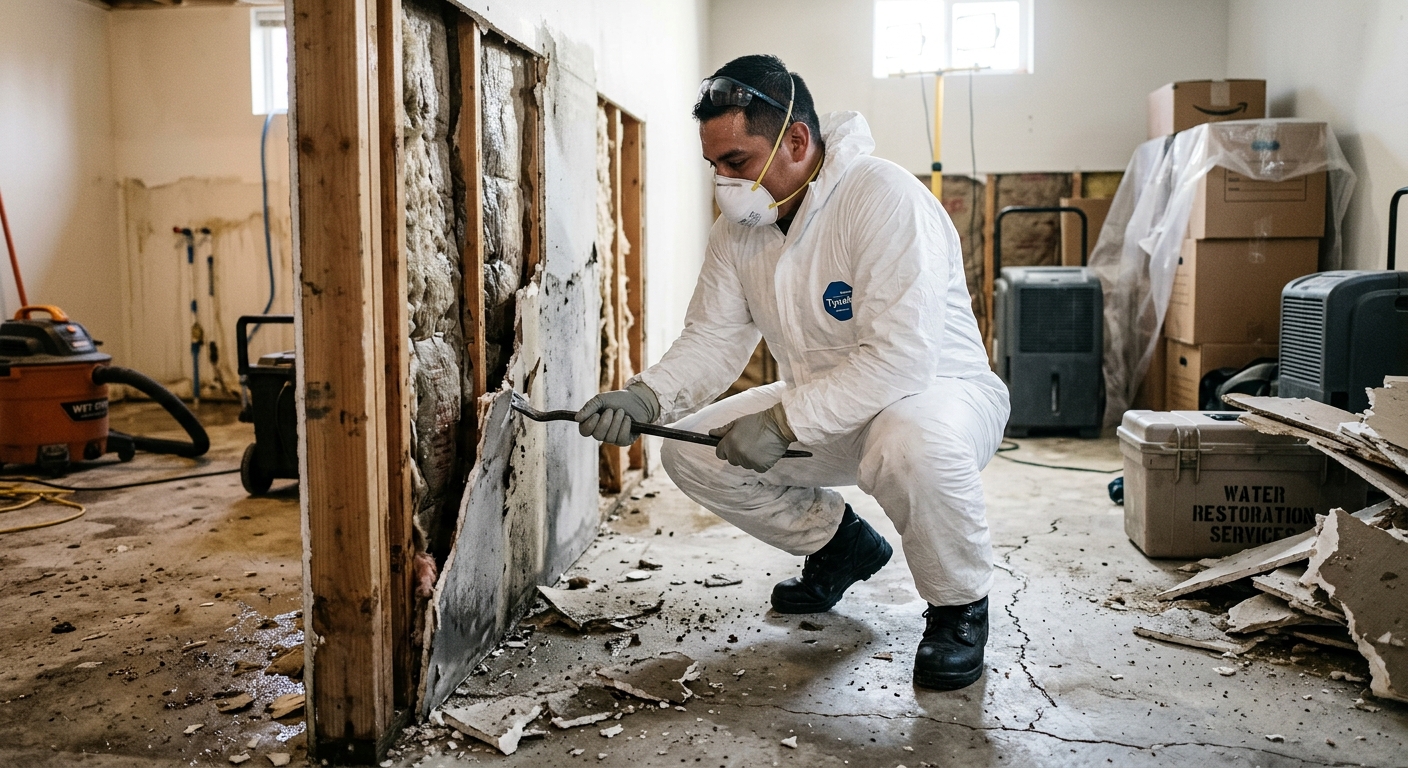
This is called a “flood cut.” In Lititz’s older homes, water wicks up plaster or drywall, and insulation behind the wall can stay wet long after the surface dries out. By cutting two feet up, crews remove all material touched by the water and ensure hidden moisture and contaminants are eliminated. This height is standardized so replacement materials fit easily, and wiring/plumbing can be checked and dried. In cases involving Category 2 or 3 water, it’s mandatory under IICRC S500 standards, which are the norm for insurance claims here. While it adds to demolition and repair, it often saves money by preventing hidden mold, which costs much more to fix (full remediation may reach $10,500 in multi-room jobs).
How much does a flooded basement cost to restore in Lititz?
Restoring a flooded basement in Lititz typically costs anywhere from $1,200–$12,000, depending on what caused the water and how long it sat. Clean water (supply line burst) with immediate response is at the lower end; sewer backup with biohazard removal, extensive demo, and drying lands at the upper end. Basement jobs here often involve heavy contents, built-in cabinetry, or finished walls that add both time and cost. Quick action narrows the bill. In Lancaster County’s housing stock, cleanup plus drying for a typical basement with moderate finish averages $3,900–$6,500. Insurance may cover extraction and drying, but not always full reconstruction or contents replacement, so read your policy closely and keep all receipts.