water damage restoration costs in Lebanon — 2026
If you live in Lebanon and water is pooling in your basement, you’re not alone—fast action matters, but the question on everyone’s mind is, “How much is this going to cost me?” Because most homes here were built in the 1940s–1960s (U.S. Census Bureau, ACS 2024) and rely on aging cast-iron or galvanized pipes, many losses start with internal plumbing failures, not just heavy rain or flooding from Quittapahilla Creek. Single-family homes make up a sizable portion of Lebanon’s housing, and most have full basements—making both the scope and price of remediation a little different here than in neighboring counties with newer stock or more slab-on-grade builds.
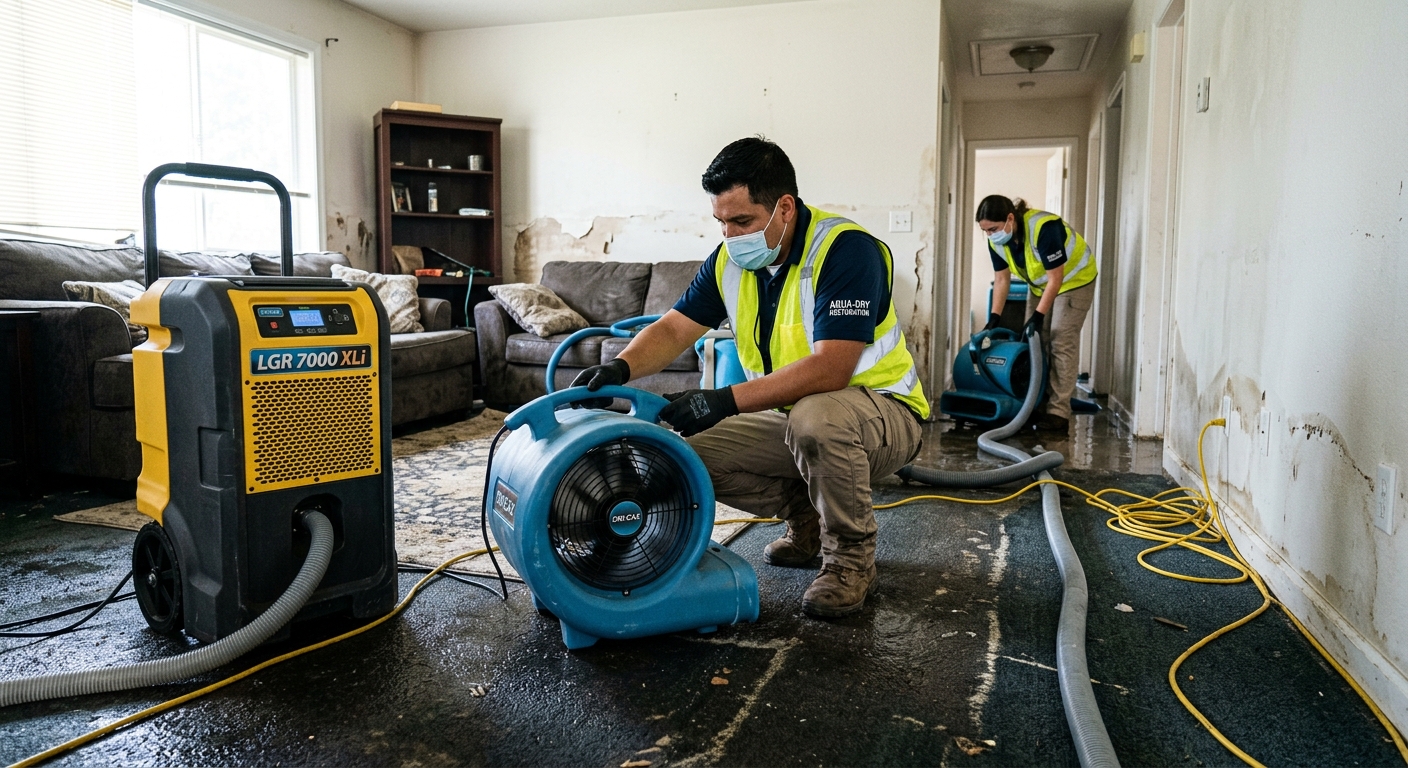
For homes in Lebanon, expect a typical water extraction and emergency drying call—if you catch it early and it’s clean water—to land between $1,100–$7,000, with most jobs around $3,600. If all you need is structural drying after you’ve stopped the source, set aside $950–$6,500. Mold remediation with proper containment and post-clearance testing can push costs higher, especially if water sat for days in a poorly ventilated cellar. Cleanup for a sewage backup—still not rare in some older Lebanon neighborhoods, despite separate city sanitary lines—often runs higher than most expect.
| Service |
What it covers |
Typical duration |
Price range |
| Water extraction + emergency drying (Cat 1) |
extraction, air movers, LGR dehumidifiers, daily moisture monitoring |
3–5 days |
$1,100–$7,000 |
| Structural drying only (post-extraction) |
drying to standard after water is already out |
3–5 days |
$950–$6,500 |
| Mold remediation with containment |
containment, HEPA filtration, removal, antimicrobial, clearance test |
3–7 days |
$1,400–$9,800 |
| Sewage backup cleanup (Cat 3) |
biohazard protocol, disposal of porous materials, disinfection |
2–5 days |
$2,300–$11,000 |
| Emergency board-up / tarping |
stop further water entry, secure the structure |
same day |
$350–$900 |
Estimates for a typical Lebanon home. Category, affected area and how long the water sat move these figures more than anything else.
Vetting a contractor when you have no time
In Lebanon County, when there’s water on the floor, few people have three days to gather bids. The reality here: you may only get one or two contractors on the phone, since coverage is moderate suburban—not the saturated metro context where firms compete on speed alone. Harrisburg, Lancaster, and Reading crews do travel in, so expect a realistic response window to be “within a few hours,” not minutes, unless you catch a local firm between jobs.
If you’re under pressure, there are three minimum checks to do over the phone before saying “come”: confirm they hold a current Pennsylvania Home Improvement Contractor (HIC) registration (verify at hic.attorneygeneral.gov), they carry both general liability and workers’ compensation (this is state-mandated), and the lead on site can present IICRC certification. That’s the baseline. Before a technician unloads a single air mover, you should see: a signed contract (required over $500), a full scope of work (what’s being done and what is not), and a copy of their insurance certificate and worker’s comp documentation. All of this protects you if something goes sideways.
- Verify HIC registration number and match it online
- Request a certificate of insurance (named for your address)
- Ask if workers’ comp will cover all crew on site
- Insist on IICRC certification for the lead technician
- Check written contract (no blank scopes, no missing price)
- Get details on what, exactly, “emergency mitigation” will include
- Ask: is the firm local, or is this a dispatched traveling crew?
- Confirm project updates and who will be your point of contact
- Clarify how payment is handled (direct-to-insurance or you pay up front)
- Check for HICPA and right-to-cancel language in paperwork
Pressure tactics in this trade usually look like fast-talking around paperwork—pushing you to sign an open work authorization, skipping the scope, or having a crew unload before you’ve agreed to anything. In Lebanon, take two extra minutes to get every commitment in writing, even if water is still coming in through the door.
What a Pennsylvania restoration contractor must actually hold
For restoration work in Lebanon County, Pennsylvania does not issue a state license specific to water mitigation, restoration, or mold remediation. This means that anyone can technically print a business card and call themselves a “specialist”—there’s no official state credential for this industry. However, for contracts over $500, every contractor must hold a Pennsylvania Home Improvement Contractor (HIC) registration, issued by the Office of Attorney General. You can (and should) verify that number before a crew arrives—use hic.attorneygeneral.gov.
IICRC certification (S500 for water and S520 for mold) is not mandated by law, but it’s the national insurance-industry standard. Every legitimate company should have at least one IICRC-certified technician on site; don’t be shy—ask to see the lead tech’s IICRC card when they arrive.
Permits become necessary only if your project moves from dry-out to actual rebuilding—like opening up walls or floors to replace water-damaged framing. In the City of Lebanon, this step will typically require a building permit, but cosmetic work like repainting without drywall replacement in boroughs like Myerstown does not.
Finally, request their certificate of general liability insurance and confirm that workers’ compensation is current—verify through the WCAIS system (wcais.pa.gov) for full peace of mind. Before work starts, always demand a written scope of work and contract in line with Pennsylvania’s Home Improvement Consumer Protection Act (HICPA).
What to expect week by week in Lebanon
Water damage recovery in Lebanon moves in two very distinct phases: mitigation and reconstruction. Mitigation—the emergency extraction, drying, and stabilization—usually happens within the first 3–7 days, is billed directly to insurance by most firms, and is done by a specialized emergency crew. In nearly every case, once the fans, dehumidifiers, and negative-air machines are gone, the process pauses.
This gap is where many Lebanon homeowners feel left in limbo. The reason is logistical and unavoidable: mitigation stops new damage, but rebuilding—cutting out and replacing drywall, remodeling, painting—requires permits (if structural), scheduling, and sometimes completely different crews. Especially given Lebanon’s moderate suburban density and that many firms are based out of Harrisburg, Reading, or Lancaster, the wait time for your home to reach the front of the reconstruction queue can be a week or more. Don’t mistake this pause for abandonment—it’s the handoff between emergency and scheduled work, not neglect.
For perspective: mitigation (the urgent, noisy phase) is typically over in a few days. Reconstruction—if you need walls rebuilt—may run several more weeks, depending on trade availability, especially during regional events like spring thaw or summer flash floods. It’s normal to live “half put-back” for a stretch. Good firms will communicate your reconstruction start date plainly. Ask for it.
The mold clock: 24, 48 and 72 hours
The most important factor in water restoration cost in Lebanon is time—because the longer water sits, especially in a basement with our regional humidity, the more likely mold becomes a second problem. Spores can begin to colonize damp drywall or framing in as little as 24–48 hours. This is not a scare story—it’s why restoration firms here jump when the phone rings.
If your water loss is addressed within 24 hours, “dry in place” is usually possible and most jobs remain straightforward, in the $1,100–$7,000 mitigation band (no advanced containment needed). Wait past 48 hours—especially in Lebanon’s older, poorly vented basements and during the humid shoulder seasons—and select demolition (removing carpet, drywall) becomes necessary. By 72 hours, the most cost-effective strategy is usually full containment and formal mold remediation, which pushes the price toward $1,400–$9,800, including HEPA air filtration and antimicrobial treatments.
A clearance test is a third-party air or surface sample (typically post-remediation) that documents the space now meets established mold-free standards. Always get the clearance in writing, especially if insurance is involved or if you plan to sell. It’s your best protection against future disputes—and in older Lebanon homes, it’s a concrete way to document you handled the problem correctly.
What insurance covers — and the exclusion that surprises people
The distinction that matters most for Lebanon homeowners is this: if water comes from a sudden internal source—a burst supply line or failed washing machine hose—standard homeowners insurance policies usually cover both mitigation and reconstruction costs. But if the source is water coming from outside, like flash flooding over your threshold or basement windows during one of the Quittapahilla Creek events, most policies exclude coverage unless you’ve bought a separate flood insurance policy. Far too many people discover this only after a loss has already happened.
Another frequent surprise is the gradual-leak exclusion. If the water issue built up slowly—say, a pinhole leak in a cast-iron supply line in a South Side basement over months—it’s often categorized as a maintenance issue, not a “sudden and accidental” loss, and coverage may be denied. For sanitary sewer or drain backups, Lebanon homeowners must generally secure a policy rider; it doesn’t come standard but is worth it if you’re in a lower-lying or older neighborhood where backup risk remains.
On your claim, insurers pay out based on “actual cash value” (depreciated) unless you pay premiums for “replacement cost.” Ask for a scope of loss document from your adjuster—a written breakdown of what’s covered, room by room.
Direct billing (or assignment of benefits) means the restoration firm works with your insurer directly, sometimes stepping into your policyholder’s shoes for payment of the mitigation work. You lose some direct control, but it keeps out-of-pocket costs lower. Under Pennsylvania’s Home Improvement Consumer Protection Act (HICPA), you get 3 business days to cancel any contract over $500. If anyone offers to “waive your deductible”—this is prohibited in Pennsylvania, as it’s considered insurance fraud and a consumer red flag. In this market, an ethical firm will never suggest it.
Preventing the next one
Most water claims in Lebanon start with aging interior plumbing—not with river or surface flooding—making prevention quite affordable. If you have 1940s–1960s cast-iron or galvanized supply pipes, the highest-value step is proactively replacing old supply lines to sinks, washers, and water heaters. Most plumbers in Lebanon charge $250–$600 per appliance or faucet line replaced with braided stainless, and it’s well spent compared to a multi-thousand-dollar water claim.
Next, an automatic water shutoff valve (installed at your home’s main), senses leaks and can cost $700–$1,800—not a fit for every budget, but increasingly common in postwar homes being renovated. Sump pumps with battery backup ($400–$1,200) pay for themselves the first time heavy rain knocks out your power in South Side or near any creek. Backflow valves ($600–$1,500) help in older Lebanon neighborhoods at risk for occasional sanitary backups. Water heater pans and floor drains are low cost ($75–$250), but in basements, they are only as effective as the drain’s ability to keep up.
Leak sensors—stick-on battery units that send a phone alert—run $30–$70 each, and a few strategically-placed in your basement and laundry area beat a $2,000 insurance deductible every time. Don’t waste money on “whole-home” flood alarm systems unless you’ve already taken these basic steps.
Frequently asked questions — water damage restoration in Lebanon
How much does water damage restoration cost in Lebanon?
In Lebanon, Pennsylvania, the cost to fully restore water damage depends on the type and extent of the loss. Basic water extraction and emergency drying typically range from $1,100–$7,000 for Category 1 (clean water) events, with most standard jobs (average basement or main floor) coming in around $3,600. If you’re looking at a more complex job—such as mold remediation or sewage backup—your total cost can rise to $9,800 or more. A big factor here is that most Lebanon homes are pre-1980 and use older plumbing, which can mean the damage is more extensive or hidden. The faster you act and the less demolition required, the lower your bill is likely to be.
How much does a flooded basement cost to restore in Lebanon?
For a typical full-basement flood in Lebanon, expect a water mitigation bill between $1,100–$7,000 if it’s clean water and caught promptly. If the water contains sewage or sat long enough to develop mold, the price jumps—mold remediation work commonly runs $1,400–$9,800, and a full sewage cleanup could be as high as $11,000 if everything below grade needs removal and replacement. Most homes here have below-grade basements due to postwar building trends, so addressing basement floods is a big part of the Lebanon trade. Fast intervention can keep you closer to the low end of the range.
Can a contractor waive my deductible in Pennsylvania?
No, a reputable contractor in Pennsylvania cannot legally waive your insurance deductible. The Home Improvement Consumer Protection Act (HICPA) specifically prohibits deductible waiving because it’s considered insurance fraud—you’re asking your insurer to pay for something you did not. If a company offers to do this, take it as a warning sign rather than an incentive. Instead, expect to pay your portion (often $1,000 or more) directly, with insurance covering the balance for approved losses, such as water extraction and emergency dryout (typically $1,100–$7,000 in Lebanon). Always insist on a full, written contract that clearly spells out your out-of-pocket portion to avoid problems with your claim or future coverage.
What is the difference between water damage class and category?
In Lebanon, as elsewhere in Pennsylvania, “category” refers to how contaminated the water is—Category 1 (clean, from supply lines), Category 2 (gray, such as washing machines), and Category 3 (grossly contaminated, like sewage). “Class” refers to how much material and space is affected—for example, Class 1 means minor moisture, while Class 4 indicates deep saturation in materials like plaster or hardwoods common in Lebanon’s older homes. Pricing follows both: a Category 1/2 job might stay at $1,100–$7,000, but a Category 3 (sewage) event is higher both because of the biohazard work involved and often severe material loss, sometimes reaching $11,000.
Can I rent dehumidifiers instead of hiring a company?
You can rent commercial dehumidifiers and air movers from Lebanon and area equipment suppliers, but without proper moisture mapping, you risk missing hidden damp spots—especially in basements typical of local postwar homes. Daily rental runs $80–$150 per unit, but a full professional dry-out (including monitoring, moisture readings, and equipment setup) commonly falls in the $950–$6,500 range, depending on severity. If you’re drying a minor spill or a small room and you’re confident you caught it fast, renting might make sense. Hidden moisture in walls or under flooring, especially in older Lebanon houses with plaster or hardwood, is where DIY attempts usually miss the mark and mold becomes a risk.
Is sewer backup a known problem in Lebanon?
Yes, while Lebanon City maintains separate sanitary and storm sewer lines, older neighborhoods—especially in the city itself—still report sanitary sewer backups during periods of heavy rain. This is less common in newer, outlying areas of Lebanon County. When it does happen, cleanup requires strict biohazard protocol, including removal of porous materials and professional disinfection, and costs typically fall between $2,300–$11,000 depending on affected area and duration. If your block has a history of backups, consider a backflow valve and adding sewer backup coverage to your insurance policy to avoid major out-of-pocket expenses.
Is sewer backup covered under a standard policy?
In Pennsylvania, including Lebanon County, sewer or drain backup is not included in a standard homeowners policy—coverage is only available as an optional policy rider. If your home is in one of Lebanon’s older neighborhoods where backups occur, adding this rider is wise. Without it, you’re responsible for all cleanup and property replacement costs, which often reach $6,100 for typical jobs and can go up to $11,000 for more extensive damage. Most insurers offer this as a low-cost add-on, and it’s worth reviewing your coverage annually, especially if your basement has a history of backup during regional storms.
How long before mold starts growing?
In Lebanon’s climate, visible mold can start growing as soon as 24–48 hours after water exposure—this is especially fast in warm, humid months or in basements with limited air flow. After 72 hours, mold colonies are established and full remediation—with containment and clearance testing—is typically required, which can raise your bill to the $1,400–$9,800 range. For this reason, local restoration contractors prioritize same-day response for new water losses. If you catch the problem quickly and start professional drying right away, there’s a good chance you can avoid more invasive and costly mold remediation work.
How long until reconstruction starts?
After the mitigation phase ends—meaning drying and removal of unsalvageable materials—there’s often a noticeable pause before reconstruction work begins in Lebanon. This window can range from a few days to several weeks, depending on your contractor’s workload and whether building permits are needed (common if you’re replacing structural framing in City of Lebanon projects). Because multiple firms in the Harrisburg–Reading–Lancaster area service Lebanon, you may wait longer after major regional events, like spring flooding. While mitigation is typically 3–7 days ($950–$7,000), expect reconstruction to add several weeks, with scheduling and permits sometimes taking longer when multiple properties are affected at once.
Will my premium go up after a water damage claim?
Filing a water damage claim in Lebanon County will likely impact your homeowners insurance premium at renewal, particularly for large or repeat losses. While Pennsylvania does not regulate insurers’ rate changes after a claim, local experience is that increases are routine—especially for Category 3 or mold-involving claims, which may cost your insurer $6,100–$9,800. For single, sudden events, the hike may be modest, but multiple claims within several years can put you at risk for non-renewal. If your loss is small and close to your deductible, weigh whether it’s worth claiming versus handling the costs yourself to keep your record clean.