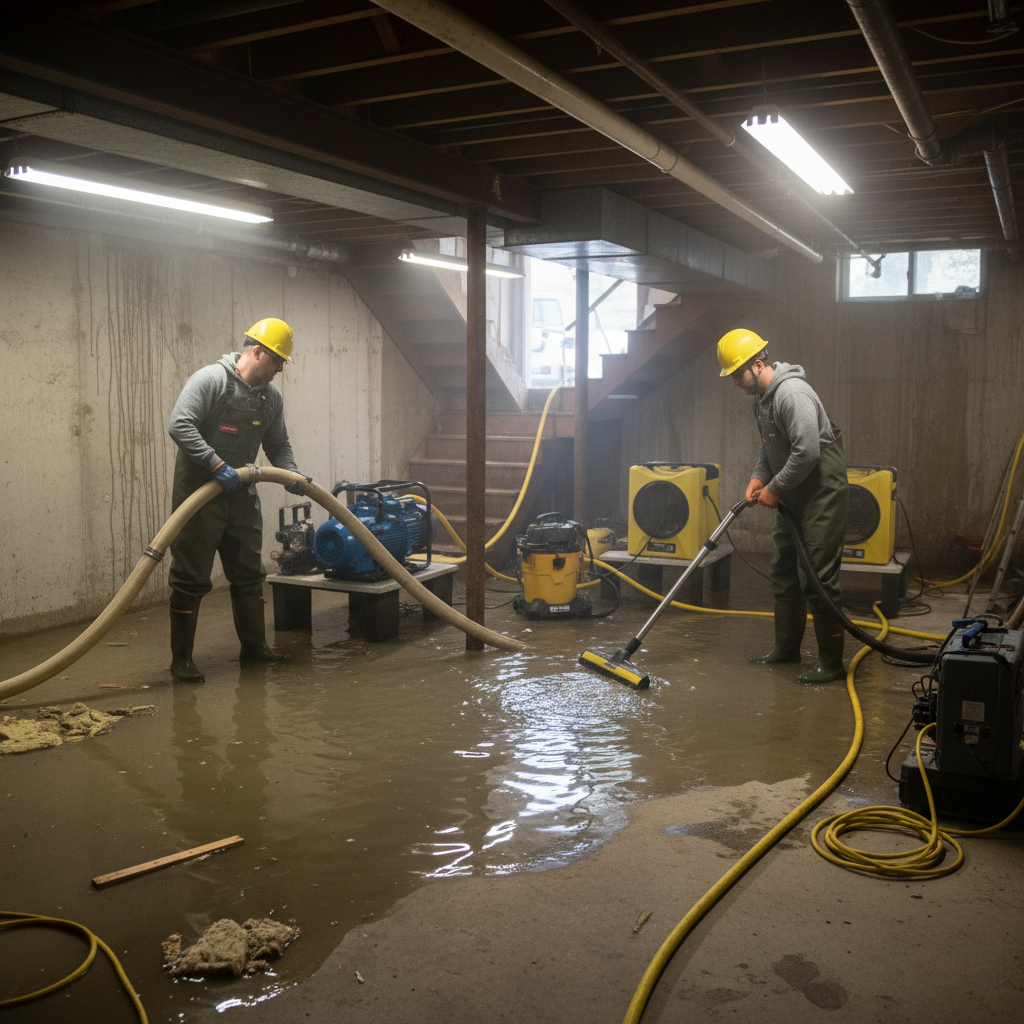
water damage restoration costs in Canonsburg — 2026
If you’re in Canonsburg and facing active water in your home, you aren’t alone. With 75.1% of homes here built before 1980 and 63.0% being single-family (U.S. Census Bureau, ACS 2024), water damage restoration drives recurring business for local contractors. The area’s postwar split-levels and hillsides mean full basements—and those, in Washington County, are prone to sump pump failures and seepage, especially after heavy rain or snowmelt rolls down from Chartiers Creek. Not all water events cost the same: the source, speed of response, and how deep the water goes into structural elements make a huge difference. Most local events resolve in a few days if caught early, but the bill changes dramatically if mold or sewage is involved, or if water sits long enough to reach drywall, insulation, or subfloors.
| Service |
What it covers |
Typical duration |
Price range |
| Water extraction + emergency drying (Cat 1) |
extraction, air movers, LGR dehumidifiers, daily moisture monitoring |
3–5 days |
$1,200–$7,400 |
| Structural drying only (post-extraction) |
drying to standard after water is already out |
3–5 days |
$1,000–$6,900 |
| Mold remediation with containment |
containment, HEPA filtration, removal, antimicrobial, clearance test |
3–7 days |
$1,500–$10,500 |
| Sewage backup cleanup (Cat 3) |
biohazard protocol, disposal of porous materials, disinfection |
2–5 days |
$2,500–$12,000 |
| Emergency board-up / tarping |
stop further water entry, secure the structure |
same day |
$350–$900 |
Estimates for a typical Canonsburg home. Category, affected area and how long the water sat move these figures more than anything else.
What insurance covers — and the exclusion that surprises people
For Canonsburg homeowners, the single most expensive surprise in water loss claims is where the water came from. Insurance will usually pay for a burst supply pipe or a failed water heater—these sudden, internal events are covered perils under a standard Pennsylvania homeowners policy. But when heavy rains push Chartiers Creek over, or water seeps through your basement walls, your basic policy will not cover a dime; this external, ground-up water is considered flooding, and only a separate flood insurance policy picks it up. Many families discover this distinction the day after a storm, facing a bill that runs from $1,200–$7,400 or more with no insurance help.
Other limits matter: insurance rarely covers gradual leaks (think: that slow ceiling stain from a missing shingle) or deferred maintenance, so anything deemed preventable may be excluded. Sewer backup is another catch—most standard policies exclude it unless you purchase a specific backup rider, worth it when Washington County’s aging pipes act up unexpectedly. Payouts are by actual cash value (depreciated) or replacement cost (new-for-old), so clarify which applies on your contract. The “scope of loss” is your insurer’s itemized statement of what work they are paying for—it sets the playing field for your claim.
Direct billing and assignment of benefits make claims easier: with direct billing, restoration firms handle documentation and bill your insurer, but you must still approve all charges; with assignment of benefits, you legally transfer claim rights so the contractor can talk directly to the insurer—a time-saver, but it means you lose some control over settlement. Pennsylvania’s Home Improvement Consumer Protection Act requires a written contract for any project over $500, and by law, waiving your insurance deductible is illegal. If anyone offers to “eat” your deductible, that’s a red flag—walk away.
Why your neighbour's bill was half of yours
Two main factors set the price of water restoration in Canonsburg, and most people get them confused. CATEGORY is about how dirty or dangerous the water is; CLASS is about how much of the building has gotten wet, and how deep. These are independent—so a minor sewage backup (Category 3) in a laundry room can still cost more than a whole-room carpet soak from a clean source (Category 1), with Category 3 cleanup running $2,500–$12,000. That higher category triggers biohazard protocols, disposal, and longer mitigation.
Here’s the mechanism almost nobody knows: clean water becomes contaminated the longer it sits. Fresh water running into your basement is Category 1 for the first day, but if left—especially in Washington County’s humid months—it turns gray (Category 2) and finally black (Category 3) within 72 hours, driving labor and disposal costs right up. That’s why waiting “just one night” can move your bill thousands higher.
| Classification |
Source or extent |
Health risk |
Cost effect |
| Category 1 — clean |
supply line, appliance line, rainwater |
low |
baseline |
| Category 2 — grey |
washing machine, dishwasher, sump failure |
moderate |
+20–40% |
| Category 3 — black |
sewage, groundwater, water standing 72+ hrs |
biohazard |
$2,500–$12,000 |
| Class 1 |
small area, little absorption into structure |
— |
low end of $1,200–$7,400 |
| Class 2 |
whole room, water into walls and subfloor |
— |
$1,200–$7,400 |
| Class 3 |
saturation from above; insulation and walls wet |
— |
$1,000–$6,900 |
| Class 4 |
deep saturation of hardwood, plaster, concrete |
— |
upper range of $6,900 or more |
What a Pennsylvania restoration contractor must actually hold
Pennsylvania does not license restoration or mold contractors at the state level—there is no official trade license or government “seal.” Anyone can print a business card, but real credibility comes from IICRC certification. For water or mold work in Canonsburg, always ask for the lead technician’s IICRC wallet card; it’s the recognized industry standard, and reputable firms expect you to check. For repairs after mitigation (like drywall or framing), the Pennsylvania Uniform Construction Code applies, and in most municipalities, a building permit is only needed for structural reconstruction, not for extraction or drying.
Home improvement contractors need HIC registration from the Pennsylvania Office of Attorney General for jobs over $500—you can verify current status online and confirm their identity matches the business on your contract. Workers’ compensation is mandatory for all employers in this state; request a certificate and independently check it through the WCAIS system before any crew enters your home. Before work starts, you should have in writing: a signed contract (required by the Home Improvement Consumer Protection Act), a description of the services to be performed, the price range or rates, and proof of insurance. Never let extraction or demolition begin with just a handshake or verbal promise.
Immediate steps for a Canonsburg homeowner with active water
If you’re standing in water in your Canonsburg home, move fast and methodically. First, shut off your main water supply; in homes here, look for a valve at the basement wall, just above the meter or foundation. If the electrical panel is on a dry wall and accessible, shut off only those circuits that serve wet areas—never risk crossing standing water to reach your panel. Photograph the scene from the doorway, then closer up—take shots of affected rooms, walls, contents, and the water source if visible. Before moving anything, get photos of your belongings in place.
Raise furniture and valuables off wet floors; plastic bins, foil, or wood scraps can bridge the gap. Don’t plug in or use a household vacuum to remove water—shop vacuums sold for home use do not have the ratings or safety features needed for inches of standing water, especially on the three-prong outlets commonly found in older homes here.
Call your insurance company as soon as you can, either before or at the same time as you call a restoration company. The order is less important than having a claim number, thorough photos, and a record of every action. Many people delay overnight, thinking they’ll deal with it in the morning—this is where mold gains its footing. Waiting even 12 hours can turn a $3,900 clean-water job into a $10,500 remediation. Every hour counts; get the process started immediately.
Hiring under pressure in Canonsburg
Most advice online assumes plenty of time for vetting. In Canonsburg, after your basement floods, you don’t have a week to compare quotes—especially with multiple regional firms from Pittsburgh and the I-79 corridor serving the area. That means crews are available, but being first in line doesn’t always mean getting the right company. Before you let anyone drive over, confirm these three things: their HIC registration number, that they carry current workers’ compensation (not just general liability), and that a certified technician will be on-site (not just the office on call).
Once the crew arrives, never let equipment off the truck before you have: (1) a signed written contract, (2) proof of insurance, and (3) a detailed, written service scope (what’s being done, not generic “restoration work”).
- Confirm HIC registration at hic.attorneygeneral.gov
- Request a current workers’ comp certificate and check it at WCAIS (wcais.pa.gov)
- Ask to see the crew lead’s IICRC certification card
- Get a written, itemized scope of work before signing anything
- Require a signed contract for all work over $500, per state law
- Request proof of general liability insurance
- Ask what drying/monitoring equipment will be used and for how long
- Insist on daily project updates or logs
- Photograph all contract documents and ID on arrival
- Check final invoice matches initial scope—no blank lines or add-ons
This market sees pressure tactics: some crews unload equipment without a contract, present a blank-scope work authorization, or have you sign “just to get started.” Insist on full documents up front. If anyone tries to rush you or says “we’ll fill this in later,” that is your signal to stop the process until the basics are covered.
Mitigation, then reconstruction: two different timelines
Water disaster relief in Canonsburg comes in two distinct phases. Mitigation happens first: extraction, drying, and cleaning, usually within a week and often billed directly to your insurance. Contractors expect urgency, and you’ll see air movers and dehumidifiers in place in hours. But as soon as moisture readings come back dry, that team pulls the equipment—and suddenly, nothing happens for days or even weeks. This is where many homeowners feel “left hanging.”
The gap is normal. Reconstruction—repairing drywall, framing, floors, or cabinets—uses different trades, requires permits when structural work is involved (especially in the City of Washington), and scheduling can stretch out when multiple homes are hit by the same storm or freeze event. With the density of firms in the Pittsburgh metro fringe, weeks instead of months is typical for non-structural repairs, but wait times can be weeks for skilled trades or backlogged permit offices. Knowing that the lull is not neglect but the normal sequence lets you plan, ask questions, and avoid unnecessary frustration.
Frequently asked questions — water damage restoration in Canonsburg
Is it safe to stay in the house during drying?
It depends on the category and extent of the water damage in your Canonsburg home. Clean water (Category 1) events may be safe if the wet area is isolated, and industrial drying equipment can run safely in most cases. However, if there is any sewage involvement (Category 3) or visible mold—both real concerns with the frequent basement backups seen around here—leaving during mitigation is usually advised for children, elderly, or anyone with respiratory issues. The strong airflow from commercial dryers can circulate dust and spores, especially in older homes that make up 75.1% of Canonsburg’s housing. Moving to a hotel for a few days isn’t cheap, but neither is a mold remediation bill in the $1,500–$10,500 range if contamination worsens from poor containment.
What is an assignment of benefits and should I sign one?
An assignment of benefits (AOB) is a legal document that allows your restoration contractor to speak directly with your insurer and receive payment on your behalf. In Pennsylvania—including Canonsburg—it can save you time: you won’t have to coordinate between the contractor and adjuster for every step. However, when you sign an AOB, you give up certain rights to control how your claim is handled and settled. Read the agreement carefully and never sign if there are blank sections or you feel rushed. Make sure the contract includes details on the scope and price—don’t leave it open-ended. If you’re comfortable with the contractor and need work started immediately, it’s reasonable in this market. Remember you still owe your deductible—never trust anyone who offers to “waive it.” All reputable restoration companies adhere to these rules, with typical bills running $3,900 for a Category 1 event.
Is a shop vacuum enough for standing water?
While a wet/dry shop vacuum feels like an immediate fix, it’s rarely enough for the quantity and type of water damage seen in Canonsburg basements—especially those built in the postwar era. Homeowner-grade shop vacs may remove several gallons per dump, but once padding, subfloors, or finished basement walls are wet, they simply can’t match commercial extraction and structural drying. Missing the hidden moisture can lead to a much pricier mold remediation in the $1,500–$10,500 range a few weeks later. There’s also a significant safety risk: never use a vacuum in standing water if outlets or circuits may be energized. For more than a puddle, especially if it’s carpeted or if you’re worried about the smell after, skip the shop vac and call a restoration company with proper equipment and training.
Why is water damage priced per square foot?
Water mitigation in Canonsburg—and most of Pennsylvania—is usually estimated per square foot for drying, extraction, and demolition. That’s because every foot of affected area means more equipment, labor, disposal and, often, more time on site. A 400-sq-ft finished basement flood with wall saturation can quickly reach $3,900–$7,400, while a small laundry room spill may stay under the low end of that band. Pricing also reflects the category and class of the loss: deeply saturated hardwoods (common in older homes here) cost more to dry and often require specialized techniques. Ask for a clear, itemized estimate linked to the measured wet area and always request a breakdown that matches the scope of work.
What causes most water damage in Canonsburg homes?
In Canonsburg, the most common culprits are sump pump failures and basement seepage due to our region’s hilly terrain and clay soil subgrade. Postwar construction (1950s–1970s) dominates, with full basements prone to both surface runoff after storms and groundwater pressure from tributaries like Little Chartiers Creek. With 75.1% of housing stock predating 1980, plumbing failures and aging sanitary systems are frequent. Sewer backups—especially in the City of Washington—lead to costly Category 3 cleanup jobs that often reach $2,500–$12,000. The combination of older homes, local topography, and sometimes-overloaded sewers puts most water claims into the same handful of categories season after season.
Do I need separate flood insurance in Canonsburg?
Yes, if you want coverage for water entering from outside, like surface flooding after heavy rain or overflow from Chartiers Creek. Standard homeowners policies in Pennsylvania—including those serving Canonsburg—don’t cover damage from groundwater or overland flooding. This is the most frequent gap when basement water claims arrive, with homeowners left paying $1,200–$7,400 out of pocket. Flood policies must be purchased separately, often through the National Flood Insurance Program (NFIP). Claims from burst pipes or sudden internal leaks are covered, but anything described as "flood" in insurance language isn’t. If your basement has ever shown damp spots or water lines, it’s worth talking to your agent about supplemental coverage before you need it.
Is emergency after-hours service more expensive in Canonsburg?
After-hours premiums are common in the restoration business, but in Canonsburg, the competition from regional firms (including Pittsburgh-based crews) plus a steady year-round demand keeps pricing within the published bands. You may see a higher line-item charge for initial callout—sometimes bumping a standard extraction from $3,900 up toward $7,400 if you call at 2 a.m. or on a holiday. However, reputable companies make this clear in writing up front. Always ask about after-hours fees before giving the go-ahead and check that all rates are spelled out in your contract. Emergency timing is sometimes unavoidable, but you shouldn’t see surprise surcharges when the job is invoiced.
Can hardwood floors be saved after flooding?
Sometimes—but speed, the amount of water, and local climate conditions in Canonsburg all play a role. If drying starts within the first 12–24 hours, especially with professional-grade dehumidifiers and air movers, there is a real shot at saving floors, particularly in moderately affected areas (Class 1 or 2). Delays, deep saturation, or contamination (like sewage or prolonged water) often require removal, with total repair costs reaching the upper band of $6,900 for drying or far more for replacement. Homes here built before 1980 may have hardwoods over concrete or tile, complicating removal and reinstallation. Restoration contractors should provide daily moisture readings and adjust plans if cupping, warping, or mold signs develop after equipment is set up.
How do I verify a restoration contractor's insurance?
In Pennsylvania, including Canonsburg, start by insisting on a certificate of insurance showing both general liability and workers’ compensation. The workers’ comp policy should list the actual business name that matches your contract—do not accept a generic or “in process” document. For workers’ comp, check coverage status at the state’s WCAIS system, which makes it simple to verify active, valid coverage for any employer. General liability should come directly from their agent, not just a photocopy; call the broker if you need confirmation. Keep both certificates on file with your signed contract. Anyone reluctant to provide insurance proof is not legitimate—and considering a typical job can run $1,200–$7,400, you deserve protection from liability.
How long until reconstruction starts?
After mitigation wraps up in Canonsburg—a process that usually takes 3–7 days for water extraction and drying—the clock starts on reconstruction. In the Pittsburgh metro fringe, expect a delay of several days to a few weeks, depending on the volume of claims, availability of permits (especially for structural repairs in the City of Washington), and contractor schedules. Non-structural work tends to move faster, but full structural reconstruction may face a backlog if multiple homes were hit by a storm. Your restoration firm may not handle reconstruction directly; often, a new contractor with a separate contract steps in. For budgeting, after a typical $3,900 mitigation job, plan on at least one to three weeks before rebuild work starts, longer if permits or specialty trades (like carpentry or electrical) are involved.