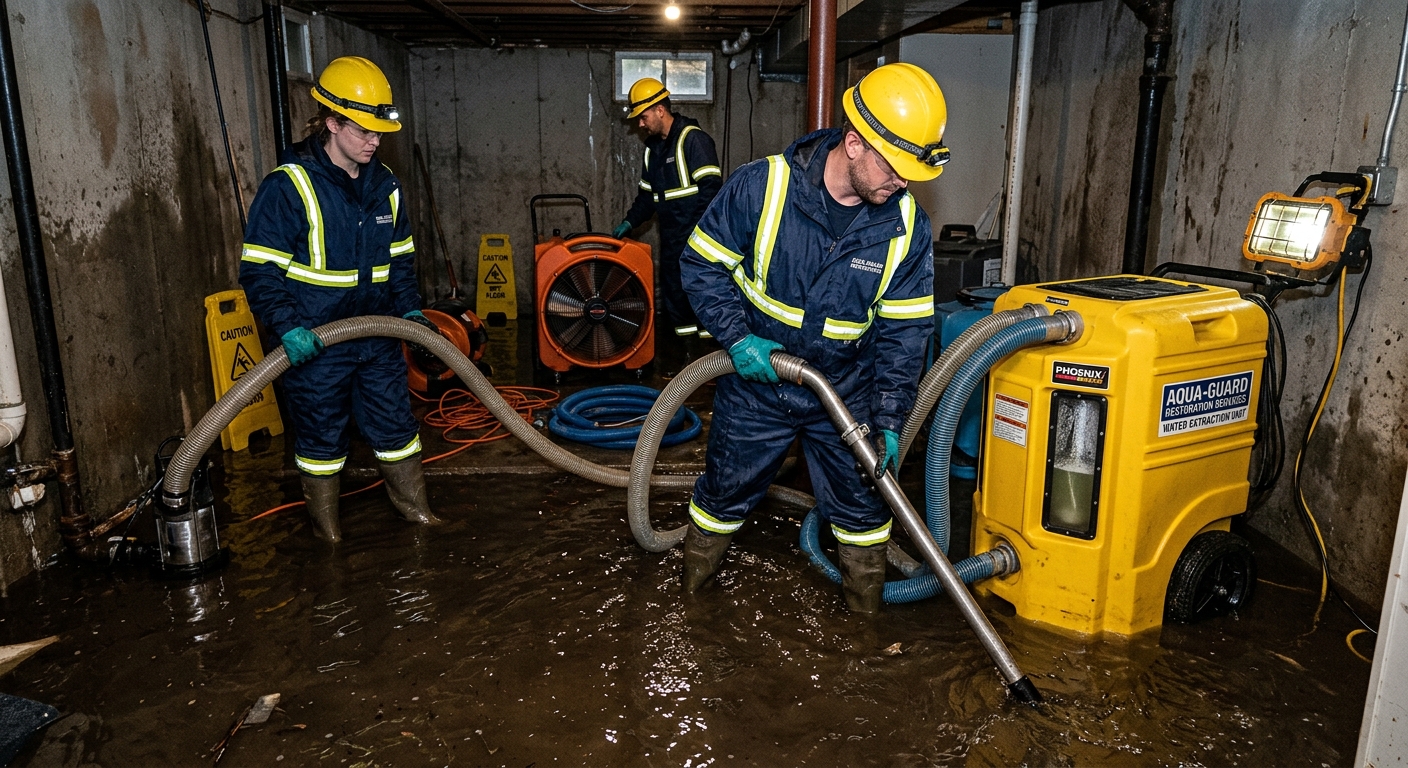
What water damage restoration costs in Butler
If you’re in Butler, Luzerne County, and dealing with water in your house right now, you’re not alone—most homes here are full basements, often older, and see their share of water issues after storms or pipe failures. With 84.8% of homes in Butler being single-family and a sizable 37.7% built before 1980 (U.S. Census Bureau, ACS 2024), the combination of older construction and the region’s post–World War II tract housing makes basement water intrusion and pipe failures common—especially in Wilkes-Barre, Hazleton, and the surrounding area. When facing any kind of sudden water loss here, expect costs and timelines to hinge most on how quickly you call for help, how extensive the water spread is, and how long materials stayed wet.
Local prices for professional water damage services below:
| Service |
What it covers |
Typical duration |
Price range |
| Water extraction + emergency drying (Cat 1) |
extraction, air movers, LGR dehumidifiers, daily moisture monitoring |
3–5 days |
$1,200–$7,700 |
| Structural drying only (post-extraction) |
drying to standard after water is already out |
3–5 days |
$1,000–$7,100 |
| Mold remediation with containment |
containment, HEPA filtration, removal, antimicrobial, clearance test |
3–7 days |
$1,550–$10,500 |
| Sewage backup cleanup (Cat 3) |
biohazard protocol, disposal of porous materials, disinfection |
2–5 days |
$2,600–$12,000 |
| Emergency board-up / tarping |
stop further water entry, secure the structure |
same day |
$350–$900 |
Estimates for a typical Butler home. Category, affected area and how long the water sat move these figures more than anything else.
Regulation, certification and verification in Butler
Pennsylvania does not issue state licenses for water damage restoration or mold remediation contractors. This means that in Luzerne County—including Butler—there is no official state “restoration license,” so seeing a business card or a claim of “certified” means almost nothing by itself. Instead, the industry standard is IICRC certification: ask for the lead technician’s IICRC card, not just a company logo. For mold, insurers recognize IICRC S520 as the technical bar, but again, there’s no state license you can check in Pennsylvania.
Permits are triggered for reconstruction—not mitigation. In Wilkes-Barre, you’ll need a building permit for structural repairs after floods or sewer backups, but you won’t need one for emergency water extraction or drying alone. For areas like Hazleton, most extraction and drying work doesn’t require permits unless you remove or alter framing, drywall, or structural elements.
Always verify that the contractor holds current Home Improvement Contractor (HIC) registration for any job over $500. You can check a registration at hic.attorneygeneral.gov. Ask to see proof of general liability insurance and workers’ compensation (mandatory in Pennsylvania), and you can verify workers’ comp coverage for their crew using WCAIS (wcais.pa.gov).
Before a crew starts extracting or demo, you should have a written contract specifying the scope, a dollar estimate or rate sheet, and a clear right of cancellation—Pennsylvania law requires a 3-day right to cancel on jobs over $500.
Contents: pack-out, cleaning and what you can claim
Many Butler homeowners under-claim on contents after a water loss, simply because documenting and sorting items in a soaked basement or living room feels overwhelming. Restoration firms serving Luzerne County will offer a pack-out service for large losses: crews inventory, carefully pack, and transport your salvageable belongings to an off-site facility for cleaning and deodorization while your home is dried and repaired. Proper inventory is your responsibility too—photograph every room and item before anything is touched, so you have proof for your insurance adjuster. List brand, make, age, and pre-existing condition where you can.
Insurance splits your claim into “structure” (walls, floors, built-ins) and “contents” (furniture, electronics, books, clothes). Contents are usually subject to limits and separate deductibles. Typically, upholstered furniture exposed to sewage (Category 3), most mattresses, and anything made of particleboard will be unsalvageable and need disposal. Most solid wood furniture, electronics not powered on, and area rugs can be restored if cleaned and dried promptly. High-value or sentimental items should be triaged first and handled separately if possible. Make your claim “loss of use” list early—discuss temporary living expenses with your adjuster if you need to vacate during cleaning.
After the repair: hardening the house
Preventing the next loss is often cheaper than cleaning up the last one. In Luzerne County, the most cost-effective upgrades after water damage depend on your budget and where the last event started.
- Stainless braided washer and water heater lines: Easy swap, $25–$80 per appliance, prevents most burst hose losses.
- Sump pump with battery backup: A must in most Wilkes-Barre/Kingson basements. Install for $900–$2,200.
- Automatic whole-house water shutoff: These monitor flow and stop major leaks. Installed cost: $600–$1,700. Worth it if you travel or have an older house.
- Backflow valve on sewer line: If you’re in a combined sewer area with known backup risk, this is a code-accepted way to cut risk. Typical cost: $850–$2,000.
- Leak sensors: Budget units can go under kitchen sinks, behind toilets, near the water heater, and on basement floors for $15–$60 each.
- Water heater catch pan and drain: In older homes, this is cheap peace of mind: $250–$600 installed.
In Northeast Pennsylvania’s climate, with a frost depth of 36 inches and 4 °F winter design temps, freezing pipes are a recurring culprit. When upgrading, focus on insulation and proper shutoff valves above basement grade. You can safely skip “waterproof paints” and basement wall sealers—these don’t address the source, and aren’t code fixes here.
Vetting a contractor when you have no time
Even with Luzerne County’s moderately dense restoration market, most reputable companies are based out of Wilkes-Barre, Hazleton, or Scranton. That usually means you can get a crew onsite in an hour or two, but you might feel you have to pick the first one who answers. Here’s the accelerated vetting process for Butler homeowners facing an active leak or flood:
On the phone before they show up, confirm:
- They’re HIC-registered for jobs over $500
- They carry valid general liability insurance and workers’ compensation
- Your call will bring an IICRC-certified lead tech (ask for the name)
Before the first fan or extractor crosses your threshold, insist on:
- Written, signed contract including description of work and 3-day cancellation right
- Proof of insurance (ask to see both certificates)
- The HIC registration number in writing
- Copy of the itemized estimate with category of water clearly identified
- Agreement on how contents are handled (packed out or left onsite)
- Outline of daily updates and moisture checks
- Clear process for change orders if the job grows
- Clarification on who bills the insurer and whether you owe anything up front
- Who will secure permits (for repairs) if triggered during the project
- A direct mobile number for the project supervisor
Common pressure tactics in this trade include pushing for signatures on a blank scope (“we’ll fill it out later”), crews unloading without a signed contract, or telling you “the insurance will cover everything” without documenting water category or affected area. Insist on specifics, in writing, before any equipment leaves the truck.
What to do right now
If you haven’t called anyone yet and your Butler home is taking on water, you can minimize damage—if you move fast and methodically:
- Shut off the main water supply. Most Northeast PA homes have the main at the basement wall. If you can’t find it, shut water at the street curb box.
- Turn off power to affected rooms if, and only if, the breaker panel is not near standing water and you can reach it safely. Otherwise, leave this to a professional.
- Photograph and video everything as-is before technicians, friends, or family move a single item. Document water lines on walls, damaged belongings, and every angle of affected rooms.
- Move salvageable contents to dry ground—put wood or aluminum under furniture legs, and lift area rugs or electronics immediately.
- Never use a household vacuum—especially a shop vac—on standing floodwater, particularly if there’s any chance of sewage or electrical hazard.
Next: call your insurance company and a qualified restoration crew—with both calls made as soon as feasible, and in either order. Documentation is what really matters to your claim. The biggest and most expensive mistake local homeowners make? Waiting until morning. Mold becomes a serious risk within 48 hours. By then, the cost can escalate from $4,000 for emergency drying to $10,500 for a full mold job.
What insurance covers — and the exclusion that surprises people
The coverage gap that stings Butler and Luzerne County homeowners the most is the difference between sudden, internal water events (like a burst pipe) and surface flooding (from the Susquehanna River or street runoff). Your standard policy nearly always covers burst pipes or failed appliances, but does not cover water coming from outside into your house unless you separately purchased federal flood insurance. Too many find this out the hard way after a major storm or levee spillover.
Another common exclusion: slow leaks or neglect. If your insurer finds the water damage was from a leaky pipe that’s dripped for months, they’ll typically deny coverage due to “maintenance.” Sewer backups are almost never included by default but can be added as a rider; this is crucial if you live near Wilkes-Barre’s levee system, which sees backups during storms.
Understand “actual cash value” (ACV) versus “replacement cost”: ACV pays out what your items were worth (depreciated); “replacement cost” gets you new items of similar value. Know which your policy states.
Your “scope of loss” is the document your insurer writes up stating what they’ll pay for, line by line. Good restoration firms build their estimate to this scope.
Direct billing and assignment of benefits mean the contractor deals with the insurer for payment, possibly waiving your up-front outlay. Understand you may give up some control over repairs in exchange.
In Pennsylvania, it’s illegal for contractors to offer to waive your deductible. This is for your protection; offers to “cover your deductible” or present $0 paperwork usually mean corners are being cut or fraud is happening. You always have a 3-day right to cancel on jobs over $500 in Luzerne County under the Home Improvement Consumer Protection Act.
Frequently asked questions — water damage restoration in Butler
What should I do in the first hour of a water leak?
In Butler, if you find a sudden water leak or flood, immediate action is worth hundreds or even thousands in avoided damage. Shut off the home’s water supply at the main (usually located along the basement perimeter), cut power to only those circuits in wet areas if safe, and start photographing every affected corner before you move a thing. Prioritize lifting items off wet flooring but do not use a standard vacuum on water—especially when risk of sewage or electrical contact exists. Then, call your insurance company and a local restoration company at the same time for guidance and to open a claim. Delays are costly: mold growth after 48 hours can push a routine drying and extraction job from $4,000 up toward full remediation costs, and insurers will want proof of both loss and initial response.
How do I verify a restoration contractor's insurance?
In Pennsylvania, there’s no restoration license to check, but you can—and must—verify both general liability insurance and workers’ compensation before any work begins in your Butler home. Ask to see their active policy documents (insurance certificate showing your address as the jobsite), and confirm workers’ comp for all on-site techs by checking WCAIS (wcais.pa.gov). Home Improvement Contractor (HIC) registration, mandatory for jobs over $500, can be looked up at hic.attorneygeneral.gov. These steps prevent disaster if a crew member gets injured on your property during work that may easily cost $2,600–$12,000 for serious restoration. Don’t accept a business card or verbal assurance—insist on documents.
What causes most water damage in Butler homes?
Butler homes are especially prone to water damage because of their construction era and prevalence of below-grade basements. With many homes built before 1980 and by post-war tract patterns, frequent failures stem from aging supply lines, sump pump breakdowns (especially during Susquehanna River events), and sewer backflow in levee-adjacent sections of Wilkes-Barre. Basement seepage and failed washing machine hoses are also big culprits. Most losses here involve full basements, which means more structural material affected—driving costs for extraction and drying up to $7,700 or more in bad cases.
What is Category 3 black water?
Category 3 “black water” is the classification for water contaminated by sewage, river flooding, or other unsanitary sources. In Luzerne County, and particularly in Wilkes-Barre’s combined sewer areas, it most often means a sewer backup or floodwater incursion. This water carries pathogens and requires all porous materials (carpet, drywall, mattresses, upholstered furniture) to be disposed of. Butler homeowners facing a Category 3 event should expect more extensive demolition and cleaning, which is reflected in cleanup costs ranging from $2,600–$12,000. Specialized cleaning protocols, PPE, and disposal are mandatory for safety and compliance.
Does insurance cover mold after water damage?
Typical Pennsylvania homeowners insurance does not cover mold remediation unless it is directly caused by a sudden, covered water loss (like a burst pipe)—and even then, coverage is often capped. If long-standing leaks or gradual dampness are the cause, most insurers in Luzerne County will deny a mold claim. If the policy covers it, you may still have to pay out of pocket, as mold remediation with proper containment usually costs $1,550–$10,500. Always review your policy’s “limited fungi” or “mold sublimit.” Document timing and source to make your case for coverage.
Is basement flooding covered by insurance in Pennsylvania?
Basement flooding in Butler—whether from groundwater, river overflow, or sump failure—is generally not covered under a standard homeowners policy in Pennsylvania. Coverage for “surface water” or “flood” requires a separate federal flood policy. Sewer or drain backup sometimes can be added by rider, but isn’t automatically included. Sudden internal pipe breaks are typically covered but don’t confuse those with outside water. With floods from the Susquehanna or Solomon Creek, you’ll need separate flood insurance, or risk being liable for the full cost, which can run $7,700 or more for emergency drying alone.
Is a shop vacuum enough for standing water?
A shop vacuum might remove small puddles, but for even an inch or two of standing water in typical Butler basements, you’ll quickly run into capacity and safety limits—especially with possible contaminated (“gray” or “black”) water. The risk goes beyond volume: electrical hazard is real, and you’re unlikely to dry structural materials in time to avoid mold. For anything beyond a couple wet floor tiles, professional extraction is safer and cost-effective, often preventing a routine Category 1 job ($1,200–$7,700) from turning into a Category 3 sewage or mold event with much larger bills.
Is emergency after-hours service more expensive in Butler?
Yes, most restoration firms servicing Butler and the greater Luzerne County area do charge higher rates for work begun outside regular business hours—nights, weekends, or holidays—due to the need to mobilize crews quickly, sometimes traveling in from Scranton or Hazleton. This can push otherwise moderate costs for water extraction (that might be $4,000 during normal hours) up by several hundred dollars in overtime or after-hours fees. Still, waiting until morning risks greater damage and higher overall bills if mold sets in—so don’t delay the call if water is sitting.
What does mold remediation cost in Butler?
Mold remediation with proper containment in Butler typically costs between $1,550–$10,500, depending on the affected square footage, the length of time materials sat wet, and whether structural demolition is needed. Most jobs fall around $6,100. Houses with finished basements and older drywall or insulation are at greater risk for extensive spread after just a few days of standing water. Insurers may cap their responsibility well below actual cost, especially if they find a maintenance issue led to the growth, so proper documentation and immediate response play a big role in what is ultimately out of pocket.
What is a clearance test and do I need one?
A clearance test is an independent check—usually using air sampling and a visual inspection—performed after mold remediation to ensure all targeted mold has been safely removed. In Butler and Luzerne County, it’s not always a legal requirement, but if you’re dealing with insurance or selling the home afterward, a passed clearance test can be critical. For jobs over $1,550, or for vulnerable household members (seniors, immune-compromised), invest in clearance testing so there’s written evidence the job was completed per IICRC S520 standards. Ask for the report, not just a verbal assurance.