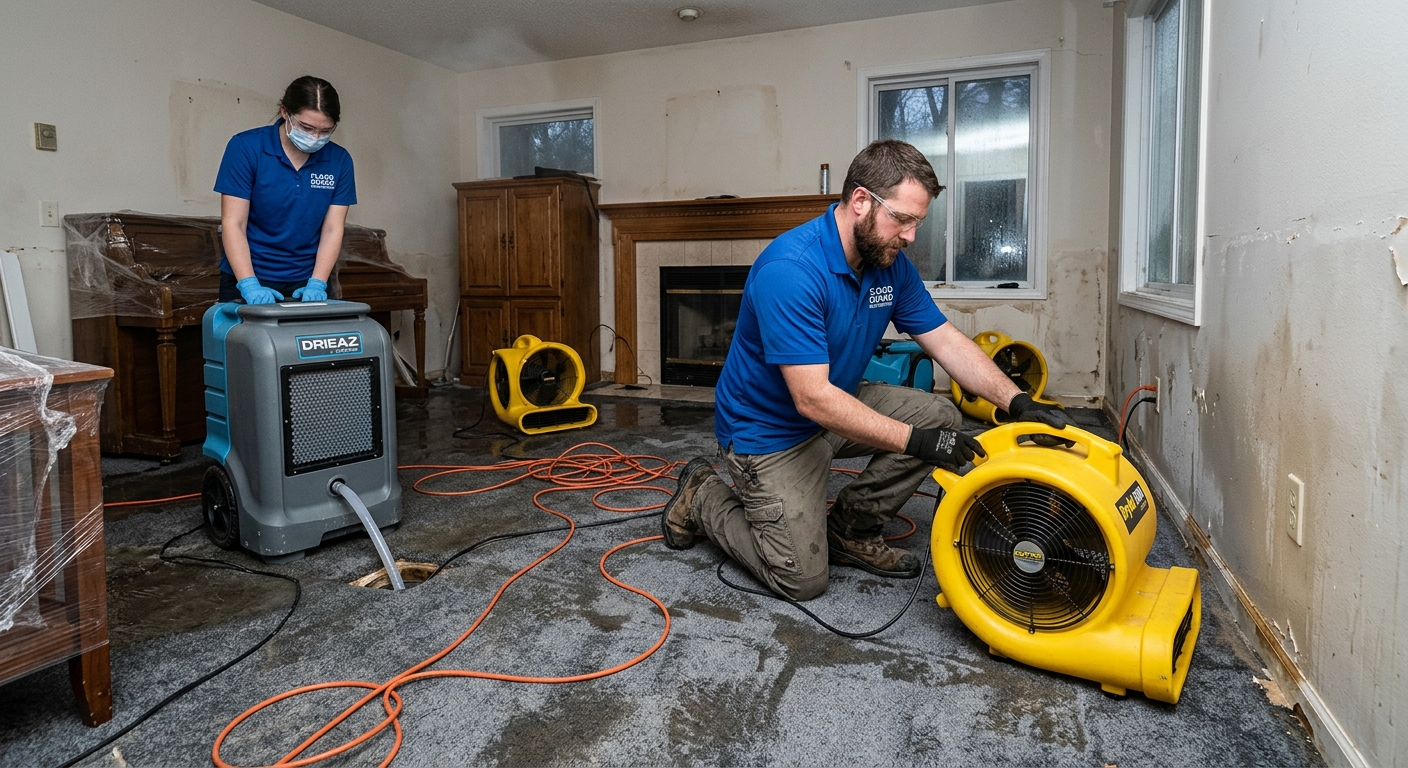
What water damage restoration costs in Mount Lebanon
If you’re facing water in your home right now in Mount Lebanon, you want to know what it will cost and why the numbers can swing so much. With 87.1% of local homes built before 1980 and a majority (69.1%) being single-family structures (U.S. Census Bureau, ACS 2024), most losses here are shaped by aging pipes, basement seepage, and construction methods from the first half of the 20th century. Many Pittsburgh and inner-ring suburbs have pre-1940 housing stock, causing frequent pipe failures and basement water intrusions, which means projects here often involve hidden cavities or full basements and sometimes take longer to dry or require more demolition than in newer construction.
Water emergency costs in Mount Lebanon break down as follows:
| Service |
What it covers |
Typical duration |
Price range |
| Water extraction + emergency drying (Cat 1) |
extraction, air movers, LGR dehumidifiers, daily moisture monitoring |
3–5 days |
$1,300–$8,300 |
| Structural drying only (post-extraction) |
drying to standard after water is already out |
3–5 days |
$1,100–$7,700 |
| Mold remediation with containment |
containment, HEPA filtration, removal, antimicrobial, clearance test |
3–7 days |
$1,650–$11,500 |
| Sewage backup cleanup (Cat 3) |
biohazard protocol, disposal of porous materials, disinfection |
2–5 days |
$2,800–$13,000 |
| Emergency board-up / tarping |
stop further water entry, secure the structure |
same day |
$350–$900 |
Estimates for a typical Mount Lebanon home. Category, affected area and how long the water sat move these figures more than anything else.
Preventing the next one
For Mount Lebanon homeowners, the smartest investments to lower future water risk are direct and practical. Start with leak sensors ($40–$100 per unit) under sinks, behind washers, and at the base of water heaters—these notify you before seepage becomes an emergency. Automatic water shutoff valves, which can cut the supply when a leak is detected, come in at $350–$900 installed and are well worth it for second homes or if you travel frequently.
- Replace washer and water heater supply lines with braided stainless steel every 5–7 years—less than $150–$300 per location. This is a must with our pre-1980 housing stock and is the highest-benefit small job you can do.
- Sump pumps with battery backups ($500–$1,200 installed) pay for themselves after a single outage-related flood, especially on hilly terrain where groundwater rises quickly.
- Backflow prevention valves ($1,400–$2,500 installed) cut your risk if your sewer has ever backed up. Mount Lebanon does not currently cost-share these, but in many blocks it’s still justified after a single backup loss.
- Water heater pans with drains ($200–$400 installed) are cheap insurance if your heater is on a finished floor.
Skip whole-house leak detection if you lack a second floor or your supply lines are already exposed in an unfinished basement. With a 36-inch frost depth and winter design temps of 8°F, insulation of pipes along exterior walls and sill plates is also critical to avoid freeze failures—but expensive “smart plumbing” add-ons rarely pencil out here.
What construction era means for a water loss here
With 87.1% of Mount Lebanon houses built before 1980, and many even pre-1940, you’re usually looking at galvanized or copper supply lines, cast iron sewer stacks, and full masonry basements. All of those come with specific water damage risks and restoration considerations. First, older galvanized or thin-wall copper pipe fails from inside-out corrosion, leading to slow pipe leaks tucked behind plaster or under wood floors—these rarely show up right away and often leave widespread hidden moisture, stretching drying times.
Plaster, common in pre-1940 construction, holds water much longer than drywall and makes for a slower dry-out and sometimes extra demolition if embedded wood lath also remains wet. Expect more wall cavity work and possibly running commercial air movers for the full 3–5 days. Cast iron drains leak at joints over time—particularly in houses set into hilly clay and shale, where foundation movement opens seams. That makes repeated basement seepage normal unless drains have already been replaced with PVC.
Full basements—a staple here—take on water from exterior hydrostatic pressure, often showing up as seepage around the floor-wall joint or even through the floor if surface runoff is directed toward your foundation. In rare newer pockets, like 1960s–70s ranches, supply line failures and water heater ruptures dominate, but you’ll still see original lines approaching their end of life today.
Drywall, hardwood, insulation: what survives
After a water loss, knowing what can be dried versus what must be replaced is key. In Mount Lebanon, with its high proportion of pre-1940 housing and full masonry basements, the same set of materials comes up again and again. Fiberglass insulation in walls or basement band joists does not survive once saturated—it loses all R-value and is a mold risk, so cut it out and replace without exception. Carpet padding in finished basements is also unsalvageable if submerged, even if the carpet on top seems dry after extraction.
Drywall soaked below the waterline generally needs to be removed. Even modern “mold-resistant” panels can’t be cleaned effectively after standing water contact. The best contractors limit removal strictly to what's wet—if someone proposes stripping entire walls that show zero wicking above, get a second opinion.
Plaster walls hold moisture for days longer, especially on wood lath. Plaster can sometimes be saved if the water intrusion was brief and cavity drying can start immediately, but it’s a slow, labor-intensive process, and specialty moisture meters are essential for judging actual dryness. Hardwood floors in these older homes stand a better chance: solid oak or maple can often be dried using floor mats and specialty blowers if water is extracted quickly and boards have not cupped severely—but engineered floors delaminate and very rarely survive a flood.
Cabinets with solid hardwood frames sometimes make it with rapid drying, but particle board cabinets almost never do. If a contractor promises to save everything after a multi-day water event, be wary—they’re setting up a future mold problem. But if they cheerfully rip out every wall regardless of moisture, they’re overreaching.
What a Pennsylvania restoration contractor must actually hold
If you’re hiring a restoration contractor in Mount Lebanon, know that Pennsylvania does not require a trade-specific license for water, mold, or restoration work. The IICRC S500 (for water damage) and S520 (for mold remediation) are industry standards, but there is no state “restoration license.” Ask your contractor if their lead technician holds IICRC certification—don’t just take a logo on a truck for proof. Ask to see the actual wallet card and confirm the training date.
Your contractor must be registered for Home Improvement Contracts (HIC) with the Pennsylvania Office of Attorney General if your job is over $500. Use hic.attorneygeneral.gov and never sign a blank contract. By law, you have a three-day right to cancel, and waiving your insurance deductible is illegal.
Structural repairs (such as framing or load-bearing wall replacement) after water damage require a permit—though in Mount Lebanon, mitigation and drying alone rarely trigger permits. Always verify workers’ compensation and insurance by checking certificates through WCAIS at wcais.pa.gov and insist your address is named as insured before any work begins.
Before anyone sets up, get a detailed written contract describing the scope, anticipated drying equipment, and clear notice of your cancellation rights. If your house is pre-1978, demand proof of EPA Lead RRP certification for any demolition or sanding work.
Mitigation, then reconstruction: two different timelines
Restoration after water loss in Mount Lebanon happens in two very different stages. The first is mitigation—water extraction, drying, and demo if needed. This work is urgent, usually starts within 24 hours, and is often billed direct to your insurance company. Expect mitigation crews to be in and out in less than a week, sometimes just 2–4 days if access is easy and no secondary mold is found.
Reconstruction is slower: once the site is dry and safe, your file often enters a holding period while the insurance paperwork and scope are finalized. In Allegheny County, with many local firms, mitigation response is rapid, but reconstruction can still take weeks or months. You’ll see a different crew—sometimes a completely different contractor—return to handle flooring, drywall, paint, trim, and any framing repairs that required permits.
The gap between these two phases is when many homeowners feel “abandoned”—nothing is happening, but it’s not a mistake. Ask both the mitigation contractor and your adjuster to clarify reconstruction timelines before the fans even come out. Quick demolition doesn’t mean quick rebuild, and clear expectations early prevents headaches down the road.
Category 3 cleanup in Mount Lebanon
Sewage backup, known as Category 3 water loss, is not just dirtier water; it’s a genuine biohazard requiring different equipment, PPE, and disposal methods. In Mount Lebanon, combined sewers and aged infrastructure—frequent in Pittsburgh and nearby boroughs—mean this problem recurs more than most realize. Unlike clean water, anything porous that gets soaked—carpet, pad, insulation, lower drywall, cardboard boxes—must be bagged and disposed, period.
Cleanup teams suit up in full protective gear, set up physical containment barriers and negative air, run HEPA filtration, and never promise to salvage materials like carpet or upholstered furniture from a Cat 3 loss. Professional disinfectants and deodorization are necessary after demolition. Occupants should be out until clearance is complete, especially for the elderly or those with breathing issues.
Some municipalities in the metro area cost-share backflow valve installation after repeated backups, but Mount Lebanon does not. If your property suffered one backup, odds are it could happen again—installing a backwater valve ($1,400–$2,500) is often warranted after a single event. For cleanup itself, expect $2,800–$13,000 for Category 3, depending on spread and time to response.
Frequently asked questions — water damage restoration in Mount Lebanon
What is an assignment of benefits and should I sign one?
An assignment of benefits (AOB) is a contract that grants your restoration contractor the right to bill and communicate with your insurance company directly for approved work. In Mount Lebanon, you’ll see many reputable firms present this paperwork to streamline claims and help avoid upfront payment. However, you are not legally obligated to sign an AOB in Pennsylvania, and you should never sign one before the job scope and price are clear. If you do sign, be sure the contract references Pennsylvania’s Home Improvement Consumer Protection Act, your right to cancel within three business days, and includes the contractor’s valid HIC registration number. No AOB should contain open-ended pricing—review all line items, and for reference, full water extraction and drying typically costs $1,300–$8,300 in this market. If you are uncomfortable giving away claim rights, it’s fine to request direct payment from your insurer instead.
Can I turn the dehumidifiers off at night?
This is a common question for Mount Lebanon homeowners, especially when the fans and dehumidifiers seem loud overnight. The direct answer: don’t turn them off unless your contractor specifically allows it. Our pre-1980 homes here have dense plaster and masonry that hold moisture longer than newer builds, and every interruption delays drying and can even void guarantees with your insurer. If left off for hours, trapped moisture can quickly fuel mold growth, especially during the muggy shoulder seasons common to southwestern Pennsylvania. Most drying jobs only last 3–5 days and cost $1,100–$7,700, so keeping equipment running full-time gets you to the finish line faster. If a unit is making noise or giving off excess heat, ask your provider for a quieter model or to reposition it, but don’t unplug without a plan in writing.
Do older Mount Lebanon homes need different treatment?
Yes, restoration in Mount Lebanon’s older homes—it’s common for houses here to predate 1940—calls for different techniques and patience. Plaster walls, cast iron drains, and full masonry basements mean water hides in more places and takes longer to reach dry standard. Drying slab-on-grade homes in other areas is often faster and less disruptive. In Mount Lebanon, expect your restoration crew to spend more time on moisture detection and possibly recommend opening walls even if surface readings look “good.” Professional water extraction and emergency drying here usually land in the $1,300–$8,300 range due to these added complications. If a company promises a one-day turnaround with old plaster still wet to the touch, get a second opinion—they’re skipping steps that matter.
Is bleach effective against mold?
Bleach is not an effective or approved method for mold remediation, especially in Mount Lebanon’s older housing stock. It only works on non-porous surfaces—in real-world losses here, the vast majority of contaminated materials are porous: drywall, plaster, wood lath, insulation. Bleach does not penetrate these materials and can actually leave hidden mold behind walls or under floors. Professional remediation uses EPA-approved fungicides, HEPA filtration, and careful removal of affected materials, always guided by IICRC S520 protocol. Mold remediation in this area, following industry standards, typically costs $1,650–$11,500. Skip the bleach and ask your restoration contractor to demonstrate how they test and clear the area post-remediation, especially if you’re immunocompromised.
Can I wait until morning to call?
If you suffer a water loss in Mount Lebanon, don’t delay. With so many homes built before 1980 and finished basements common, water can travel rapidly into wall cavities and under floors. The difference between calling right away and waiting even eight hours can move a job from simple extraction ($1,300–$8,300) to mold remediation or gut work ($1,650–$11,500). In this county, one benefit is that multiple 24/7 restoration crews are based locally, not driving in from another metro. Most insurance carriers want you to take “reasonable steps” to protect property—waiting can risk coverage. Unless it’s strictly fresh rainwater on an unfinished floor, don’t put it off—call right away and at least start mitigation steps yourself if crews can’t arrive immediately.
Will my premium go up after a water damage claim?
Whether your premium increases after a water damage claim in Mount Lebanon depends on your insurer’s specific policies and your prior claim history. Generally, one small claim—say, for a burst supply line dried out for $1,100–$7,700—will not cause a dramatic increase, but multiple water or especially repeat sewer loss claims are flagged by underwriters. Carriers look at local flood risk, which in Allegheny County includes nearby rivers and combined sewer areas, and may re-rate entire neighborhoods with chronic issues. You can’t know with certainty, but you can reduce future risk by installing backflow valves or upgrading old supply lines, which your insurer may even discount. Always consult your agent before filing a claim if you’re on the fence as to whether it’s worth it.
How much does a flooded basement cost to restore in Mount Lebanon?
Flooded basement restoration in Mount Lebanon most often involves both extraction and drying, sometimes demolition and full rebuilding. Given the prevalence of finished basements and older full masonry foundations here, costs tend to run higher than in other parts of Pennsylvania. Water extraction and drying with basic demo typically ranges from $1,300–$8,300, while full rebuild including drywall, flooring, and contents can run much higher. Sewage-backed basements (Category 3) cost more—plan for $2,800–$13,000. Variables include type and length of water exposure, square footage, and whether you need after-hours/emergency response. Keep receipts and photos for insurance—many policies require documentation specific to finished or partially finished basements.
What is Category 3 black water?
Category 3, or “black water,” refers to water that contains unsafe contaminants—typically from sewage backups, river flooding, or long-standing water that sustains bacterial growth. In Mount Lebanon and the broader Pittsburgh metro, aging combined sewer infrastructure means true Category 3 cleanups are a recurring problem, not just one-off accidents. Cleanup mandates full PPE, physical containment, and complete removal of porous materials, followed by certified disinfection and deodorization. The process is strict because exposure poses real health risks, even after the area appears clean. For this reason, restoration for Category 3 events is higher, usually $2,800–$13,000. Never accept a rush job that “just dries things out”—insist on proper demo, disposal, and post-clearance testing.
How do I verify a restoration contractor's insurance?
In Pennsylvania, including Mount Lebanon, you as a homeowner should never take a restoration contractor’s word on insurance. Always ask for a certificate of insurance and check that your property address is listed as the certificate holder—this ensures coverage for your specific job. For workers’ compensation, confirm through the WCAIS system (wcais.pa.gov). If employing several workers, lack of valid coverage is a liability on you, not the contractor. General liability and pollution coverage are also critical for water jobs. Don’t hesitate to call the insurer on the certificate to confirm validity—the reputable firms in Mount Lebanon expect this question. For a typical water loss job running $1,300–$8,300, proper insurance protects you if something goes wrong during demolition or drying.
Is emergency after-hours service more expensive in Mount Lebanon?
Emergency and after-hours fees are common in some outlying areas, but in Mount Lebanon—thanks to the density of local firms and the serious risk associated with older pipes and full basements—many companies charge standard rates even for midnight calls. You should always ask before authorizing work, but for most water extraction and emergency drying jobs here, the price range is $1,300–$8,300, regardless of time of day. That said, if a job requires a specialty response, such as a whole-house flood at 2 a.m., you might see a “minimum charge” at the lower end of that band. Still, compared to rural Pennsylvania, after-hours markups are less common here—firms know delays cause mold and aren’t in their or your interest.