What water damage restoration costs in Lower Paxton
If you’re a homeowner in Lower Paxton dealing with water damage, your first question is likely: “What will this cost me?” The answer depends on how much water, where it went, and how quickly you act. Because Post‑World War II tract housing dominates Lower Paxton and Swatara Townships, frequent pipe breaks and roof leaks drive most losses. And with more than half the housing built before 1980 (U.S. Census Bureau, ACS 2024), many homes have basements and construction types that add to the drying effort when flooding occurs.
In Lower Paxton, water extraction followed by professional drying is common after a burst pipe or supply line. If you catch a clean water leak early and start the right drying process, you could be looking at a cost near the low end. But if the leak sits, or if it’s a sewage backup, costs rise fast—especially if mold remediation becomes necessary. Expect insurance to cover sudden losses from interior water but not floodwater seeping in from outside. Multiple local firms keep competition high, so you’re less likely to face travel surcharges than rural areas nearby.
| Service |
What it covers |
Typical duration |
Price range |
| Water extraction + emergency drying (Cat 1) |
extraction, air movers, LGR dehumidifiers, daily moisture monitoring |
3–5 days |
$1,200–$7,600 |
| Structural drying only (post-extraction) |
drying to standard after water is already out |
3–5 days |
$1,000–$7,100 |
| Mold remediation with containment |
containment, HEPA filtration, removal, antimicrobial, clearance test |
3–7 days |
$1,500–$10,500 |
| Sewage backup cleanup (Cat 3) |
biohazard protocol, disposal of porous materials, disinfection |
2–5 days |
$2,500–$12,000 |
| Emergency board-up / tarping |
stop further water entry, secure the structure |
same day |
$350–$900 |
Estimates for a typical Lower Paxton home. Category, affected area and how long the water sat move these figures more than anything else.
Filing a water damage claim in Pennsylvania
The biggest financial pitfall for Lower Paxton homeowners facing water damage is misunderstanding what your insurance does and doesn’t cover. Sudden, accidental water from something like a burst pipe or failed water heater is typically covered under a standard homeowner policy. But groundwater or surface floodwater coming in from a swollen Swatara Creek won’t be—those claims fall under separate flood insurance, and most people only find this out when it’s too late.
There are more files to check: slow, hidden leaks—like a pipe dripping over months—may be excluded as “maintenance” problems. Sewer backup is a recurring issue in Harrisburg and the region, but coverage for this is not automatic and instead requires a special rider. If you haven’t added it, don’t assume you’re covered. Be aware of the insurance adjuster’s “scope of loss” document, which details what they’ll pay for: review it closely and ask for clarification on any line you don’t understand.
Pennsylvania law (Home Improvement Consumer Protection Act) requires a written contract for any job over $500 and gives you a three-business-day right of cancellation. Do not be tempted by any offer to “waive your deductible”—it’s prohibited here and is a red flag for trouble. Some restoration contractors may offer direct billing to your insurer if you sign an assignment of benefits (AOB). This hands payment and part of your claim rights to them—the upside is less paperwork for you, but you lose control over final billing disputes. Always get a copy of what you sign and keep your insurer in the loop so your interests are represented.
How a Lower Paxton crew dries a house
Drying out a home in Lower Paxton isn’t a guessing game―a skilled crew will show up with moisture meters, mark readings on a wall chart, and record daily progress. Before any fan kicks on, the team maps out all wet areas using non-invasive meters and sometimes infrared cameras. It’s not enough to feel surfaces by hand: numbers are what matter, and those numbers are logged and compared daily.
Crews use air movers to keep evaporation going and LGR (low-grain refrigerant) dehumidifiers to pull water from the air. In Lower Paxton’s winter design temps and freeze-thaw cycles, basements often take longer to dry because of colder slab temperatures, especially if insulation is lacking. Leaving equipment running day and night is not overkill—it’s required to achieve steady drying. Shutting machines off at night or between visits just adds days and risks mold growth, since the typical home’s humidity can swing with outside weather (heating degree days here: 5,200).
The goal isn’t just “dry,” but reaching a drying standard—a specific measured moisture content that matches undamaged material in your house. A competent crew will have daily moisture logs; if they can’t show these, they weren’t really monitoring. Ask for them in writing. That tells you you’re getting professional treatment, not just noise and airflow.
Contents: pack-out, cleaning and what you can claim
When water spreads in your Lower Paxton home, contents suffer right alongside the building. Most homeowners focus on floors and drywall, but forget about their personal property in closets, basements or living rooms. A good restoration crew will offer to “pack out” wet and at-risk items—inventorying, photographing and moving them off-site for specialized cleaning and drying. Before anything moves, document every item with your own photos and list, as this is crucial for both insurance recovery and avoiding disputes later.
Your policy treats contents (“personal property”) separately from the structure, each with its own coverage limit. Some things are rarely salvageable: upholstered furniture exposed to sewage backup (Category 3), particleboard or MDF furniture, and most mattresses. These are usually disposed of for safety. Solid wood, electronics, area rugs and sentimental items may be restorable if cleaned quickly. Don’t under-claim—provide receipts, serial numbers, or at minimum, clear photos for every valuable affected. Insurers require this documentation for reimbursement, and a rushed toss-out without record means you can’t prove your loss.
When water damage becomes a mold problem
In Lower Paxton’s climate, a wet carpet or drywall can become a mold issue fast. Colonization can start within 24–48 hours if the basement or room stays humid—especially in the full basements typical here. The longer water sits, the more extensive the response must be, and the faster costs grow.
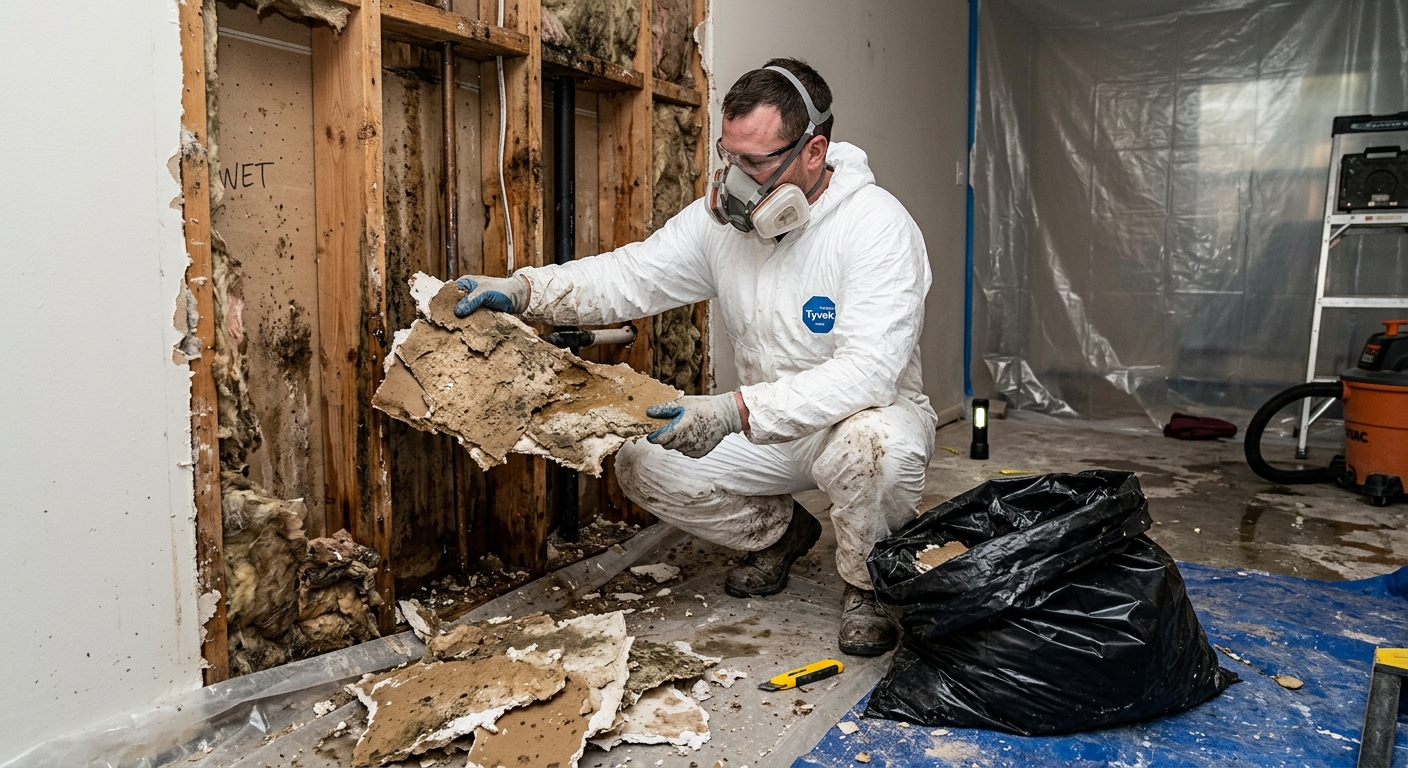
Initial dry-outs follow “dry in place” procedures: air movers and LGR dehumidifiers on clean water. But after two days, if materials aren’t reaching targets, selective demolition may be necessary, meaning cut-out of wet drywall or insulation. Wait longer and the project escalates to full containment and physical removal of affected materials, with post-remediation clearance testing. These aren’t scare tactics—delays have real costs. Dry-out after prompt extraction will usually run $1,000–$7,100; if mold remediation is needed, you could face $1,500–$10,500 and the return trip for clearance testing adds time and expense.
A clearance test means an independent technician samples air and surfaces in the cleaned area to ensure acceptable mold levels before repairs begin. Insist this be in writing and not just a promise—Lower Paxton homes with long-settled moisture or visible fungal growth should never skip it. Humid basements and our regional cold snaps both extend drying time, giving more opportunity for mold to gain ground if you wait to act.
Credentials and permits for restoration work in Lower Paxton
In Lower Paxton—and across Pennsylvania—there is no state license for water damage restoration or mold remediation. No license number on a business card guarantees skill or integrity here. The insurer-expected standard is IICRC S500 for restoration and S520 for mold; ask for your lead technician’s IICRC certification card before work starts. Skilled crews can show it and explain the process in plain English.
For the work itself, drying and installing dehumidifiers after a leak does not require a township permit. But if the job needs interior structural repairs—like replacing drywall, subfloor, or framing—a permit is likely required, as in Harrisburg or Lower Paxton Township. Your contractor must be registered as a Pennsylvania Home Improvement Contractor (HIC) for any contract over $500. You can verify this registration online before anyone starts extracting.
Insurance matters, too: always require a current proof of general liability and verification of workers’ compensation (using the WCAIS system). Before work begins, demand a detailed written scope, a contract meeting HICPA requirements, and a specific price or estimation. If the crew wants to start without paperwork, keep the door closed.
Choosing a restoration company in twenty minutes
Water emergencies in Lower Paxton don’t wait for a full vetting process. With a saturated restoration market in Dauphin County and major firms based in Harrisburg, York, and Lancaster, you can expect fast response. That’s a blessing—competition holds travel fees down and usually means you have options within the hour. But rushing the call makes it easy to overlook the basics and end up with poor documentation or unexpected billing.
If you can’t shop around, focus on three things by phone: (1) confirm Home Improvement Contractor registration and ask for the number so you can check it right away, (2) verify that the company carries workers’ compensation and liability insurance, and (3) confirm the lead technician’s IICRC certification. Before a single air mover comes off the truck, have in hand: a written contract (HICPA requires this over $500), a detailed scope of work with what will be done and what equipment will be used, and confirmation of who will deal directly with your insurer (and under what terms—assignment of benefits or not).
- Confirm Home Improvement Contractor registration (get the number and check online)
- Ask for IICRC certification of your lead technician (not just the company)
- Require proof of liability and workers’ comp insurance (see the WCAIS reference)
- Get a full written scope of work (what rooms, what materials, how many days)
- Insist on a contract that matches the Home Improvement Consumer Protection Act standard
- Ask who will perform daily moisture readings and request those logs in writing
- Request a clear estimate or price band before anything starts
- Require photo documentation for all affected contents and structure before removal
- See who will handle permit paperwork if demolition or reconstruction is needed
- Check for a three-business-day right to cancel if you reconsider after the rush
Watch out for crews who begin unloading before you’ve signed a contract, hand you paperwork with blank pricing or scope, or apply high-pressure tactics (“sign here now or we leave”). A Lower Paxton homeowner can—and should—make ten focused minutes of due diligence count more than a slow quote process ever will in an emergency.
Frequently asked questions — water damage restoration in Lower Paxton
How long does water damage drying take in Lower Paxton?
For most homes in Lower Paxton, expect professional drying to run 3–5 days for clean water losses. Factors like Lower Paxton’s winter temperatures and the prevalence of full basements (which trap moisture in concrete and insulation) can push this longer. Material type matters: plaster walls in older homes, or double subfloors, are slower to dry than modern drywall and can add a full day or more. Don’t expect it to be “done in a day”—industry-standard drying times are built for our climate profile. For typical jobs, water extraction and drying together fall in the $1,200–$7,600 range, based on scope and category. A rushed job that pulls equipment too soon or ignores moisture readings almost always leads to mold or ongoing odor problems, so trust the timeline set by your technician, not just the fans turning off.
What is an assignment of benefits and should I sign one?
An assignment of benefits (AOB) is an agreement that lets your restoration contractor bill your insurance company directly, instead of you paying upfront and waiting for reimbursement. In Lower Paxton and across Pennsylvania, this can speed up repairs—especially if you’re dealing with a large Category 3 loss in the $2,500–$12,000 range. The risk is that you’re granting your contractor broad control to negotiate and settle direct with your insurer, and you may lose some input if there are disputes over what’s covered. Never sign an AOB without reading the full document. Always keep your insurance company in the loop, and be wary if you feel pressured—it’s your claim, and you shouldn’t be forced to sign away rights just for fast service.
Will my premium go up after a water damage claim?
In Pennsylvania, insurers can consider claim history when setting future premiums, including for Lower Paxton homeowners. A single, unavoidable water loss often won’t trigger a big increase, but multiple claims—especially sewer backups or preventable leaks—will raise red flags. Filing for smaller jobs (dry-outs near $1,000–$7,100) may leave you paying more through higher premiums than you recover short-term. Generally, insurers reserve the right to non-renew or raise rates if the risk appears ongoing or maintenance is lacking. Before filing, talk with your agent about your deductible, your claim record, and what to expect in the renewal cycle.
Do older Lower Paxton homes need different treatment?
Yes, and it starts with knowing that over half the homes in Lower Paxton were built before 1980. These houses are more likely to have plaster walls, vintage hardwood, and insulation types that trap moisture longer than modern construction. Drying times stretch out, and the need for mold safeguards is higher. Lead paint risk exists in homes built before 1978; crews must follow EPA Lead RRP rules for any demolition or sanding, so ask directly how they’ll handle it. Mold remediation in these properties can run higher—$1,500–$10,500—if paneling or original finishes need selective removal to truly dry the structure.
How much does sewage backup cleanup cost in Lower Paxton?
Cleanup for a Category 3 sewage backup in Lower Paxton usually falls into the $2,500–$12,000 range, reflecting biohazard protocols, disposal of contaminated carpet, and disinfection of all exposed surfaces. The region’s aging sanitary infrastructure makes these backups unfortunately common, especially after heavy rains when systems are overwhelmed. Fast response is vital—Category 3 jobs almost always require replacement (not cleaning) of carpets, upholstered items, and insulation. Insurance often covers this with a special rider, so check your policy before approving work.
Can I rent dehumidifiers instead of hiring a company?
You can rent consumer-grade dehumidifiers in Lower Paxton, but for all but the smallest spills this is rarely enough. Professional water damage drying uses LGR dehumidifiers and air movers with far more capacity than rental units, along with on-site moisture monitoring. Missing hidden moisture can turn a small job into a mold remediation in the $1,500–$10,500 range. Homeowners with limited wet flooring, who act immediately and thoroughly document conditions, may try a DIY approach, but larger multi-room jobs or any basement with seepage should be left to professionals for both safety and insurance reasons.
Should I call my insurer or a restoration company first?
In Lower Paxton, if water is still coming in or spreading, call a restoration company first to stop the damage—they can also draft the documentation needed for your insurance claim. Most reputable crews can walk you through immediate mitigation and provide a written estimate (usually in the $1,200–$7,600 range). Once an immediate stop-gap is in place, call your insurer to file the formal claim and confirm coverage details. If the loss is small or clearly below your deductible, you may not need to file at all, but never delay stopping active water for paperwork.
How do I verify a restoration contractor's insurance?
Before hiring any restoration contractor in Lower Paxton, ask for a Certificate of Insurance showing general liability and workers’ compensation coverage. Pennsylvania requires all employers to have workers’ comp (check via WCAIS). Make sure your name and address appear on the certificate, not just a generic copy, to guarantee coverage applies to your job. Some companies look legitimate but are simply referring work or using subcontract labor without proper coverage. Review these documents before any equipment is set up—don’t rely solely on business cards or verbal promises. For larger jobs, like a sewage cleanup in the $2,500–$12,000 range, this is especially important.
Is emergency after-hours service more expensive in Lower Paxton?
Lower Paxton’s saturated market helps keep after-hours surcharges lower than in more rural counties, but you may still see a small premium for calls after 6 p.m. or on weekends. Most firms bake this into the higher end of their bands (e.g., water extraction at $1,200–$7,600 includes possible after-hour response). However, with multiple available companies and short travel distances, the added cost is usually modest. Ask up front if the invoice will include “emergency rates,” and require a written estimate before work starts so you aren’t surprised.
Why does plaster take longer to dry than drywall?
Plaster walls, common in older Lower Paxton homes, hold more moisture and release it slowly because of their thickness and composition. Unlike drywall, which is thin and covered with paper, plaster is denser and may have wood lath behind it trapping water inside walls. This means drying takes longer—sometimes 5–7 days instead of 3–4—even with professional-grade equipment. The difference can bump the cost of structural drying to the higher end of the $1,000–$7,100 range, especially if a basement or multiple walls are involved. Crews should always use moisture meters to monitor both types and adjust their drying timeline accordingly.