Lancaster water damage pricing by scope — 2026
If you’re reading this in Lancaster, you might have water spreading in your home right now—when it happens, pricing is often the first question, not the last. In Lancaster city, where dense pre-1940 rowhouses make up a large share of owner homes (U.S. Census Bureau, ACS 2024), pipe failures and complex shared-wall losses happen more than most places. Older construction and a high percentage of homes built before 1980 mean damage can spread fast through wood lath, plaster, or stacked framing, making quick intervention critical.
Water damage restoration is never one-size-fits-all, but these are real 2026 numbers reflecting Lancaster’s conditions and typical project scopes:
| Service |
What it covers |
Typical duration |
Price range |
| Water extraction + emergency drying (Cat 1) |
extraction, air movers, LGR dehumidifiers, daily moisture monitoring |
3–5 days |
$1,150–$7,200 |
| Structural drying only (post-extraction) |
drying to standard after water is already out |
3–5 days |
$950–$6,700 |
| Mold remediation with containment |
containment, HEPA filtration, removal, antimicrobial, clearance test |
3–7 days |
$1,450–$10,000 |
| Sewage backup cleanup (Cat 3) |
biohazard protocol, disposal of porous materials, disinfection |
2–5 days |
$2,400–$11,500 |
| Emergency board-up / tarping |
stop further water entry, secure the structure |
same day |
$350–$900 |
Estimates for a typical Lancaster home. Category, affected area and how long the water sat move these figures more than anything else.
Credentials and permits for restoration work in Lancaster
Neither Pennsylvania nor Lancaster County issues a state license for water damage restoration, mold remediation, or general restoration work, and there is no state mold contractor license. That means anyone can claim to be a “restoration contractor,” so you should lean on recognized industry standards. Insurers and property managers in Lancaster expect lead technicians to hold IICRC (Institute of Inspection, Cleaning and Restoration Certification) credentials — ask to see their card before work starts. The IICRC S500 standard is the industry baseline for water jobs, and S520 guides mold work.
If your project involves structural repairs after a Category 2 or 3 water loss in Lancaster city, you’ll run into building permit requirements triggered by code enforcement—especially if anything structural or electrical is touched. In the surrounding townships, minor interior drying and routine dehumidification after small leaks usually don’t need a permit.
Any contractor signing a contract over $500 must have HIC registration issued by the Pennsylvania Office of Attorney General—always verify at hic.attorneygeneral.gov. Insurance and workers’ compensation are mandatory for all employers (check active status at WCAIS: wcais.pa.gov). Before extraction, get a written contract stating scope, price range, and cancellation rights. Under HICPA, you have a three-day right of cancellation for contracts over $500, which must be honored.
Your belongings after a water loss
After a water loss in Lancaster, especially inside older homes with full basements, belongings can end up as much or more of a headache as the building itself. Many homeowners don’t realize the burden falls on them to document what was damaged—a rushed cleanup before photos are taken can cost you money on your insurance claim.
Pack-out is when restoration crews inventory, photograph, and move your contents off-site for cleaning or secure storage while the house dries. Make sure every salvaged item is photographed in place before it’s moved; your insurer wants evidence of both condition and location. Once moved, accurate inventories and (if possible) a digital photo log make claims much smoother.
Generally, Category 3 (sewage) water means upholstered furniture, mattresses, and uncoated particleboard will not be salvageable—don’t pay for restoration that can’t pass any clearance test. Hardwoods, metal objects, glassware, and most sealed or dense plastics often make sense to restore, especially if they have value or sentimental worth. Your homeowner’s policy typically separates “structure” (the walls, floors, built-ins) and “contents” (your possessions); understand where your loss falls before spending on pack-out or cleaning.
Filing a water damage claim in Pennsylvania
The most expensive misconception in Lancaster is that all water damage is covered by homeowners insurance. Sudden, internal water—say, a burst pipe behind your pre-1940 rowhouse wall—is generally a covered peril. But if floodwater entered your basement from the Conestoga River, it’s considered “surface water” and is excluded unless you bought separate flood insurance. This is where many people find themselves without help on the worst day of their year.
Gradual leaks—like long-term drips from a failing valve—or damage from lack of maintenance are normally not covered. Sewage backup, which can happen in the city’s older neighborhoods due to combined or aging sewer lines, is not standard coverage but can be added as a rider. If you don’t see sewer backup protection on your declarations page, ask about it now rather than after an emergency.
Policies can pay “actual cash value” (depreciated) or “replacement cost” (what it takes to return to new condition). Your “scope of loss” is the document laying out what the adjuster agrees was damaged and what needs repair—review it carefully before agreeing to any work.
Direct billing means the restoration contractor bills your insurer, not you, usually after you sign an “assignment of benefits” which gives the contractor the right to negotiate and collect on your behalf. This can speed things up but means you’ll have less say in dispute negotiations. Under Pennsylvania’s Home Improvement Consumer Protection Act, you must be given a written contract for any job over $500 and you have three business days to cancel. Don’t ever accept a promise to “waive your deductible”: it’s illegal here and usually signals a contractor is cutting other corners.
How long the whole thing takes
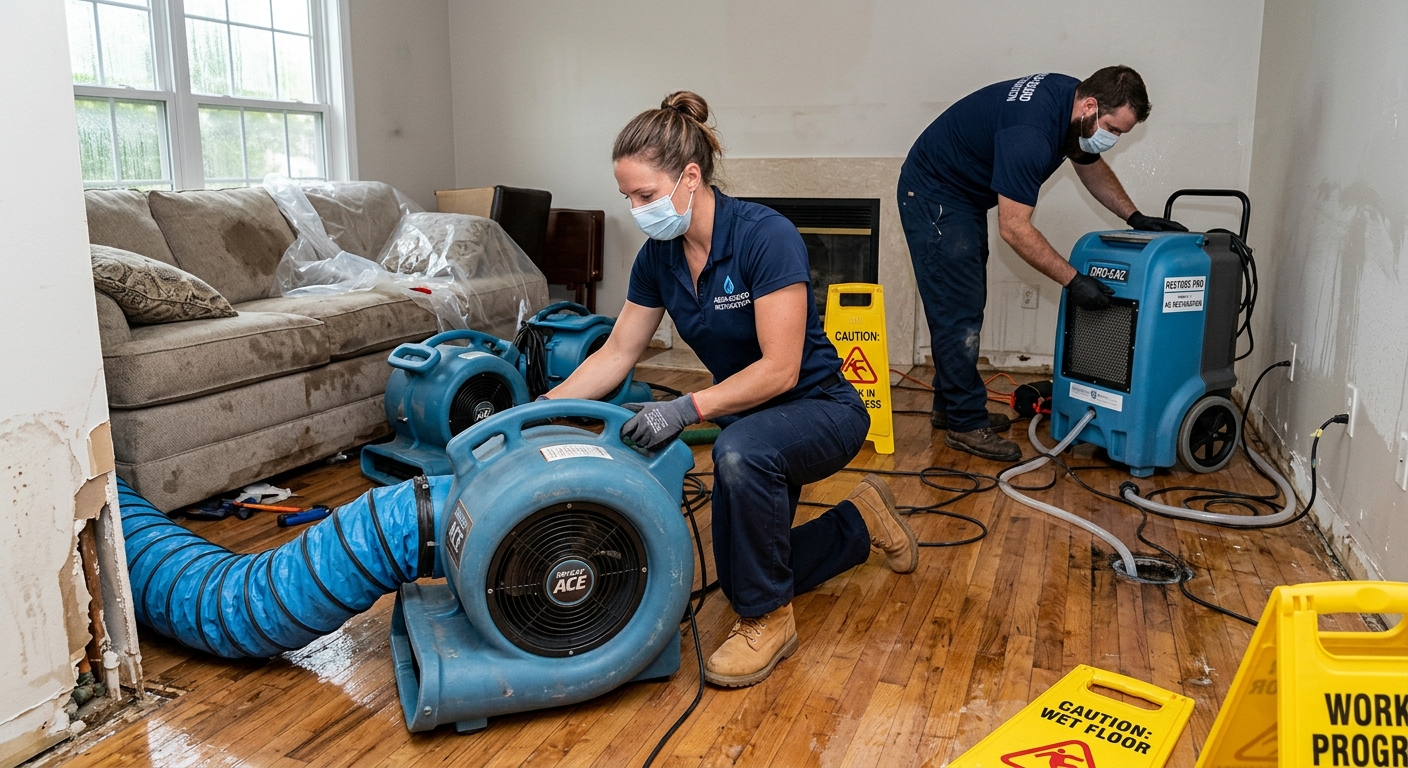
Restoration in Lancaster always splits in two: first, mitigation—emergency extraction and drying—lasts three to seven days. This is fast, urgent, and often direct-billed to your insurance if you file a claim, handled by a specialized mitigation crew who brings in air movers, dehumidifiers, and moisture meters. As soon as drying targets are met and the equipment is pulled, the clock changes pace entirely.
At this point, you move into reconstruction. Permits are required in Lancaster city for structural repairs after serious water losses—expect these to take anywhere from two to eight weeks, sometimes longer if materials are backordered or if code inspections reveal hidden damage (which happens a lot in old rowhouses). In Lancaster County, the restoration contractor market is dense; you won’t usually wait weeks for a drying crew, but for reconstruction, even with short travel, the wait depends on when adjusters finish their scope and how busy local trades are.
It’s normal for there to be a gap between the last day of drying and your rebuild starting—nothing is happening except waiting for adjuster approval, permits, or scheduling. If you know that going in, it feels less like being “abandoned” in your own half-demolished home.
What a sewage loss requires
Sewage backups in Lancaster don’t just smell unpleasant—they’re Category 3 biohazard events that require different procedures from regular water damage. Older city areas with combined or aging sewer lines mean this isn’t just an unlucky accident for a few homes: localized backups are a recurring problem in some blocks.
Cleanup always starts with PPE (full-face respirators, gloves, disposable or chemical-resistant coveralls). If the water reached drywall, insulation, or finished flooring, those materials must be cut out and discarded—even if they look OK, they’re not cleanable to any safe standard. Porous belongings like carpets and upholstered furniture exposed to sewage are typically unsalvageable. After debris removal, high-level disinfection and odor control follow, with containment barriers if the area isn’t separated from the rest of the house.
During sewage cleanup, all occupants should stay out for their own safety. If sewer backup is repeat trouble in your block, consider asking your plumber about a backflow prevention valve; in Lancaster County, these aren’t cost-shared by the municipality, but the prevention value often outweighs the outlay when compared to each cleanup—$2,400–$11,500 per incident, depending on the scale. Document any recurring municipal backups carefully for your insurer.
Finished basements and water damage in Lancaster
Full basements are standard in Lancaster homes, a legacy of old construction methods and the need for utility space in true four-season weather. Unfortunately, below-grade water damage behaves differently. Water from pipe breaks or groundwater intrusion is trapped by hydrostatic pressure, with no gravity drainage, and high year-round humidity makes drying tougher and mold growth faster.
Sump pump failure is the single most common cause we see for flooded basements here—battery backups or water-powered sump pumps are cheap insurance if your home has ever taken on water. Finished basements double the work and the cost of the exact same gallonage: every linear foot of wall, built-ins, and flooring must be opened up to dry or replace, and hidden framing means damage can extend farther than you’d expect.
With Lancaster’s frost depth of 30 inches, foundation cracks and shifting from freeze-thaw stress are common entry points. After a leak, always push for a thorough moisture assessment—infrared imaging and deep-probe meters can find water behind finished walls before mold becomes visible. If your basement is finished, the price tag and the timeline are never at the low end of any estimate range; there’s just more to do, and less room for shortcuts.
Frequently asked questions — water damage restoration in Lancaster
Can I turn the dehumidifiers off at night?
If you’re dealing with water damage in Lancaster, it’s tempting to turn off noisy dehumidifiers at night—especially in a rowhouse with bedrooms close to the work area. But every hour the equipment runs moves your moisture levels toward dry and safe; turning them off, even overnight, can easily double your dry time and increase the risk of mold, raising your final bill. On most jobs this can mean the difference between a $1,150–$7,200 extraction-and-drying scope and facing added expenses for mold remediation, which in Lancaster routinely hits $1,450–$10,000. Your contractor should help position machines so at least some sleeping areas are bearable, and if the equipment sounds unusually loud, ask about adjustments or baffle panels.
Is sewer backup a known problem in Lancaster?
Yes—Lancaster city has localized sewer backup risk in areas with combined or aging sewer lines, especially during major rain events. The Lancaster Area Sewer Authority confirms this as a recurring issue. Because of the city’s older housing stock and full basements, backups can enter even well-maintained homes. A single incident can be costly, with professional Category 3 sewage cleanup charged at $2,400–$11,500 depending on how far the contamination spread. Proactive steps, like having a plumber install a backflow valve, are smart investments here, though residents currently pay the full cost. If backups keep happening in your block, always report them and keep documentation for insurance and legal purposes.
Is bleach effective against mold?
While bleach kills surface mold on nonporous materials, it doesn’t solve mold problems in Lancaster’s typical construction, especially pre-1940 rowhouses with porous lath, plaster, and framing. Bleach won’t penetrate wood or drywall, so surviving roots (hyphae) enable rapid regrowth—often with worse indoor air next time. Professional mold remediation here costs $1,450–$10,000, because successful cleanup involves containment, HEPA filtration, and physical removal of affected material, not just wiping and spraying. For minor visible growth on tile or glass, bleach can help cosmetically, but on any organic or structural surface, it’s not a fix and can give a false sense of security.
Does Pennsylvania license mold remediation contractors?
Pennsylvania does not license mold remediation contractors—there is no state registry or permitting process for mold work, in Lancaster or anywhere else in the state. This means anyone can claim to offer “professional remediation,” so you need to check for independent credentials. Most insurers and property managers require that the lead technician is IICRC-certified, with S520 as the recognized standard for mold jobs (ask to see the card). Typical mold remediation in Lancaster runs $1,450–$10,000. If someone talks about a Pennsylvania mold license, it’s a red flag.
How much does a flooded basement cost to restore in Lancaster?
Restoring a flooded basement in Lancaster depends on factors like how much water, the age of the finished space, and how long it sat. With most homes built before 1980 and full basements standard, what looks like “a few inches” can mean extensive drywall, insulation, and flooring work. A typical water extraction and emergency drying job ranges from $1,150–$7,200. If there’s contamination (Category 2 or 3), or mold development, costs can climb—sewage means jumping to $2,400–$11,500. Finished basements put you near the higher end of those ranges.
Does insurance cover mold after water damage?
In Pennsylvania, standard homeowners policies generally exclude mold unless it results directly from a covered water loss—say, you discover a soaked wall after a burst pipe and mold grows before repairs are made. If you wait weeks to report it, or if the mold results from a maintenance issue or surface flooding, you’re likely not covered. Mold remediation in Lancaster averages $5,800, but the cause and reporting timeline matter more than the price when dealing with insurance. Always get documentation of the water source for your adjuster, and act promptly to avoid unnecessary exclusions.
How much does sewage backup cleanup cost in Lancaster?
Cleanup after a sewage backup in Lancaster runs from $2,400–$11,500. The wide range comes down to how much space is affected and how much material must be removed—full finished basements in pre-1940 homes are expensive to remediate because all contaminated drywall, insulation, and contents must go. Sewage work is always Category 3 (highest risk), and insurance will only pay if you have the right rider on your policy. The cleanup company must follow biohazard protocols and use proper containment, which also factors into the total bill.
Do I need mold testing or just remediation?
In most water damage cases in Lancaster, mold testing isn’t required unless someone involved needs proof the cleanup really worked (like a buyer or an insurer). The IICRC S520 standard, which contractors here typically follow, says visible mold means you already know you need remediation. Post-remediation testing (clearance) is more useful—especially if the work must satisfy insurers, real estate transactions, or sensitive occupiers. On ordinary residential jobs, the cost of thorough remediation—$1,450–$10,000—almost always outweighs what you’d pay just for testing. Save testing for borderline or unusually risky scenarios.
Is sewer backup covered under a standard policy?
A standard homeowner’s policy in Pennsylvania does not automatically cover sewer backup losses. You need a specific rider for this—check your declarations page or call your agent before there’s a problem. If your property is in Lancaster city, where recurring backups are documented by the sewer authority, a rider is absolutely worth the extra premium. Restoration for Category 3 sewage runs $2,400–$11,500; it’s not something you want to pay out of pocket. Even if you have the rider, be ready to document the loss with photos and lists for the insurer.
What should I do in the first hour of a water leak?
First, shut off the home’s main water supply if you can safely reach it. In Lancaster’s older homes, this can sometimes mean a trip to the basement or street shutoff—know where yours is before you’re ankle-deep. Next, move electronics and valuables out of the path of water, and photograph the scene as you find it for your claim. Don’t try to extract or dry anything yourself without documenting the damage first—it can affect your claim and make it harder to recover the full cost. A reputable contractor will walk you through the next steps and explain their estimate (expect $1,150–$7,200 for full extraction and drying). Always get the contract in writing and verify credentials.