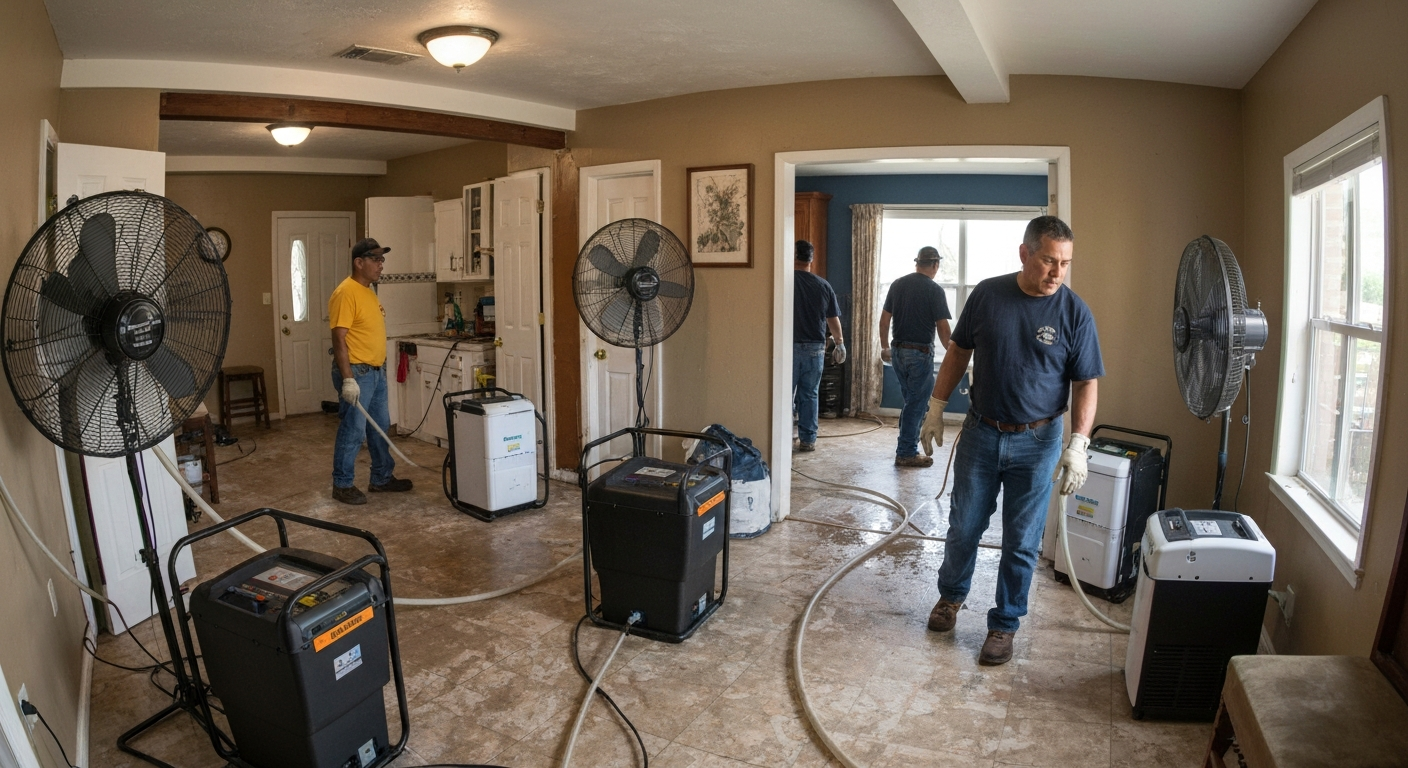
What water damage restoration costs in East Norriton
East Norriton homeowners dealing with a sudden water loss need to know what to budget for fast. Most houses here, built in the post-World War II suburban boom, have full basements and aging copper pipes—two factors that shape both the type and extent of common water damage (U.S. Census Bureau, ACS 2024). With the majority of homes built before 1980 and over 4,400 owner-occupied, hidden pipe leaks and finished basement losses are frequent in this part of Montgomery County. If you’re facing an active issue, restoration costs in East Norriton depend on the kind of water, how long it sat, and how much area is affected—but getting numbers quickly can help you make informed decisions.
| Service |
What it covers |
Typical duration |
Price range |
| Water extraction + emergency drying (Cat 1) |
extraction, air movers, LGR dehumidifiers, daily moisture monitoring |
3–5 days |
$1,300–$8,000 |
| Structural drying only (post-extraction) |
drying to standard after water is already out |
3–5 days |
$1,050–$7,500 |
| Mold remediation with containment |
containment, HEPA filtration, removal, antimicrobial, clearance test |
3–7 days |
$1,600–$11,500 |
| Sewage backup cleanup (Cat 3) |
biohazard protocol, disposal of porous materials, disinfection |
2–5 days |
$2,700–$13,000 |
| Emergency board-up / tarping |
stop further water entry, secure the structure |
same day |
$350–$900 |
Estimates for a typical East Norriton home. Category, affected area and how long the water sat move these figures more than anything else.
What can be saved and what has to go
In East Norriton homes, full basements and mid-century build-outs mean water issues often hit areas packed with insulation, finished wallboard, and flooring. The era’s copper supply lines are prone to slow leaks behind drywall, leading to hidden damage you may not see right away. Here’s what typically happens by material:
- Carpet pad and fiberglass insulation — Almost never salvageable. Once wet, these trap moisture and mold risk rises quickly. Removal is the standard.
- Drywall — Where water rises above the baseboard, a "flood cut" (typically 12–24" up) is usually needed. If a contractor says they can always dry it in place, get a second opinion—hidden moisture isn’t worth a future mold claim.
- Solid hardwood floors — Sometimes savable with floor drying mats and specialty equipment if you catch it fast. Engineered wood and laminate rarely survive even moderate soaking without permanent swelling or delamination.
- Plaster walls — Plaster takes longer both to absorb and release moisture. In older sections of 1940s-60s homes, these can sometimes be dried, but only if moisture readings confirm it’s working.
- Cabinets — Laminate or MDF-based boxes almost always swell and split. Plywood or hardwood may be rescued if dried promptly, but only if the base isn’t sitting in water.
Most reputable firms in Montgomery County aim to save what makes sense and demo what can’t be dried to standard—full gut jobs are rarely justified unless there’s sewage or weeks-old damage. If a contractor promises to preserve everything no matter the condition, be wary; if they want to gut for a minor leak, they may be chasing a larger rebuild rather than protecting your interests.
When water damage becomes a mold problem
In the climate of southeastern Pennsylvania, with full basements and humid summers, the window before water damage turns into a mold issue is short. Mold colonization can start in as little as 24–48 hours if building materials and the air hold moisture—so every hour after a plumbing leak, flood, or backup matters for your wallet. At first, a crew can usually dry carpet, drywall, and wood in place, running air movers and dehumidifiers ($1,300–$8,000 for extraction and drying). Past the day-two mark, sections turning soft or warping may need to be cut out, and costs rise as you move towards structural drying-only ($1,050–$7,500).
Once mold is visible or air samples suggest it’s growing behind walls (very common in East Norriton basements), work changes: plastic containment barriers go up, crews wear PPE, and all affected materials get removed, not dried ($1,600–$11,500 for contained remediation). During mold remediation, a third-party clearance test can confirm the house is safe to rebuild and reoccupy—essential for any insurance claim or just for peace of mind. Get that test result in writing, not just a verbal “all clear.”
In summer, when the region’s humidity spikes, dry-out times can stretch, and ignoring a leak in a finished basement risks a full-scale mold scenario. Timely response isn’t a customer-service plus, it’s the only way to avoid a thousands-higher bill two days later.
What a Pennsylvania restoration contractor must actually hold
Pennsylvania does not license restoration or mold contractors—there’s no state-issued card or badge that proves someone is qualified. What matters here in East Norriton is the firm’s experience and whether their techs actually hold current IICRC certifications, which are considered the industry standard (S500 for water, S520 for mold). Ask for the lead technician’s IICRC card before letting anyone start work; it’s not unusual to see national or local firms in Montgomery County doing quality work, but never take it for granted.
In Norristown, only significant structural repairs (like after a Category 3 sewage backup involving framing or drywall replacement) require a building permit—regular water extraction and dry-out don’t. Like-for-like carpet replacement in these homes generally needs no permit. Make sure contractors are registered with the Pennsylvania Office of Attorney General for any job over $500 and verify their workers’ compensation coverage with WCAIS (wcais.pa.gov). For insurance, you want proof of liability coverage naming your address before any work begins.
Before crews start extracting, get a clear, written scope explaining what’s being done, what contents are being moved or packed out, and the price range. Never sign a blank work authorization or let a team start before paperwork is complete—Pennsylvania’s Home Improvement Consumer Protection Act protects you, but only if you use it.
What to do right now
If you’re standing in water: first, shut off the water at your main shut-off valve—usually in the basement or along a main wall—especially in these full-basement East Norriton houses. If safe, cut power only to affected circuits (never touch the panel if it’s wet or you have to step in water to reach it). Take photos of all affected rooms and damage before moving anything, as insurers covering Montgomery County want clear “before remediation” evidence.
Move valuables and contents up off wet flooring—use chairs, milk crates, or anything dry you have. Never use a household vacuum or shop-vac on standing water; aside from electrical risk, you can damage your appliance and risk shock. Clean, cold water from a pipe break is different from a basement full of brown water—don’t touch the latter without gloves and masks.
You can call your insurance company before or alongside your chosen restoration contractor here; order matters less than having documentation. Most policies covering East Norriton homes have a 24-hour claims line. Whoever you call first, insist on a written authorization or scope for any emergency work above $1,300.
The most expensive mistake? Waiting until morning. Mold grows fastest in our summer humidity, and a delay can mean a jump from a $4,200 dry-out to a $6,400 mold remediation before the weekend's out. Don’t stall—the clock really does add expense here.
Vetting a contractor when you have no time
Saturated by regional and national restoration firms, Montgomery County almost always has crews available in an hour—but speed doesn’t guarantee quality. You may not have days to compare quotes, but there are still ways to protect yourself when you’re calling for emergency service after hours.
On the phone, confirm:
- They are registered with the PA Office of Attorney General
- Their lead technician holds current IICRC certification (ask for S500 and/or S520)
- They will provide proof of liability insurance and workers’ comp at your address
Before equipment is unloaded, you must have:
- A written contract with total estimated range ($1,300–$8,000 is a typical cat 1 range)
- A defined scope: what’s being done now, what comes later
- Name and company of everyone entering the home (for your insurance and safety)
- Check HIC registration at hic.attorneygeneral.gov
- Ask for their PA Home Improvement Contractor # in advance
- Demand to see the IICRC card of the actual technician sent out
- Require job-specific insurance proof (not just “we’re insured”)
- Request references in Montgomery County—not just corporate branding
- Get a list of what will be disposed, and why
- Ensure all permits, if needed, are handled (especially for major structural work)
- Check for up-front or unexpected fees in the contract — these can balloon quickly
- Clarify payment timing: nothing up front for emergency work
- Insist on a copy of all paperwork (including before photos) before anyone starts moving your property
High-pressure tactics in East Norriton restoration include the “driveway contract” (blank forms signed in your garage), showing up and unloading fans before you’ve agreed to anything, and leaving scopes deliberately vague. Always get it in writing. If a company won’t pause long enough for this, the next firm will—this market is not short on options.
What a sewage loss requires
Sewage backup is a biohazard: it’s not just dirty water, and never just a worse smell. Norristown and the surrounding area have documented wet-weather inflow issues that sometimes overwhelm the municipal system, leading to genuine Category 3 water—not rare, one-off accidents but something residents deal with repeatedly.
Cleanup goes far beyond extraction. PPE (masks, gloves, disposable suits) is mandatory for everyone entering the space. Contractors set up plastic containment to isolate affected areas and must remove any porous materials (carpet, pad, insulation, and affected drywall) regardless of surface appearance or insurance adjuster optimism—mold and bacteria are unavoidable otherwise. After removal, every hard surface must be cleaned, disinfected, then deodorized with professional products.
It’s strongly advised for everyone—including pets—to stay out until full clearance is given. Affected contents may need offsite cleaning, and air filtration must run continuously during cleanup. Backflow prevention valves offer long‑term protection, but as of now, Montgomery County municipalities do not typically cost-share these installations for private property owners—check with your township for specifics. Expect to pay $2,700–$13,000 for Category 3 cleanup, depending on area and extent. Never take shortcuts with sewage; it’s not worth a chronic mold or health problem in a finished basement.
Frequently asked questions — water damage restoration in East Norriton
How long does water damage drying take in East Norriton?
Drying time always depends on the volume of water, affected area, and the conditions inside your home. In East Norriton, most restoration jobs—think a typical burst pipe or washer overflow in a finished basement—require 3–5 days for full extraction and structural drying if a crew starts within the first 24 hours. That’s consistent with what you’ll see across Montgomery County’s post‑1945 homes with full basements. Delays or larger losses (especially if water sits through a humid summer weekend) can stretch the job to seven days or more, especially if there’s subfloor or wall cavity involvement. Emergency drying and extraction fall into the $1,300–$8,000 band, and jobs rarely drag on unless major structural work or mold is involved. The key factor is not waiting overnight—each day’s delay can mean an extra category of work and higher costs down the line.
Why is water damage priced per square foot?
Insurance adjusters and restoration contractors in Pennsylvania almost always estimate water loss cleanup by square footage because costs track closely to how much area is wet. In East Norriton’s typical homes with full basements and numerous subdivided rooms, the labor and equipment needed (air movers, dehumidifiers) scale with the size of the affected floor or wall area. Pricing bands—such as $1,300–$8,000 for extraction and drying—reflect emergency jobs in spaces from a single bathroom to an entire below-grade level. Bigger spaces, more materials to remove and replace, and longer runtime for equipment all increase total charges. That’s why you’ll get a more precise estimate once a crew can map out exactly where the water traveled, instead of a one-size-fits-all quote.
How much does sewage backup cleanup cost in East Norriton?
For Category 3 sewage backup—common in Norristown and areas with inflow and infiltration—you can expect to pay in the $2,700–$13,000 range in East Norriton. Most finished basements fall near the middle or upper end if contents or wall finishes are involved. The job includes PPE for the workers, containment for the affected rooms, full removal of carpets and drywall below contamination, professional disinfection, and documentation for your insurer. Costs are higher than standard water extraction because of the need to dispose of more impacted materials and the biohazard risk. Delays or attempts to “just dry it out” always risk a secondary mold claim—which insurance may not cover if proper sanitation wasn’t documented upfront.
Does Pennsylvania license mold remediation contractors?
No, Pennsylvania does not have a state licensing system for mold remediation contractors. All restoration and mold remediation work in East Norriton and greater Montgomery County is unlicensed at the state level—any certifications come from industry bodies, not the government. The de facto standard is the IICRC S520 certification for mold and S500 for water restoration. Before letting anyone remove walls or treat for mold, ask for their IICRC card and ensure the contract is compliant with the Home Improvement Consumer Protection Act. Mold remediation with full containment and testing runs from $1,600–$11,500, so documentation and certification are your main protections against shoddy work.
Is sewer backup covered under a standard policy?
Many East Norriton homeowners are caught off-guard to learn that standard homeowners insurance often does not include sewer backup as a basic part of the policy. Most insurers in Pennsylvania offer it as a specific rider or endorsement; it’s rarely included by default. Check your documents or call your agent to verify limits and deductibles. If you do have coverage, document everything—especially in this area where the Norristown Municipal Waste Authority has reported recurrent sewer surcharges. For a full sewage backup, be ready to present all contracts and invoices, which can run $2,700–$13,000 depending on severity and area. Don’t wait to check until after the fact.
What is Category 3 black water?
Category 3, often called “black water,” is the insurance and restoration industry’s term for water carrying significant contamination. In East Norriton, this typically means water from a sewer backup, major storm flooding, or any source that has touched soil, human waste, or certain industrial runoff. Category 3 losses require biohazard protocols for all work: PPE for every worker, full removal and disposal of any porous material it touches, and EPA-approved disinfectants. Cleanup runs higher cost than pure water jobs—expect $2,700–$13,000—and is not something you can tackle with DIY tools. Crews contain and document every step because policy coverage can be strict about what’s allowed back in the house.
What is an assignment of benefits and should I sign one?
An assignment of benefits (AOB) agreement is a document that authorizes the restoration contractor to deal directly with your insurance company for payment and sometimes to receive payment directly on your behalf. In Pennsylvania, including East Norriton, this contract can streamline claims but can also limit your say if repairs go sideways or if disputes arise. Only sign an AOB after you’ve read the fine print, confirmed the contractor’s registration and insurance, and understand what work will and won’t be performed. For complex jobs (like a $7,000 sewage loss), an AOB may help—but never let a company start or bill under an AOB before you have a full, itemized scope and documentation in hand.
Do older East Norriton homes need different treatment?
Many East Norriton homes were built before 1980, according to the U.S. Census Bureau, meaning aging copper pipes, plaster walls, and full basements are the norm. These factors change both how water moves through a building and how it should be dried out. Plaster and lath, for example, dry more slowly than drywall and may conceal moisture pockets behind them. Likewise, lead paint hazards can be a concern in pre-1978 structures—make sure any invasive work follows EPA Renovation, Repair and Painting (RRP) protocols. Typical mitigation can still fall in the $1,300–$8,000 range, but demolition and remediation techniques should reflect what the house is built with. A one-size-fits-all approach risks both missed damage and unnecessary demolition.
Is it safe to stay in the house during drying?
For most clean water losses (Category 1 or 2), it’s usually safe to remain in the unaffected portions of the home while drying is underway in East Norriton. However, air movers, dehumidifiers, and partial demolition can make some rooms noisy and dusty, and specialty equipment in full basements may elevate heat and humidity in summer. If sewage (Category 3) is involved, or if mold has colonized, it’s best to stay out entirely from those areas until a clearance test says it’s safe. For heavy losses where costs reach $7,000 or more, insurance often covers temporary relocation, so you don’t have to “tough it out” through days of disruptive work. Always err on the side of caution if you have infants, the elderly, or anyone with health conditions in the household.
What water damage can I safely handle alone?
If the incident is small and limited—say, a sink overflow on a tile floor or a few wet towels—most East Norriton owners can mop up and run fans without issue. But once there’s water in carpet pads, insulation, drywall, or if any basement space is wet (very common here), DIY work stops being cost-saving and starts being a future risk. Porous structural materials almost always need commercial-grade drying and monitoring. Before you attempt anything on your own, document everything for your insurer. If the area exceeds a couple of square feet, call a professional. With costs for pro extraction and drying starting at $1,300, getting it right up front is almost always cheaper than paying for both missed damage and the follow-up mold remediation later.